

This post is also available in:
 עברית (Hebrew)
Collecting data at sea often requires researchers to choose between two very different types of vehicles. Aerial drones can quickly survey large areas but cannot operate underwater, while underwater robots move below the surface but are slow and cannot rapidly relocate. Switching between the two environments typically means deploying multiple platforms, increasing both cost and operational complexity.
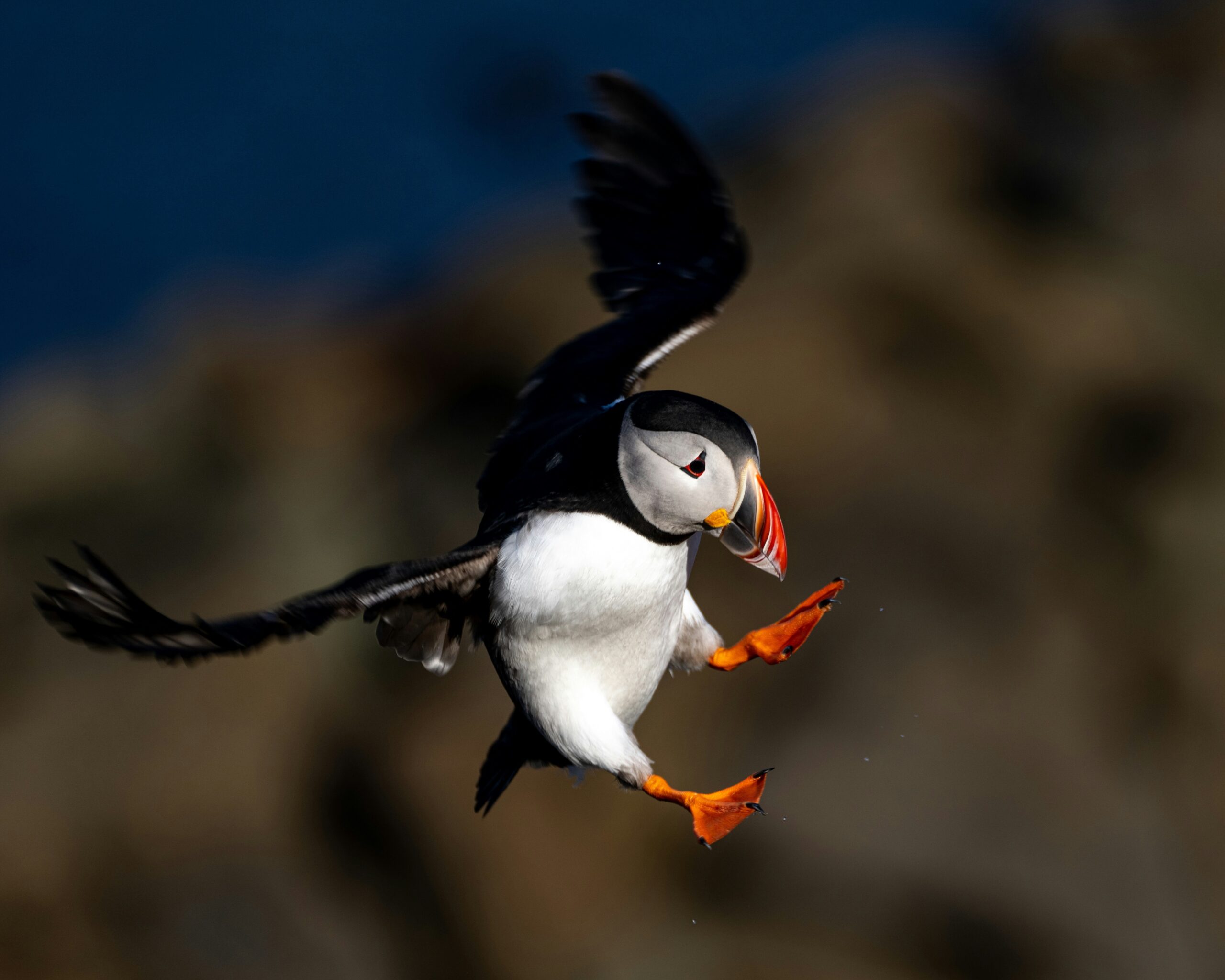
Researchers from MIT and EPFL have developed a single robot designed to bridge that gap. Inspired by diving birds such as puffins, loons and petrels, the lightweight robotic vehicle can swim underwater before breaking through the surface and immediately transitioning into flapping-wing flight. Unlike birds, however, it does not need feet or propellers to launch itself from the water.
Known as the Flapping-Wing Aerial-Aquatic Vehicle (FAAV), the robot weighs less than 300 grams and mimics the biomechanics of birds that naturally move through both air and water. Its fuselage houses a waterproof electric motor and battery, while a crankshaft drives two flexible wings that flap rather than rotate like propellers. A motorized tail continuously adjusts its angle to control climbing, diving and the critical transition between water and air.
According to TechXplore, designing such a vehicle is particularly challenging because water is roughly 1,000 times denser than air. The forces acting on the wings differ dramatically between the two environments, making a single flight mechanism difficult to optimize. After studying the movement of diving birds, the researchers identified combinations of wing size, flapping frequency and tail angle that allow the robot to operate efficiently in both mediums.
Testing in a laboratory water tank and Switzerland’s Lake Geneva showed that medium-sized wings provided the best balance between aerial and underwater performance. The robot swam at nearly one meter per second using a flapping frequency of about five hertz and flew at roughly six meters per second using a similar wingbeat. To leave the water successfully, it pitched upward at approximately 70 degrees, preventing the wing tips from striking the surface during takeoff. The wings themselves are coated with hydrophobic nanoparticles that help shed water immediately after surfacing, reducing drag as the vehicle transitions into flight.
Although developed primarily for oceanographic research, the technology has clear defense and security potential. A vehicle capable of flying to a location, diving beneath the surface to gather information, and then returning through the air could support naval reconnaissance, port security, infrastructure inspection and environmental monitoring without requiring separate aerial and underwater platforms.
The researchers are now refining the wing design to allow additional maneuverability and plan to evaluate the robot in rough seas and stronger winds. If successful, the concept could pave the way for a new generation of hybrid drones capable of repeatedly moving between water and air while carrying sensors or collecting samples in places that are difficult, or too dangerous, for conventional vehicles to reach.
The research was published here.























