

This post is also available in:
 עברית (Hebrew)
The rapid spread of inexpensive drones has created a growing challenge for air-defense systems. Traditional surface-to-air missiles can be effective against unmanned aircraft, but they are often far more expensive than the drones they intercept. Swarm attacks involving dozens of low-cost targets further complicate the problem by overwhelming conventional defenses and rapidly depleting interceptor inventories.
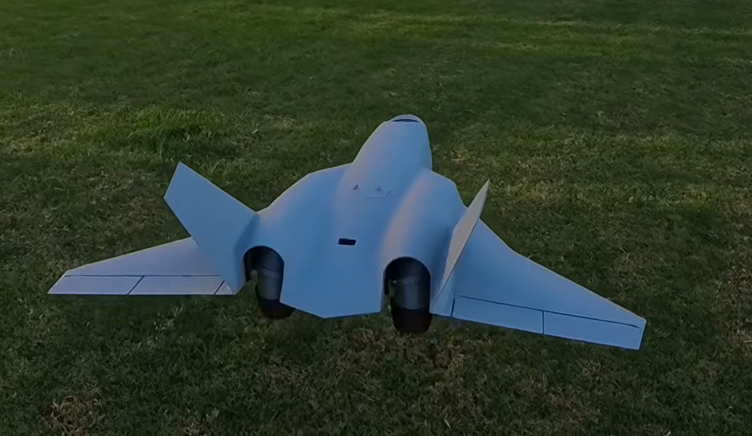
A new autonomous interceptor aircraft, called CobraJet (by SkyDefense), has been developed to provide a reusable alternative specifically designed for counter-drone missions.
Unlike traditional missile interceptors, the aircraft takes off vertically, flies autonomously toward incoming threats, and engages them using onboard guided munitions. Rather than destroying itself during the interception, it can continue pursuing additional targets during the same mission before returning for recovery and rearming.
The platform is available in several configurations using either battery-electric propulsion or a hybrid design. According to Interesting Engineering, the electric variants can reportedly reach speeds of up to 362 kmph, while hybrid models equipped with turbojet propulsion increase maximum speed to approximately 563 kmph.
Its airframe is manufactured primarily from carbon-fiber components produced through 3D printing. This modular construction allows damaged sections to be replaced more easily while simplifying future upgrades without redesigning the entire aircraft.
Vertical takeoff capability eliminates the need for conventional runways, allowing deployment from trucks, ships, or other mobile platforms. Thrust-vectoring nozzles improve maneuverability during high-speed engagements against evasive drone targets.
One larger version also functions as a drone carrier, transporting additional interceptor drones that can be deployed during flight to extend operational reach.
Artificial intelligence manages much of the aircraft’s autonomous flight. Electro-optical and infrared sensors continuously detect and track aerial targets while onboard software supports navigation in daylight, darkness, adverse weather, and electronically contested environments. Human operators remain responsible for engagement decisions and can assume manual control when required.
Instead of carrying conventional air-defense missiles, the aircraft employs compact guided interceptor munitions designed specifically for engaging Group 1, 2, and 3 unmanned aerial systems, including first-person-view drones, jet-powered UAVs, and coordinated drone swarms.
From a defense perspective, reusable airborne interceptors represent a different approach to countering the growing volume of unmanned threats. By combining autonomous flight, multiple engagements per sortie, and lower-cost interceptor munitions, systems like this seek to improve the economics of air defense while expanding the ability to respond to increasingly complex drone attacks.
As drone technology continues evolving, autonomous interceptor aircraft are emerging as another layer within broader multi-tiered counter-UAS architectures designed to protect military installations, critical infrastructure, and other high-value assets.























