This post is also available in:
 עברית (Hebrew)
Modern air defense systems are increasingly facing a difficult economic problem. One-way attack drones and loitering munitions can be produced cheaply and launched in large numbers, while many conventional interceptors cost far more than the threats they destroy. Existing defenses often force militaries to use expensive missiles against relatively low-cost unmanned aircraft, raising concerns about sustainability during prolonged attacks.
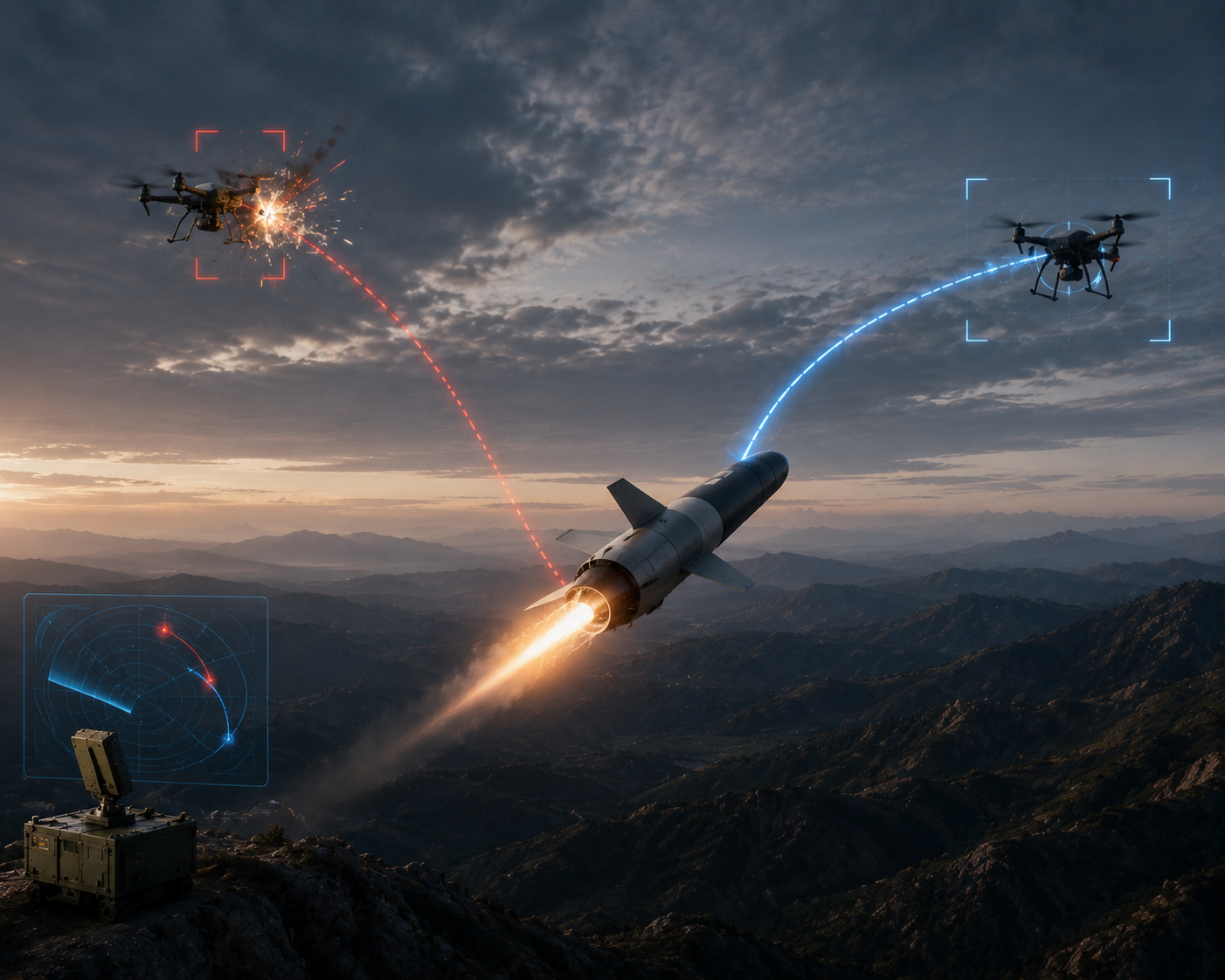
A new interceptor system (IonStrike by DZYNE Technologies) is being tested as a potential mid-range solution between electronic warfare tools and traditional missile defenses. Designed specifically to engage drones, the interceptor is intended to provide a lower-cost kinetic option while integrating directly into existing air defense networks.
The system connects to the current radar and command-and-control infrastructure rather than requiring a separate engagement chain. It can receive targeting information through existing Army air defense networks, allowing operators to track and engage threats using familiar systems and procedures. According to Interesting Engineering, this reduces additional training requirements and simplifies operational integration.
The interceptor itself launches from a palletized system currently configured with four launch tubes, while a larger twelve-cell version is also under development to address mass drone attacks. Unlike many conventional interceptors that remain locked onto a target once fired, this system can be redirected during flight. Operators can abort an engagement if the target is identified as friendly or retask the interceptor toward a higher-priority threat after launch.
Guidance is provided by an infrared seeker combined with a proximity-fuzed warhead, designed to defeat one-way attack drones during both day and night operations. The ability to reassign targets in flight is intended to provide commanders with additional decision time in fast-moving scenarios where battlefield conditions may change rapidly.
From a defense perspective, the concept reflects a broader push toward layered and economically sustainable counter-drone defenses. Air defense planners increasingly need systems capable of handling large UAV attacks without exhausting more expensive missile inventories.
The ongoing evaluation also focuses heavily on how well the interceptor performs within real operational networks, including radar integration, launcher sustainment, reload procedures, and engagement flexibility under field conditions. As drone warfare continues evolving, adaptable and lower-cost intercept systems are becoming a growing priority for modern air defense architectures.