This post is also available in:
 עברית (Hebrew)
Coordinating large numbers of robots to perform complex tasks remains a major challenge. Traditional systems often rely on centralized control, detailed planning, and constant communication, which are factors that can limit flexibility and create single points of failure. In unpredictable environments, such as disaster zones or remote construction sites, these limitations become even more pronounced.
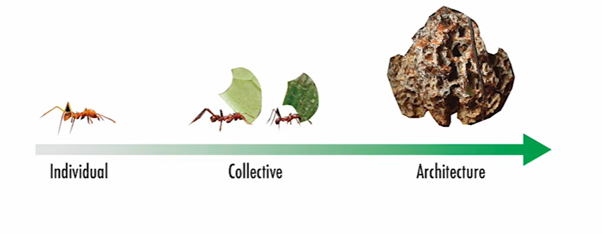
A new approach takes inspiration from nature, specifically how ant colonies operate without a leader or blueprint. Instead of centralized control, the system uses simple local rules that allow robots to coordinate indirectly through their environment. Each robot follows basic instructions, such as moving toward signals, picking up materials, and depositing them under certain conditions, yet collectively they are able to build or dismantle structures.
According to TechXplore, the key mechanism behind this coordination is a form of indirect communication. Rather than exchanging data directly, the robots modify their surroundings and respond to those changes. In this case, the system uses light-based signals that act as digital stand-ins for chemical trails. As robots move, they create and follow these gradients, forming a feedback loop between the swarm and its environment.
This interaction leads to emergent behavior. Without predefined roles, robots naturally cluster in certain areas, forming the starting points for construction. As more units gather, the structure grows in an organized way. By adjusting a small number of parameters, such as how strongly robots respond to signals or how often they deposit material, the system can switch between building and dismantling.
One of the more interesting aspects is robustness. Because there is no central controller, the system can continue operating even if individual robots fail. The behavior emerges from the group rather than any single unit, making it adaptable to changing conditions.
From a defense and homeland security perspective, such swarm-based systems could be relevant for tasks in hazardous or inaccessible environments. Coordinated robotic teams could assist in clearing debris, building temporary structures, or operating in areas where communication is limited and centralized control is impractical.
As robotics continues to evolve, approaches that rely on simple rules and collective behavior may offer a scalable way to manage large groups of autonomous systems, especially in environments where flexibility and resilience are essential.
The research was published here.