

This post is also available in:
 עברית (Hebrew)
First-person-view (FPV) drones have become increasingly important for reconnaissance and strike missions, but controlling them often requires bulky ground equipment. Traditional ground control stations can involve separate cases, large antenna assemblies, or vehicle-mounted setups that limit operator mobility. Once deployed, drone pilots may have difficulty relocating quickly, reducing flexibility in dynamic environments.
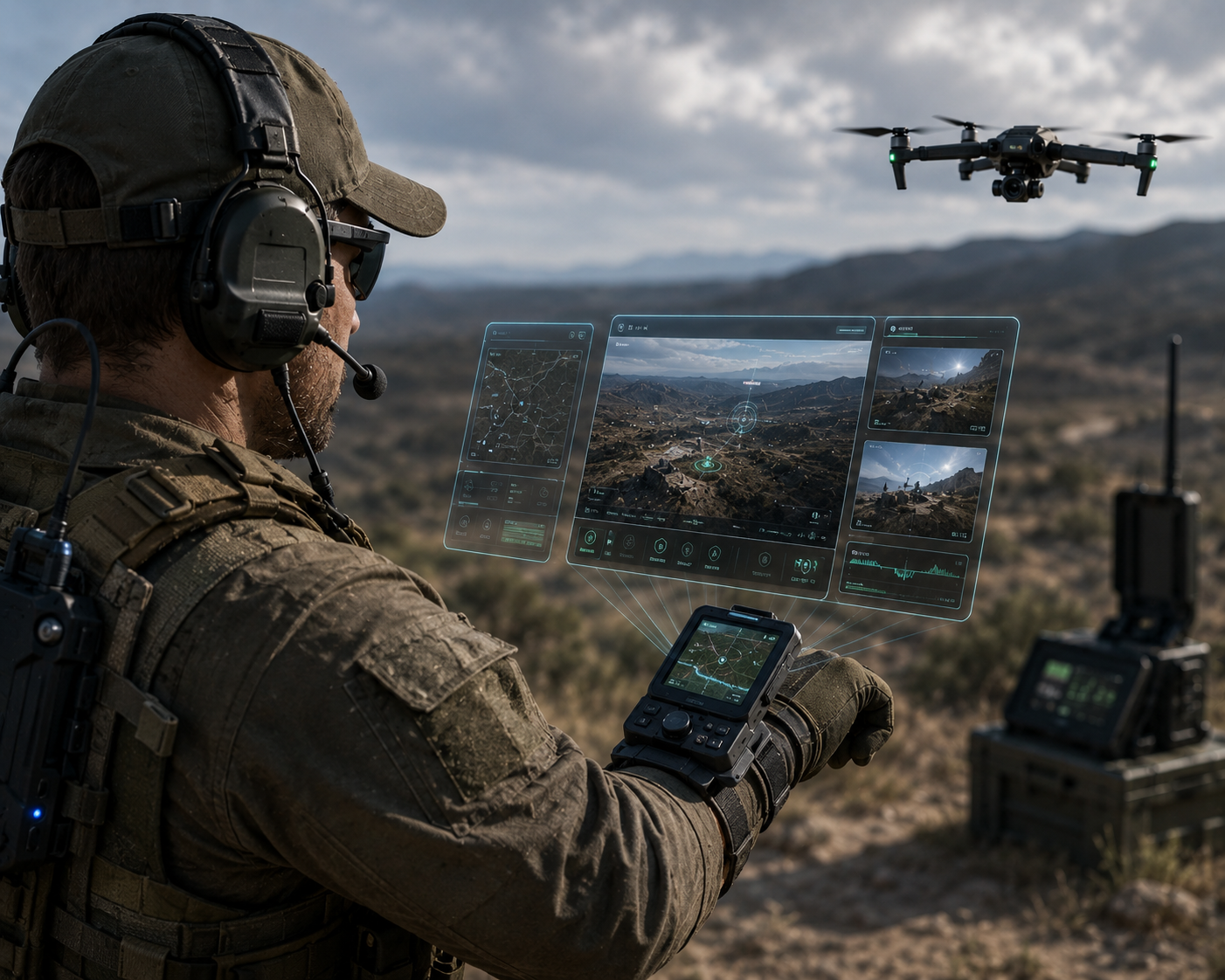
A newly introduced wearable ground control system (Crossbow Block 2 by Neros Technologies) is designed to address that problem by reducing the size of the control station by more than half while maintaining long-range drone connectivity. The compact design allows operators to carry the entire system directly on their body armor rather than relying on dedicated equipment cases or fixed positions.
The wearable controller is designed for FPV drone operations at ranges of up to 25 kilometers. Instead of separating radios, antennas, goggles, and control hardware into multiple components, the redesign consolidates much of the equipment into a body-worn configuration intended to improve freedom of movement.
One of the major engineering changes involves the antenna system. According to Interesting Engineering, FPV drone operators often need to maintain careful antenna alignment while simultaneously flying the aircraft and monitoring targets. To reduce that workload, the new system uses antennas with more than double the beam width of the previous design. A wider beam creates a larger coverage area, reducing the need for precise aiming while helping maintain signal quality during flight.
The platform also incorporates dual receivers, providing redundancy if one signal path degrades. Operators can still use a displaced radio configuration when missions require antennas to be positioned away from the pilot to improve signal geometry or reduce exposure.
Additional design changes focus on usability under operational conditions. Simplified push-pull connectors link the radio, goggles, and controller, making assembly faster and reducing connection errors during night operations or high-stress scenarios. The radio components and pilot control box are also housed in weather-resistant enclosures designed for field use.
From a defense perspective, mobility is becoming increasingly important for FPV drone teams. Operators often need to relocate quickly, maintain concealment, and avoid detection while continuing to control aircraft. Reducing the size and complexity of control equipment can directly affect survivability and operational flexibility.
The system also supports integration with broader command-and-control networks through low-latency video outputs, allowing drone imagery to be shared with battlefield mapping and situational awareness systems in real time. This helps transform FPV drones from standalone assets into connected elements of larger operational networks.























