This post is also available in:
 עברית (Hebrew)
Robotic systems designed for remote or extreme environments face a consistent limitation: power. Movement alone can consume a significant portion of a robot’s energy, often around 20% of total battery capacity. In areas where recharging or replacing batteries is impractical, such as deserts, polar regions, or remote operational zones, this constraint limits mission duration and effectiveness.
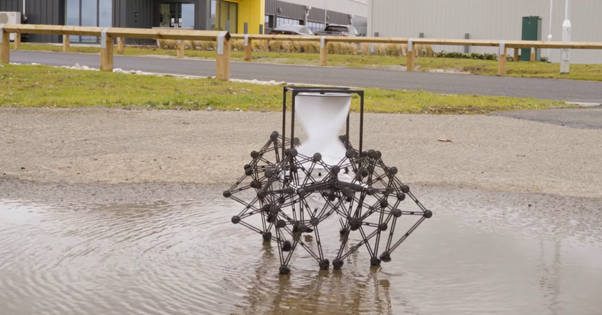
A newly developed prototype, named WANDER-bot, takes a different approach by removing batteries from the equation for mobility altogether. The robot relies on wind as its primary energy source, converting airflow into mechanical motion that drives its legs. This allows it to operate continuously in environments where wind is available, without the need for traditional power systems to support movement.
The design combines two established mechanical concepts. A vertical-axis wind turbine captures energy from the environment, while a multi-legged linkage system translates that energy into walking motion. This setup eliminates the need for electric motors for locomotion, reducing both energy consumption and system complexity.
Beyond propulsion, the robot is built entirely using 3D-printed components. According to Interesting Engineering, its modular structure enables rapid repairs by replacing individual parts rather than entire systems. In remote scenarios, this could allow operators to produce spare components on-site, avoiding long supply chains and reducing downtime.
Another advantage is the redistribution of energy use. With movement powered mechanically, onboard electronics such as sensors or cameras can operate using smaller, lighter power sources. This supports longer missions focused on data collection rather than energy management.
From a defense and homeland security perspective, such a system could support persistent monitoring in areas where logistics are limited. Wind-powered mobility reduces the need for resupply, making it suitable for border surveillance, remote sensing, or long-duration reconnaissance in harsh terrain. Its low complexity and repairability also make it more resilient in environments where maintenance capabilities are limited.
While still in early development, the concept highlights a shift toward simpler, self-sufficient robotic systems. Future iterations are expected to improve maneuverability, enabling the platform to navigate more complex terrain while maintaining its core advantage: the ability to operate with minimal reliance on traditional energy infrastructure.