

This post is also available in:
 עברית (Hebrew)
Coordinating large numbers of unmanned systems has become one of the central challenges of modern autonomy. Most drone operations still depend on centralized control, identical platforms, or constant human oversight. That approach breaks down when communications are disrupted, GPS is unavailable, or platforms with different roles are expected to work together in real time. As missions grow more complex, especially in contested or remote environments, the limits of traditional control models are increasingly clear.
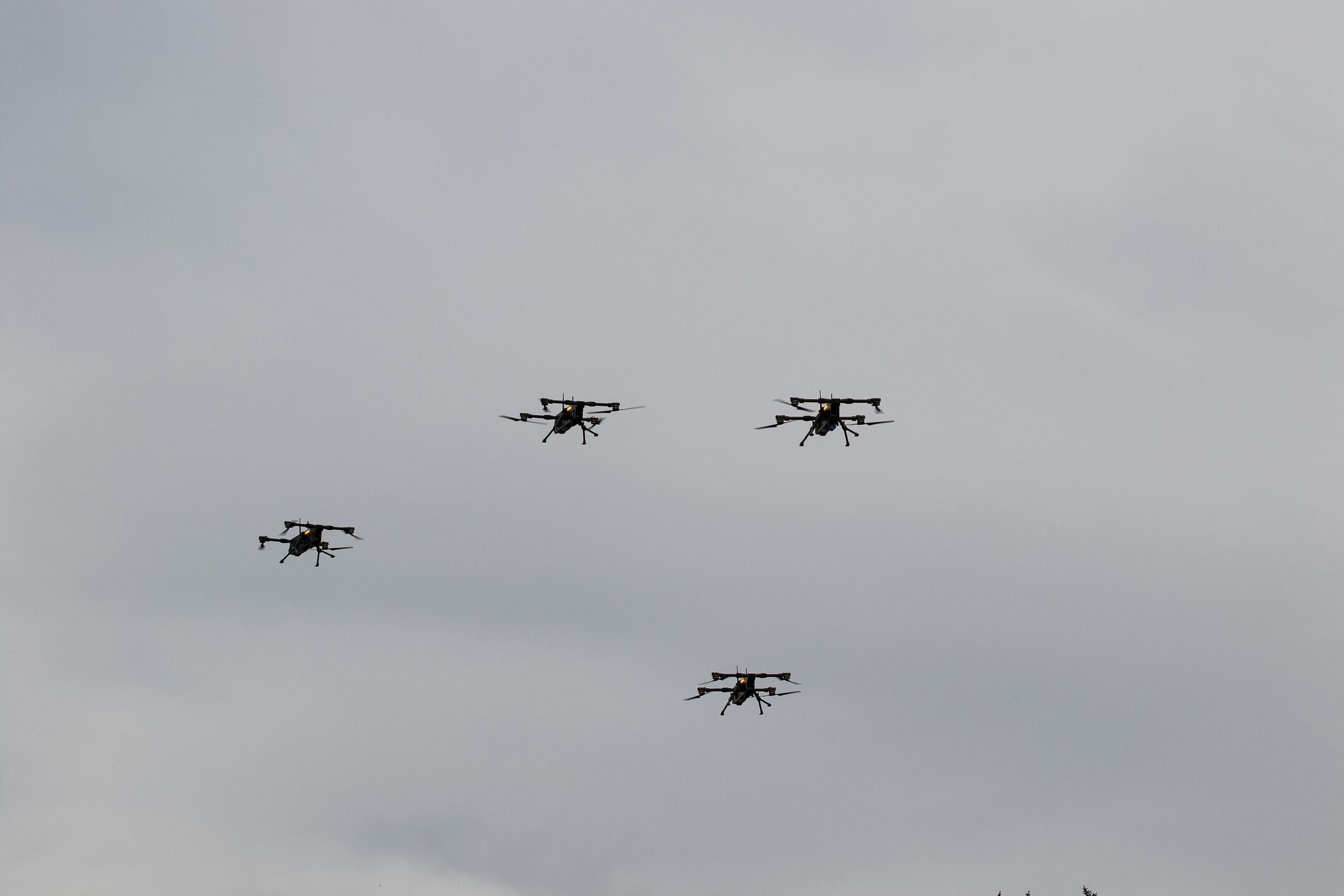
A recent flight test demonstrated a different solution: fully autonomous swarming across dissimilar drone types. During the trial, multiple unmanned aircraft with distinct designs and missions operated together as a single, coordinated system. Rather than relying on one controller or a lead drone, each platform made its own decisions while contributing to a shared mission objective.
The system (called IntelliSwarm) enabling this behavior is designed around edge-based artificial intelligence. Autonomy, coordination, and flight control are handled directly onboard each vehicle, allowing the swarm to function even when external navigation signals or centralized links are unavailable. According to NextGenDefense, drones exchange mission data over a secure network, continuously updating their understanding of the environment and each other’s status. If a vehicle is lost or a task becomes impossible, roles are reassigned automatically and the mission continues.
A key aspect of the test was heterogeneity. The swarm combined loitering munition-type platforms (Banshee) with reconnaissance-class drones (Red Cat), showing that different vehicle types can cooperate without custom integration for each pairing. Flight control and swarming logic are unified within a single autonomy stack, allowing platforms of different size, origin, and purpose to behave as one adaptive force. Each drone acts as an active participant, not a scripted follower, contributing sensing, movement, or effects based on real-time conditions.
From a defense and homeland security perspective, this capability is highly relevant. Autonomous, resilient swarms can support missions such as border surveillance, area denial, reconnaissance, and precision strike without constant operator input. The ability to function in GPS-denied or electronically contested environments addresses a key vulnerability in current unmanned systems. Heterogeneous swarms also allow forces to mix sensors, decoys, and effectors, complicating adversary defenses while reducing reliance on single high-value platforms.
Beyond military use, the same architecture applies to disaster response, infrastructure monitoring, and search-and-rescue operations, where communication gaps and dynamic conditions are common. By shifting intelligence and coordination to the edge, autonomous swarming moves from controlled demonstrations toward practical deployment.
The recent test shows that coordinated autonomy across mixed platforms is no longer theoretical. It marks a step toward unmanned systems that can operate as cohesive teams, adapt under pressure, and continue functioning when traditional control methods fail.























