

This post is also available in:
 עברית (Hebrew)
Small units operating at the edge of the battlefield often face a familiar problem: they need precision strike capability, but traditional close air support may be unavailable, delayed, or too risky to call in. In contested environments, manned aircraft are exposed to air defenses, while larger drones require prepared runways and robust command links. This gap has driven growing interest in compact systems that can launch quickly, operate autonomously, and deliver accurate firepower without heavy logistical support.
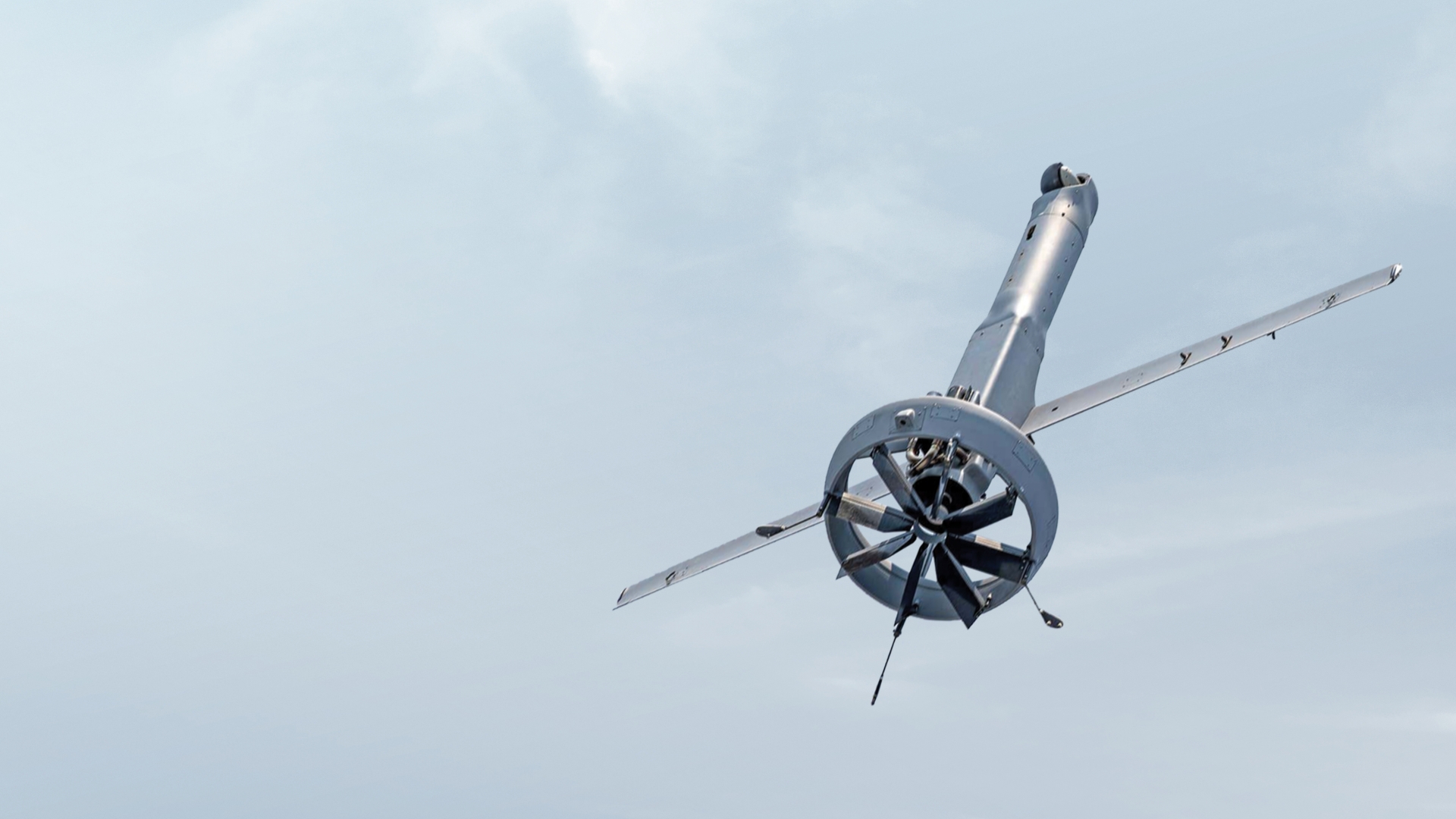
A recent integration effort highlights how that gap could be filled. A vertical takeoff and landing unmanned aircraft has been paired with a lightweight, laser-guided air-to-ground missile, transforming it from a reconnaissance platform into a self-contained strike asset. The combination brings together a drone designed for flexible launch and recovery with a munition intended specifically for drone deployment.
The missile, known as the Multi-purpose Drone-launched Missile (L-MDM), is built around a modular design and laser guidance. According to NextGenDefense, this allows it to engage ground targets with precision while keeping operators at a safe distance. Its architecture is suited for integration on both rotary-wing and fixed-wing unmanned platforms, making it adaptable across different mission profiles.
The drone carrying it is designed around a hybrid concept. It takes off and lands vertically, but transitions to efficient fixed-wing flight for cruise. This allows operations from ship decks, confined clearings, or improvised forward sites, without the need for runways. With a wingspan of just under four meters and a maximum takeoff weight of about 75 kilograms, it can carry payloads of up to 18 kilograms depending on configuration.
Autonomy is a central element of the system. An onboard autonomy stack manages navigation, sensor use, and recovery with limited operator input. This is particularly relevant in environments where GPS is unreliable or electronic warfare is present, reducing the burden on remote crews and increasing mission resilience.
From a defense perspective, the armed configuration offers frontline forces a stand-alone strike option. Units can deploy a single platform capable of intelligence gathering and immediate precision engagement, shortening the sensor-to-shooter loop. Such systems are well-suited for maritime security, border operations, and expeditionary missions where access and response time are critical.
The next phase focuses on flight testing and performance evaluation, validating missile handling, targeting accuracy, and mission reliability under operational conditions. If successful, the integration demonstrates how compact VTOL drones can evolve into multi-role platforms, combining surveillance and precision strike in a package small enough to operate almost anywhere.























