

This post is also available in:
 עברית (Hebrew)
Modern military operations increasingly rely on unmanned systems, but coordinating them effectively remains a challenge. Drones operating in the air, on the surface, or below it often function as isolated assets, each tied to its own control system and sensor feed. This fragmentation limits their value, especially in complex missions that demand shared awareness, rapid decision-making, and secure coordination across domains.
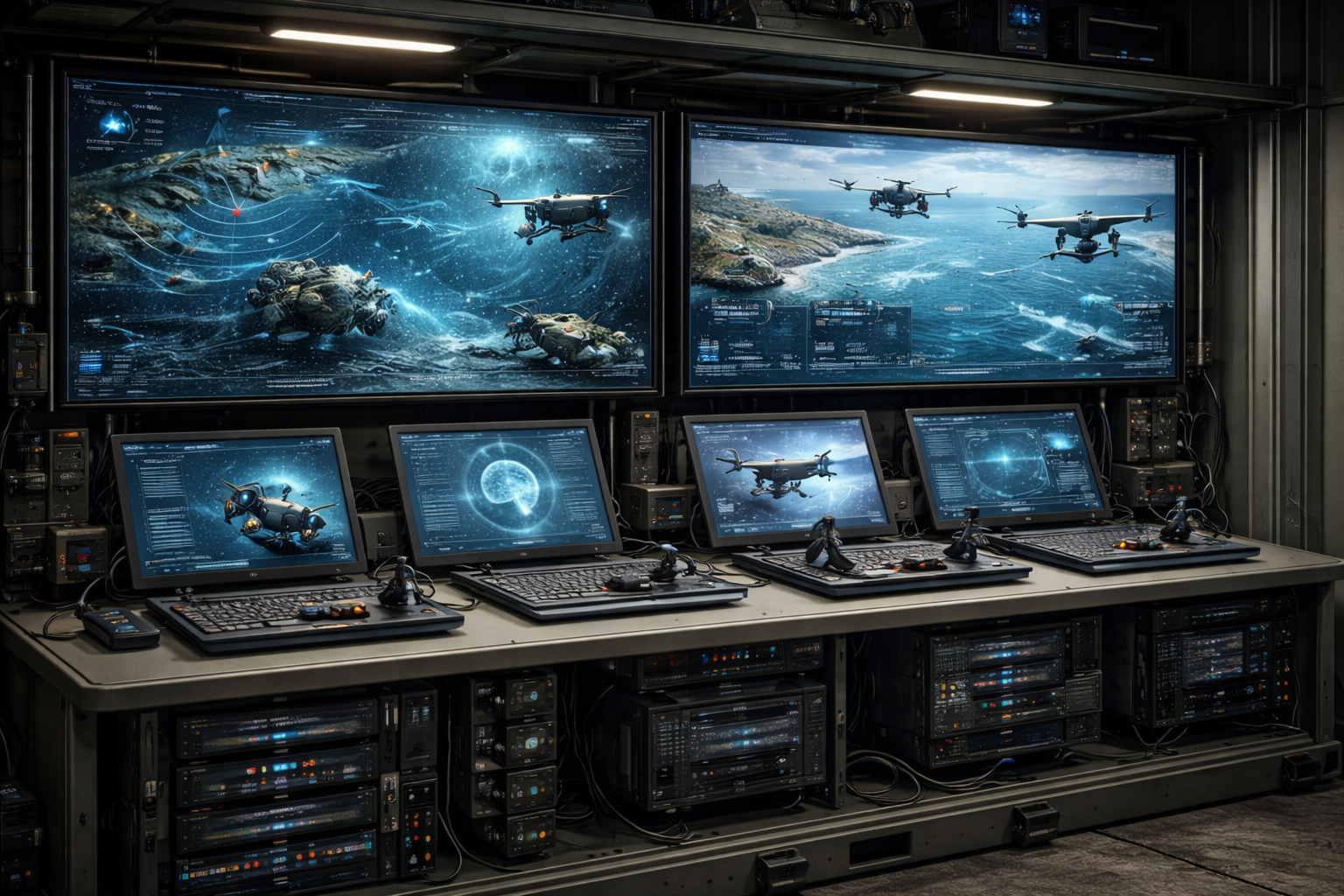
Recent live trials in the UK point to a different model. A new mission autonomy setup (MDCX‑X and Vigilance) demonstrated how multiple unmanned platforms can be controlled at the same time while sharing data in real-time. During the exercise, a single autonomy framework managed both a quadcopter and a fixed-wing unmanned aircraft, while simultaneously linking them to maritime sensors through an airborne communications relay. The result was a coordinated picture of the operational environment rather than disconnected streams of information.
According to NextGenDefense, at the core of the demonstration was a mission autonomy platform designed to handle multi-vehicle control without relying on centralized, vulnerable infrastructure. The system issued commands, managed flight behavior, and synchronized tasks across different types of drones. In parallel, a mission and sensor management layer fused incoming data, including information from underwater sensors, and distributed it securely to all participating assets. This allowed air and maritime elements to operate as part of a single, coherent mission.
A key aspect of the approach is its emphasis on open architecture. The autonomy software is built to integrate with existing national sensor systems rather than replacing them. Sensitive data can be processed and shared without being exposed outside approved boundaries, making the system suitable for use among allied forces with different security requirements. This flexibility is intended to accelerate adoption and adaptation rather than locking operators into proprietary ecosystems.
Coordinated autonomy across air and maritime domains supports missions such as intelligence collection, anti-submarine warfare, surveillance of sea lanes, and protection of carrier or expeditionary groups. The ability to control multiple unmanned platforms simultaneously reduces operator workload while increasing coverage and responsiveness. It also lays the groundwork for future concepts where human commanders supervise missions rather than micromanage individual vehicles.
The trials also highlighted the role of secure communications. By using drones as relay nodes, the system maintained links between sensors and controllers without fixed infrastructure, an important consideration in contested environments.
Taken together, the demonstration suggests that autonomy is moving beyond single-platform experiments toward integrated, multi-domain operations. As unmanned systems become more numerous, the ability to make them collaborate securely and intelligently may matter as much as the performance of any individual drone.























