This post is also available in:
 עברית (Hebrew)
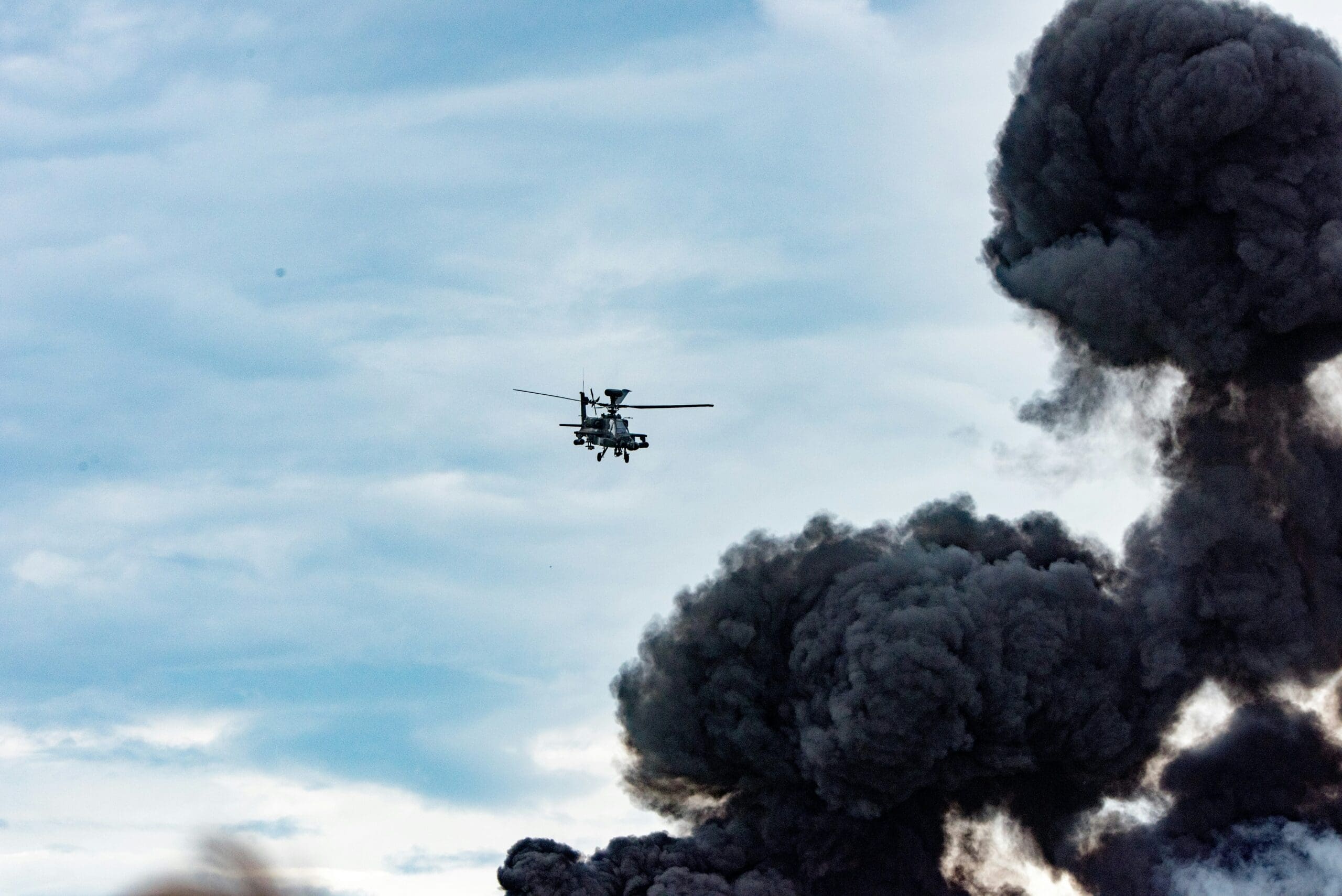
Modern attack helicopters face a growing operational dilemma. While they remain valuable for close air support and maritime strike, their standard weapons force crews to fly dangerously close to defended targets. Legacy helicopter-launched missiles such as Hellfire were designed for shorter engagements, at a time when air defenses were less dense and less mobile. Against modern surface-to-air systems, especially in littoral or contested maritime zones, that limited reach has become a real constraint.
A recent U.S. Marine Corps test points to a possible way out of this problem. During a low-altitude firing over the Atlantic Test Range, Marines launched a new long-range munition known as Red Wolf from an AH-1Z Viper attack helicopter. The weapon successfully struck a sea-based target, marking an important step in the Marine Corps’ Long Range Attack Missile (LRAM) effort. The goal is straightforward: allow rotary-wing aircraft to engage targets from distances far beyond what current helicopter weapons can manage.
According to Interesting Engineering, in practical terms, the system dramatically expands the engagement envelope. Whereas Hellfire reaches roughly 34 kilometers and other medium-range missiles even less, the system is designed to operate at ranges exceeding 370 nautical kms while flying at low altitude. That standoff distance allows helicopters to remain outside enemy air-defense coverage rather than pushing into it. For crews operating close to hostile coastlines or ships, this shift could significantly change mission planning.
What makes the system particularly notable is that it is not limited to a single “launch and forget” strike role. During the test, it also functioned as a sensor and networking node, collecting and sharing targeting data while in flight. This enables it to support follow-on attacks by other aircraft, ships, or ground forces, effectively acting as a bridge between sensors and shooters. They also demonstrated a tablet-based control interface, reducing cockpit workload and simplifying operation.
From a broader defense perspective, systems like this reflect a shift toward affordable, multi-role “launched effects.” Beyond kinetic strikes, the same platform can be configured for communications relay, electronic warfare, signal detection, or decoy missions. With a payload capacity of up to 11.3 kgs, subsonic speed, and over an hour of endurance, it offers flexibility without the cost of full-scale cruise missiles.
As militaries prepare for high-end conflicts characterized by long-range sensors and layered defenses, extending the reach of helicopters without exposing crews is becoming increasingly critical. This system represents one approach to solving that problem, combining range, networking, and adaptability in a single, relatively low-cost system.