This post is also available in:
 עברית (Hebrew)
Modern air forces face a growing challenge in evaluating new air-to-air weapons: missiles must be tested against maneuvering, fighter-size targets, not simulators or scaled-down drones. Without realistic opponents in the sky, pilots cannot safely rehearse complex engagements, and engineers struggle to validate guidance systems and warhead performance. As adversaries introduce more advanced aircraft, the demand for high-fidelity training targets has only increased.
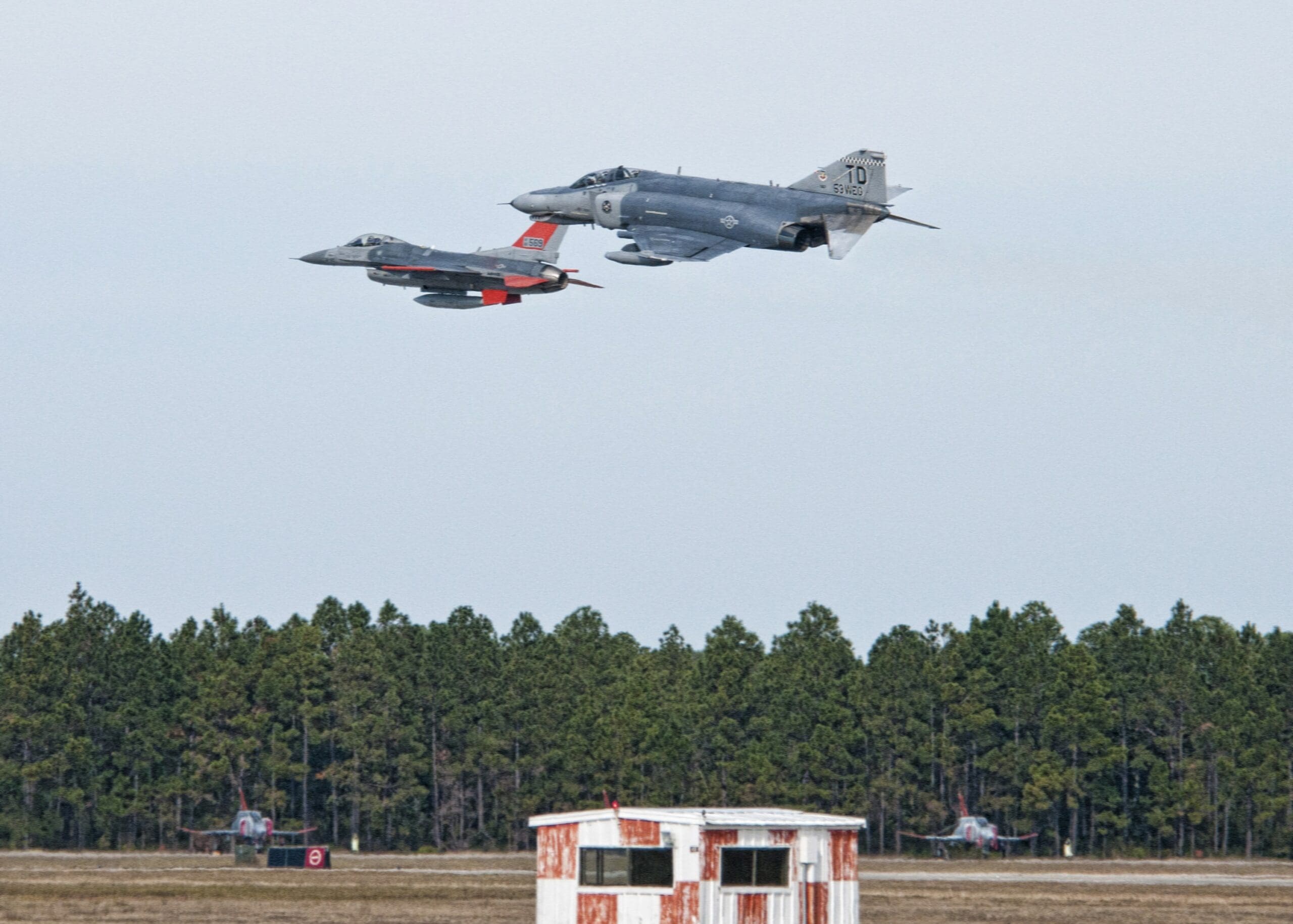
To meet that need, a long-running effort to convert retired F-16s into remotely operated target drones has now reached its final delivery milestone. The most recent aircraft marks the completion of a 15-year program in which older F-16A and F-16C models were pulled from storage, restored to flight condition, and fitted with hardware that allows them to operate with or without a pilot. Once modified, these “QF-16” aircraft can execute controlled flights, carry full telemetry suites, and perform evasive maneuvers while being tracked or engaged by live weapons.
Full-scale aerial targets provide an essential test environment that cannot be replicated with synthetic tools alone. They allow aircrews and engineers to examine missile behavior against real aerodynamic performance, radar signatures, and thermal characteristics. This contributes directly to readiness, particularly as Western air forces prepare for near-peer threats with sophisticated aircraft and electronic warfare capabilities.
According to Interesting Engineering, each aircraft begins its second life at the American Air Force’s storage facility in Arizona, where the jets are selected, overhauled, and re-equipped with remote-flight controls, safety interlocks, telemetry transmitters, and specialized instrumentation. The aircraft can fly autonomously during tests yet retain the option of a human pilot for transit flights or conventional training activities. During live-fire events, onboard sensors send detailed data on missile tracking, proximity cues, and detonation effectiveness, giving engineers a complete picture of system performance.
The final airframe to join the fleet originally entered service in the mid-1980s before its retirement and long-term storage. Although no additional conversions are planned, the drone fleet will remain in service well into the next decade, supported through logistics and maintenance contracts that keep the specialized equipment operational.
As new fighters and next-generation missile systems enter development, the aircraft’s role as a full-scale test asset is expected to remain a critical component of air combat preparation.