

This post is also available in:
 עברית (Hebrew)
Modern militaries face a growing challenge: traditional unmanned aircraft such as MALE-class drones offer advanced ISR and strike capabilities, but their high cost and vulnerability limit their usefulness in dense air-defense environments. At the same time, low-cost loitering munitions like Iran’s Shahed-136 have reshaped conflicts by enabling mass deployment at a fraction of the cost of defending against them. This cost asymmetry has placed pressure on defense planners to rethink how attritable drones should fit into future operations.
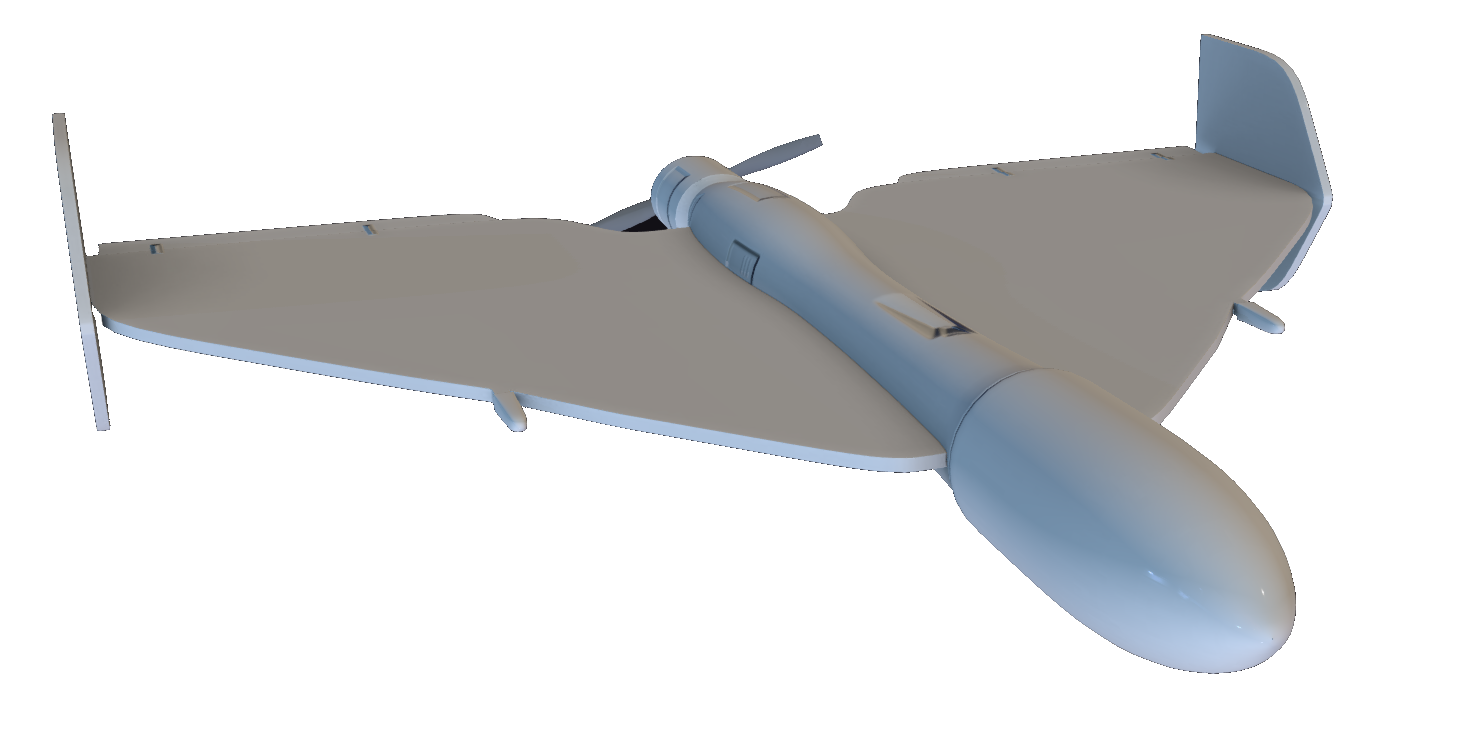
The United States has now taken a step in that direction. In early December, U.S. Central Command (CENTCOM) revealed that it has fielded a new class of expendable attack drones under the LUCAS (Low-cost Unmanned Combat Attack Systems) program. The drones debuted operationally under Task Force Scorpion Strike, a new unit focused on scalable, autonomous strike capabilities.
According to Interesting Engineering, the drones are single-use loitering munitions designed to provide long-range attack options at roughly $35,000 per unit—a price point intentionally comparable to the Shahed-136. Unlike legacy U.S. platforms such as the MQ-9 Reaper, which cost tens of millions of dollars, the drones are built to be lost, launched in volleys, and replenished quickly. CENTCOM notes that the system supports multiple launch methods, including catapult, rocket-assisted takeoff, and vehicle-mounted rails, offering flexibility for forward-deployed units.
The core technology is informed by analysis of a captured Shahed-136, which U.S. engineers examined to understand how Iran had achieved long-range and low manufacturing costs. While reverse-engineering adversary systems is not new in the region, this marks an unusual case of the U.S. adopting design optimization principles pioneered by its rivals—lean manufacturing, simplified airframes, and modular assembly.
The use of attritable drones enables proportional response and persistent pressure in contested areas without risking high-value assets. This is especially relevant in CENTCOM’s theater, where Iran and aligned groups have repeatedly used low-cost drones against U.S. forces and partners. An American counterpart provides a means to neutralize launch sites, disrupt militia logistics, or conduct rapid retaliation while maintaining strategic flexibility.
The broader trend is clear: the economics of unmanned warfare are shifting. As nations increasingly rely on low-cost, high-volume systems to saturate air defenses, the United States is signaling that it intends to compete on that front rather than rely exclusively on exquisite platforms. The drones represents an early step in a wider transition toward affordable, high-throughput unmanned strike capabilities that reflect the realities of modern conflict.























