

This post is also available in:
 עברית (Hebrew)
Modern battlefields place growing demands on unmanned ground vehicles, which are increasingly used not only for logistics but also for frontline support. Traditional armored vehicles face mounting threats from drones, loitering munitions, and anti-vehicle weapons, making remotely operated systems an attractive way to reduce risk to personnel. Ukraine’s largest UGV, known as the Protector, has now been upgraded to meet these realities with a new combat-oriented configuration.
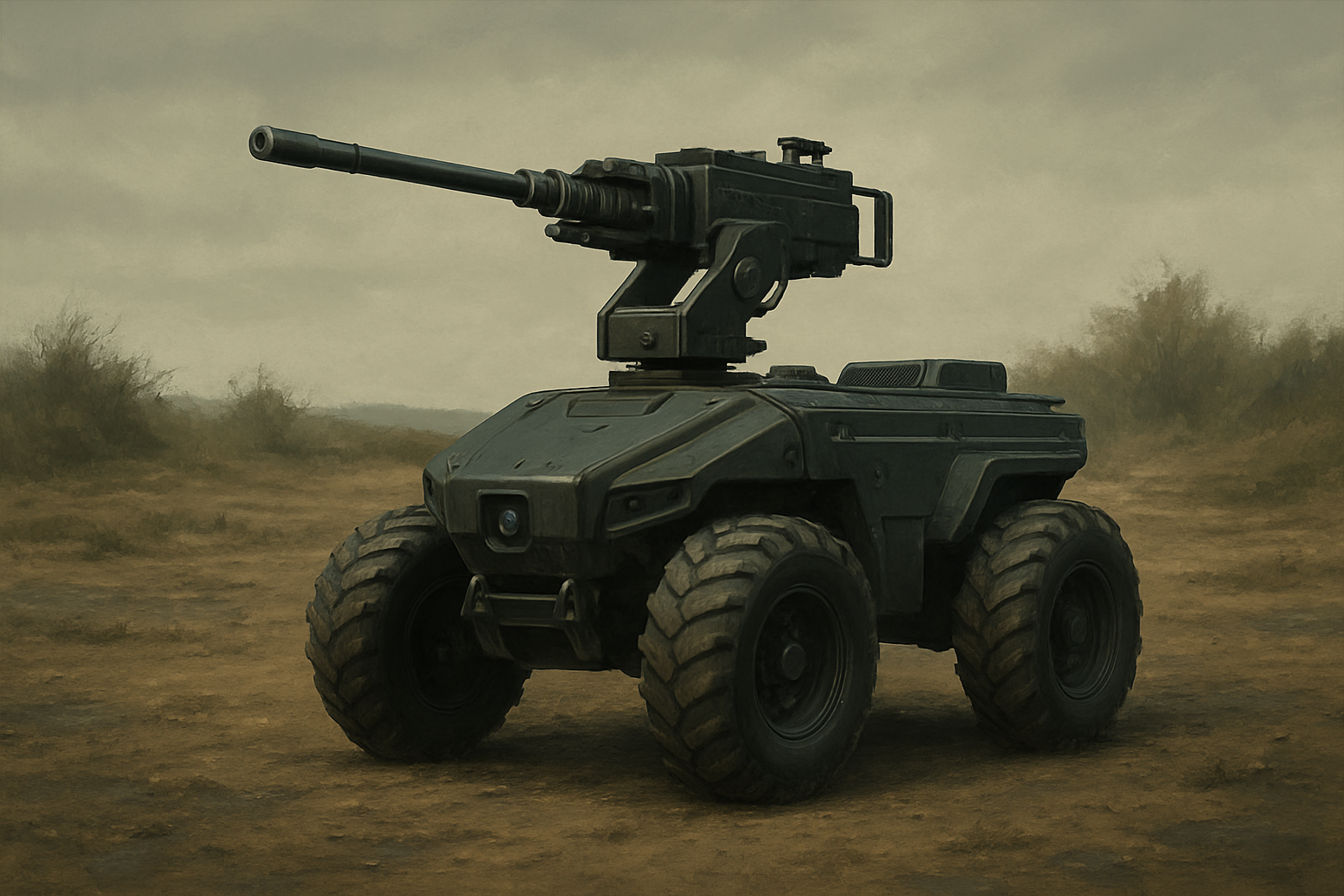
According to NextGenDefense, originally designed as a robust hauler for medical evacuation, supply transport, and engineering tasks, the UGV has been reconfigured with a remotely operated Tavriia-12.7mm turret. The module mounts a Browning M2 heavy machine gun supported by a digital fire-control system, enabling operators to track and engage ground and aerial targets. The system has been tested in both stationary and mobile firing modes, confirming that the platform can deliver suppressive fire while maintaining stability and control.
The problem this upgrade seeks to address is simple – crews operating near the frontline face escalating threats, and every movement across exposed areas increases the chance of casualties. By mounting a heavy weapon system on a remote-controlled vehicle, operators can deliver fire support, cover troop movements, or counter drone activity from a protected position. The same platform can still perform evacuation or resupply missions, consolidating roles that otherwise require multiple vehicles and personnel.
Technically, the UGV retains its heavy-duty mobility features. It supports payloads of up to 700 kg, travels as far as 400 km, and uses an internal combustion engine that provides endurance for extended missions. All-wheel drive and run-flat tires allow it to traverse damaged roads and rough terrain—even after sustaining hits. The vehicle can also be adapted for electronic warfare roles, making it flexible for a range of operational needs.
Such UGV configurations highlight a trend toward multi-role unmanned platforms capable of carrying heavier weapons and integrating more advanced sensors. As remote-control and autonomous technologies improve, systems can take on increasingly complex tasks while reducing exposure for human crews. Approved for operational use by Ukraine’s Ministry of Defense in 2025, the upgraded UGV reflects how rapidly battlefield robots are evolving in response to modern threats.























