


The Battle for the Sky Now Depends on Flying Data Hubs
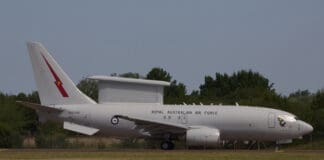
Modern air operations depend heavily on airborne early warning aircraft to detect threats, coordinate forces, and manage complex engagements across large areas. But many...
A Hidden Long-Range Missile Designed to Stay Invisible Until Launch
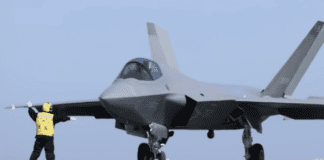
Modern stealth aircraft are designed around one key principle: avoiding detection for as long as possible. But carrying large external weapons can undermine that...

A Visual Intelligence Startup Raised $60 Million
Modern intelligence systems are facing a growing problem: an overwhelming flood of visual information from countless sources, such as security cameras, drones, bodycams, social...

A Smarter Camera That Tracks Movement, Not Frames
Modern sensing systems face a growing challenge: too much data. Traditional cameras capture and process full image frames continuously, even when little is changing...
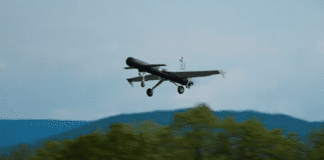
This Kamikaze Drone Can Strike Targets Almost 1,000 KMs Away
Long-range strike capabilities often face a trade-off between endurance, precision, and survivability. Systems that can reach distant targets may depend heavily on satellite navigation,...

Tracking the Untrackable: New Radar Takes on Hypersonic Missiles
Detecting hypersonic missiles remains one of the most difficult challenges in modern air defense. Traveling at speeds above Mach 5, these weapons generate extreme...
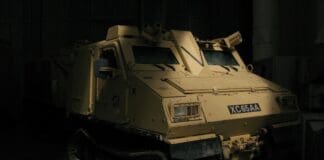
Speed Meets Firepower: The Next-Gen Battlefield Robot
Modern military operations are increasingly defined by speed, flexibility, and reduced risk to personnel. At the same time, forces operating in complex environments, such...
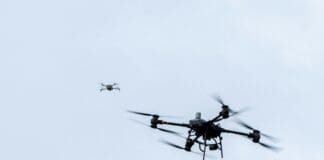
A New Way to Stop Drones: Just Listen
As small drones become more accessible and harder to detect, traditional air defense methods are facing growing limitations. Many systems rely on radar or...
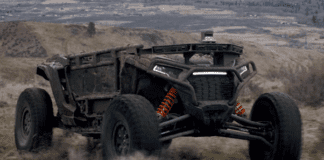
This Robot Sees Threats on the Ground — and Now in...
Unmanned ground vehicles are increasingly used to reduce risk to personnel in complex environments, but they face a persistent weakness: exposure to small, hard-to-detect...

A New Kind of Stealth: Using Radar Energy Instead of Batteries
Modern military and civilian systems face a growing power and connectivity problem. Sensors, communications, and autonomous platforms all demand more energy, yet batteries add...

A $200M Buyout of an Israeli Company Signals the Growing Importance...
As military operations become increasingly data-driven, defense companies are racing to integrate software capable of coordinating sensors, drones, air defense systems, and battlefield assets...

A Paint That Shows Exactly Where and How Hard You Were...
Measuring impact usually requires sensors, wiring, and data systems that add complexity, weight, and cost. In many cases, such as monitoring structural stress, tracking...
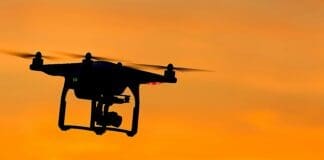
A Counter-Drone System Anyone Can Operate
The growing use of small drones is creating a new operational burden: countering them often requires trained specialists, dedicated equipment, and time-consuming setup. In...
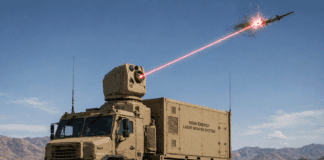
The Push to Stop Drones With Beams Instead of Missiles
The growing use of small drones is forcing a rethink in short-range air defense. Commercial quadcopters and improvised FPV systems are inexpensive, easy to...
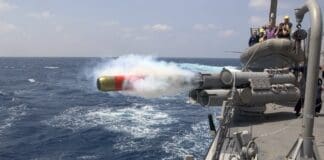
A New Layered Defense for Evolving Torpedo Threats
Undersea threats are becoming harder to counter. Modern torpedoes are faster, quieter, and more capable of adjusting their course mid-run, leaving ships with very...
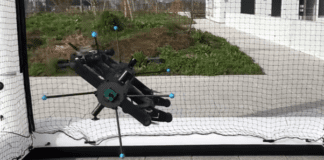
Forget Tilting: A New Way for Drones to Fly
Traditional drones rely on a simple principle: to move forward, they must tilt. This dependence on body orientation limits maneuverability, slows response time, and...
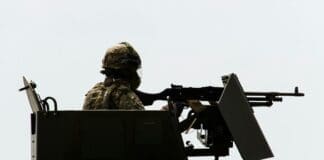
Fighting Drones Without Leaving the Tank
Modern armored units are facing a new challenge: drones are no longer a rare threat, but a constant presence. Small UAVs can locate, track,...

Can Bamboo Replace Carbon Fiber in Drones? New Tech Says Yes
The push toward more sustainable drone designs has introduced a less obvious technical challenge: materials matter. While bamboo offers clear advantages as a lightweight,...
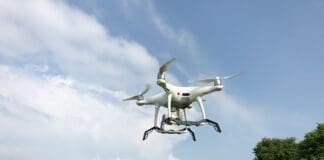
Powering Drones From the Ground—While They Fly
Drone operations are often limited by one key factor: endurance. Even advanced platforms must return to base for recharging or battery replacement, creating gaps...

Seeing 450 Km Ahead: A New Radar Takes Shape
The rapid growth of aerial threats, from long-range aircraft to small, low-flying drones, has exposed limitations in traditional radar systems. Detecting objects at extended...
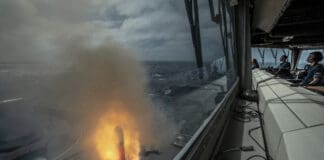
A Cruise Missile Fired From the Ground — and Retargeted Mid-Flight
Modern military operations increasingly rely on long-range precision fires, but many of these capabilities have traditionally depended on ships or aircraft. In heavily contested...
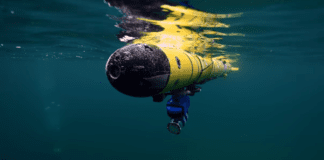
When Divers and Robots Start Thinking Together
Underwater operations present a persistent challenge for both humans and machines. Visibility is often limited, communication is constrained, and navigation can quickly become uncertain....
Latest

These AI Agents Treated a Security Filter Like a Problem to...
Giving AI agents access to the internet creates a problem that ordinary web automation does not necessarily present. When conventional software encounters a restriction,...