This post is also available in:
 עברית (Hebrew)
Unmanned surface vessels are rapidly evolving from reconnaissance platforms into armed combat systems capable of operating alongside conventional naval forces. As maritime threats become more diverse, navies are seeking autonomous vessels that can perform surveillance, launch precision strikes, and reduce the need to place crews in high-risk environments.
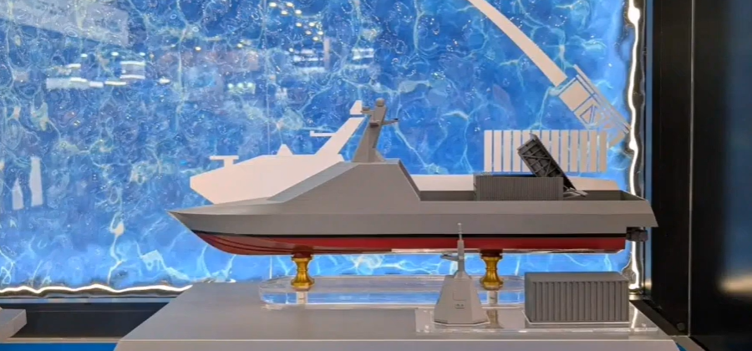
A newly unveiled unmanned surface vessel (Striker-S by Hanwha Systems) reflects that shift by combining modular mission equipment with long-range strike capability in a platform designed for sustained operations.
The vessel measures more than 35 meters in length and is built around a modular architecture that allows operators to configure it for different missions. Instead of carrying a fixed payload, it can accommodate up to 10 tons of containerized equipment, enabling rapid reconfiguration between reconnaissance, surveillance, electronic systems, or missile strike roles.
According to NextGenDefense, one of the platform’s defining characteristics is its integration with a long-range rocket and missile system capable of engaging targets at distances of up to 290 kilometers. Depending on the selected munitions, the vessel can support both land-attack missions and anti-ship engagements against moving maritime targets.
Unlike expendable one-way attack vessels, the platform is intended to remain operational after completing its mission. This allows it to conduct repeated patrols, surveillance tasks, and strike operations as part of a broader naval force.
To support these missions, the vessel incorporates an active electronically scanned array (AESA) radar. According to the developer, the radar provides aerial surveillance at distances of up to 50 kilometers while monitoring surface targets out to approximately 30 kilometers. These sensors contribute to target detection, situational awareness, and coordination with other naval assets.
The hull also incorporates angular shaping intended to reduce radar reflections, making the vessel more difficult to detect than conventional designs.
From a defense perspective, large, unmanned surface vessels are expected to play an increasing role in distributed maritime operations. By operating alongside crewed ships, autonomous vessels can extend sensor coverage, carry additional weapons, perform reconnaissance, and undertake higher-risk missions without exposing sailors to direct danger.
The modular payload concept further increases flexibility by allowing the same platform to adapt to changing operational requirements rather than requiring separate vessels for each mission type.
As autonomous naval technologies continue to mature, platforms combining modular payloads, long-range precision weapons, advanced sensors, and reduced-observability features illustrate how unmanned systems are expanding beyond surveillance into increasingly complex combat roles across future maritime operations.