

This post is also available in:
 עברית (Hebrew)
The growing use of small drones around military installations has forced defense organizations to rethink how they protect sensitive facilities. Commercially available unmanned aircraft can be used for surveillance, disruption, or attack, and their relatively low cost allows multiple drones to operate simultaneously, creating challenges for traditional air-defense systems designed to engage larger aerial targets.
A newly expanded counter-drone deployment is intended to address that problem by providing military bases with a system capable of detecting, tracking, and classifying hundreds of airborne threats at the same time.
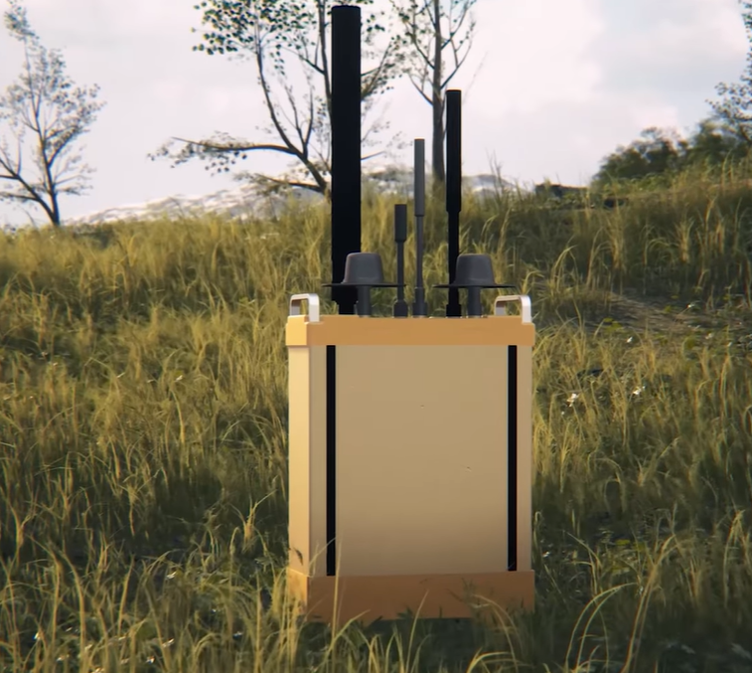
The Titan-MS platform (by AeroVironment) combines multiple sensor types with artificial intelligence to create a single operational picture of the surrounding airspace. Rather than requiring operators to interpret information from separate radar, radio-frequency, or surveillance systems, the software automatically fuses incoming data into one interface, allowing threats to be identified more quickly.
According to Interesting Engineering, the system can monitor more than 500 drones simultaneously. Under certain configurations, its radar can detect aerial targets at distances of up to approximately 59 kms, providing operators with additional reaction time before a drone reaches protected facilities.
Artificial intelligence plays a central role in the platform’s operation. Beyond simply detecting objects, the software helps classify potential threats and continuously tracks their movements. The architecture is also designed to address increasingly autonomous drones that may no longer rely on conventional radio-control links, reducing dependence on radio-frequency detection alone.
Another notable feature is the platform’s software-defined architecture. Rather than replacing hardware whenever new drone threats emerge, updates can be delivered through software improvements, allowing the system to evolve as unmanned technologies continue to change.
From a defense perspective, layered counter-drone protection is becoming a critical component of base security. Military installations must contend with unauthorized commercial drones, autonomous aircraft, and increasingly sophisticated unmanned systems that can challenge conventional surveillance equipment. AI-assisted sensor fusion provides a way to manage these complex airspaces without overwhelming human operators.
The latest procurement expands deployment of the system across additional military locations, reflecting continued investment in technologies designed specifically for small unmanned aerial threats.
As drone capabilities continue advancing, counter-UAS systems are increasingly shifting from simple detection tools toward integrated platforms that combine radar, multiple sensors, artificial intelligence, and continuous software updates to provide adaptable protection against evolving aerial threats.























