This post is also available in:
 עברית (Hebrew)
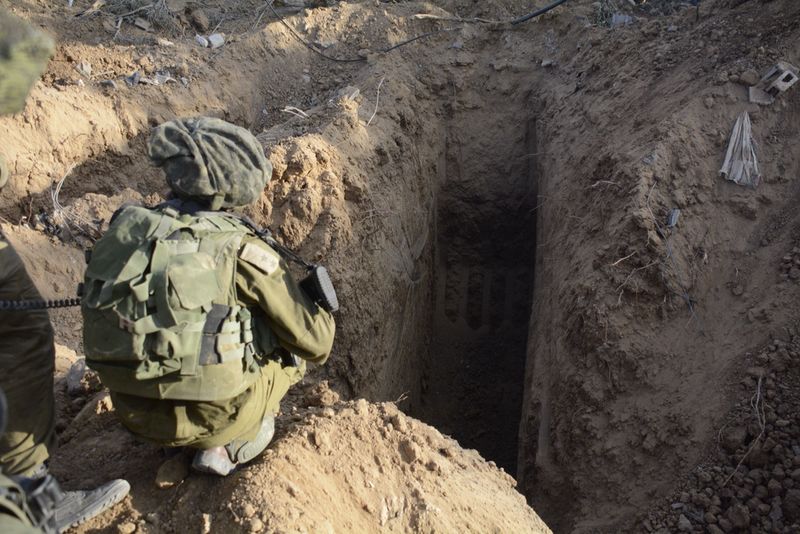
Over the past several decades, nations and armed organizations have invested heavily in moving strategic assets underground. Combat tunnels, bunkers, ammunition depots, command centers, and even large-scale underground facilities have become an integral part of the modern battlefield. While Western militaries have developed advanced capabilities in the air, at sea, and on land, countering underground infrastructure has remained a significant challenge, relying primarily on bunker-busting munitions or the risky deployment of combat engineers.
Israeli startup Traysar, which recently emerged from stealth, is taking a different approach to the problem. The company has raised approximately $25 million at a valuation exceeding $100 million and is developing systems specifically designed for underground operations, from dismantling combat tunnels to neutralizing buried facilities and rapidly constructing underground infrastructure.
The company’s first system is a compact autonomous vehicle engineered to operate inside tunnels with dimensions typical of military tunnel networks. The vehicle is remotely controlled via a fiber-optic link but also incorporates autonomous capabilities that allow it to continue operating even if communications are lost, which is a common occurrence in underground environments. It is designed to overcome obstacles such as sandbags, blast doors, and mines, reach the end of a tunnel, and then move back while dismantling the tunnel from the inside out. It can also drill into designated points and place explosive charges for the controlled collapse of the tunnel structure.
At the same time, the company is developing a second platform based on horizontal directional drilling technologies that are currently used primarily for installing civilian infrastructure. The system is designed to move underground, create subsurface pathways, and transport payloads, sensors, or equipment below the surface. According to the company’s vision, future versions could be scaled up to transport larger equipment and eventually even personnel.
These developments combine expertise from the mining, drilling, and tunneling industries with military operational requirements, while adapting to different geological conditions. According to the company, the systems have already undergone testing at dedicated facilities and inside tunnels in Gaza.
Beyond tunnel warfare, the technology could also serve defensive purposes. Many countries are exploring ways to relocate command centers, data centers, and critical infrastructure underground to protect them from missiles, drones, and air attacks. If these capabilities become operational, they could reshape not only underground warfare but also the way strategic infrastructure is protected in future conflicts.