

This post is also available in:
 עברית (Hebrew)
The growing use of drones on the battlefield is creating a new challenge for air defense systems. Small, low-cost drones can operate individually or in swarms, carry payloads, collect intelligence, and strike targets at short ranges. Against such threats, conventional interception solutions can be either too expensive or limited in the number of targets they can engage within a short period of time.
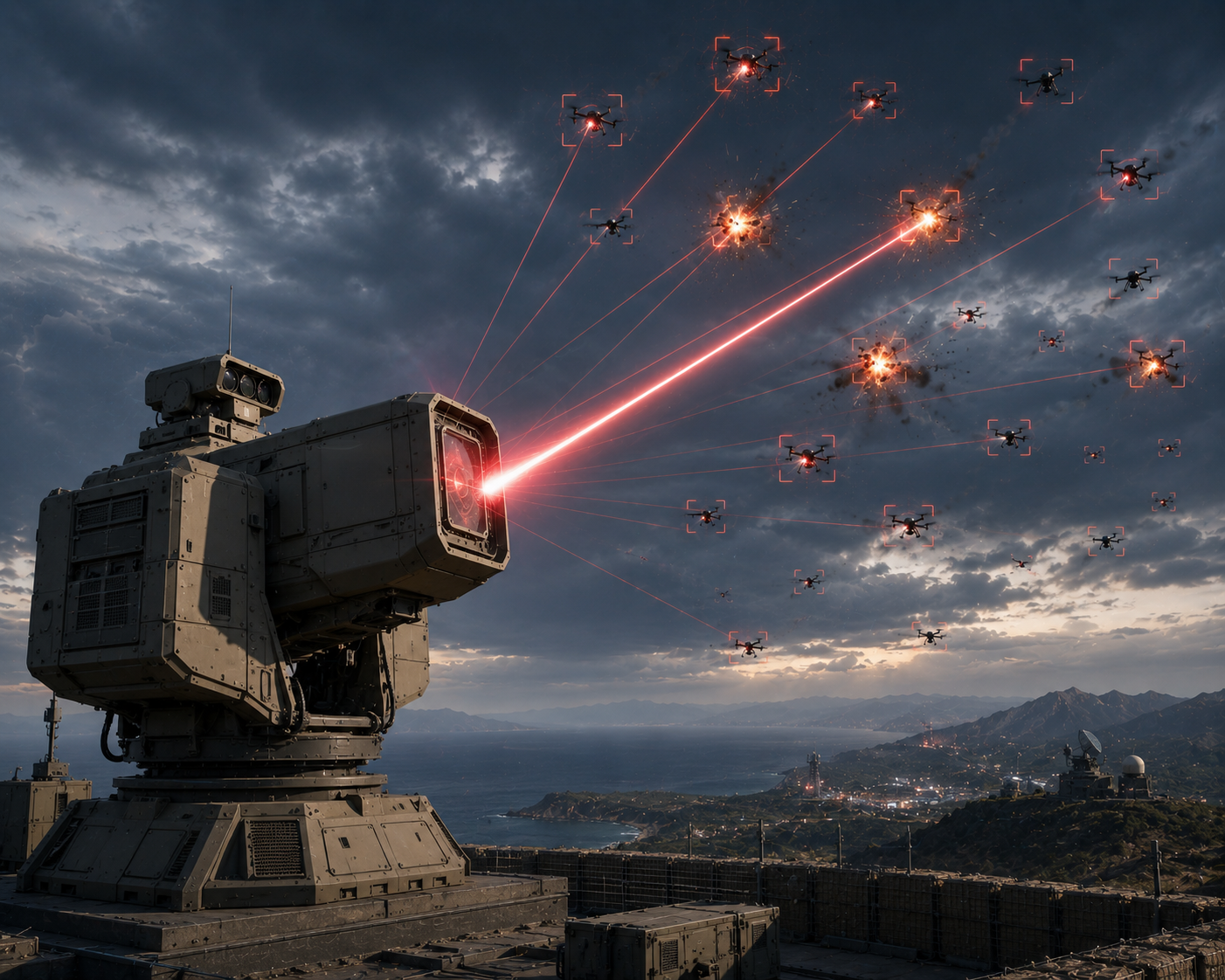
To address this challenge, Esh-Tech has developed DroneLight, a laser-based drone interception system designed to provide a tactical layer of protection for deployed forces and sensitive facilities. Unlike large laser systems intended to defend wide areas, the system focuses on short-range threats and operates in a manner that resembles a machine gun. Rather than relying on a continuous, extremely high-power laser beam, the system performs a rapid sequence of engagements and, according to the company, can handle up to 30 targets per minute.
The primary advantage of this approach is its lower energy requirement compared to strategic laser defense systems. Systems in the latter category are based on laser beams with outputs of around 100 kilowatts and are designed to intercept threats at ranges of up to approximately 10 kilometers. In contrast, the system is intended to operate closer to frontline forces, providing protection against immediate threats while requiring a significantly smaller energy infrastructure.
A major focus of the development effort was creating a relatively compact system that can be rapidly deployed and integrated into existing defense architectures. This allows operators to position the system where protection is needed most, without the logistical footprint associated with larger directed-energy platforms.
From an operational perspective, the ability to engage a large number of targets in a short period of time has become one of the key requirements in countering modern drone threats. As drone swarms become more affordable and widespread, the demand for interception systems that combine low cost per engagement with a high rate of fire continues to grow.
From a broader defense standpoint, the system reflects a growing shift away from expensive kinetic interceptors toward directed-energy solutions. If systems of this type prove effective in operational environments, they could become an important complementary layer within air defense networks, particularly for maneuvering forces that require continuous protection against small, fast-moving aerial threats.























