This post is also available in:
 עברית (Hebrew)
Naval mines remain one of the most persistent threats in maritime security. Relatively inexpensive and easy to deploy, they can disrupt shipping lanes, block ports, and endanger both military and commercial vessels. Detecting and neutralizing them is a slow and hazardous process, traditionally carried out by specialized crews operating close to the threat.
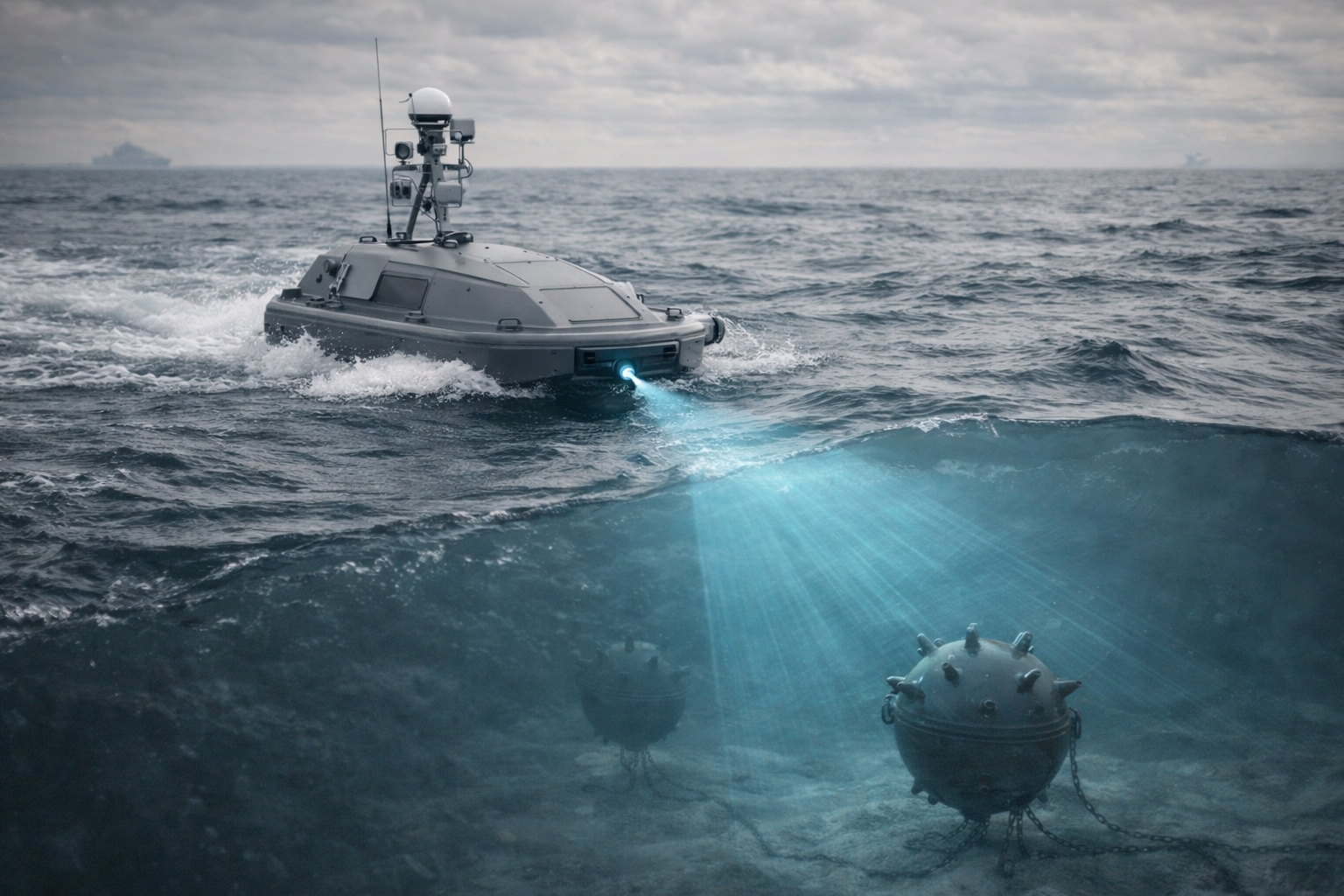
A new uncrewed minehunting system, named Adventure by Thales, is designed to change that approach by shifting operations away from crewed vessels and into remotely managed platforms. Instead of placing sailors in high-risk environments, the system uses a combination of surface and underwater drones controlled from a distance, either from shore or from a support ship.
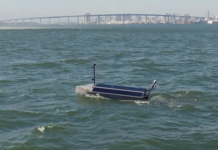
According to Interesting Engineering, at the center of the setup is a 12-meter autonomous surface vessel that acts as a deployment hub. It carries and coordinates multiple off-board systems, allowing operators to conduct the full mine countermeasure cycle, from detection to identification and neutralization, without entering the danger zone. This distributed architecture enables continuous operations while reducing direct exposure to threats.
Detection relies on advanced sonar technology capable of producing detailed images of the seabed. By capturing multiple perspectives in a single pass, the system improves accuracy and reduces ambiguity. Artificial intelligence tools process this data in real time, highlighting potential mines and reducing the workload on human operators.
Once a target is confirmed, remotely operated underwater vehicles are deployed for closer inspection and neutralization. These systems can place explosive charges with precision, allowing multiple mines to be cleared during a single mission. Their ability to operate at significant depths and switch between autonomous and tethered modes adds flexibility in complex underwater environments.
From a defense perspective, this reflects a broader shift toward autonomous and modular naval capabilities. By combining unmanned platforms with remote command systems, navies can maintain access to critical sea routes while minimizing risk to personnel. This is particularly important in contested or high-traffic areas where mine threats can have strategic and economic impact.
As maritime operations evolve, systems that integrate sensing, autonomy, and remote control are becoming central to mine countermeasure strategies, offering a safer and more scalable way to secure vital waterways.