This post is also available in:
 עברית (Hebrew)
Coordinating large groups of autonomous systems, whether drones, vehicles, or software agents, remains a difficult problem. In real-world conditions, signals are often noisy, incomplete, or even conflicting. Traditional control methods typically rely on averaging information from multiple sources or assigning a fixed leader, but both approaches can struggle when uncertainty increases, leading to inefficient or unstable group behavior.
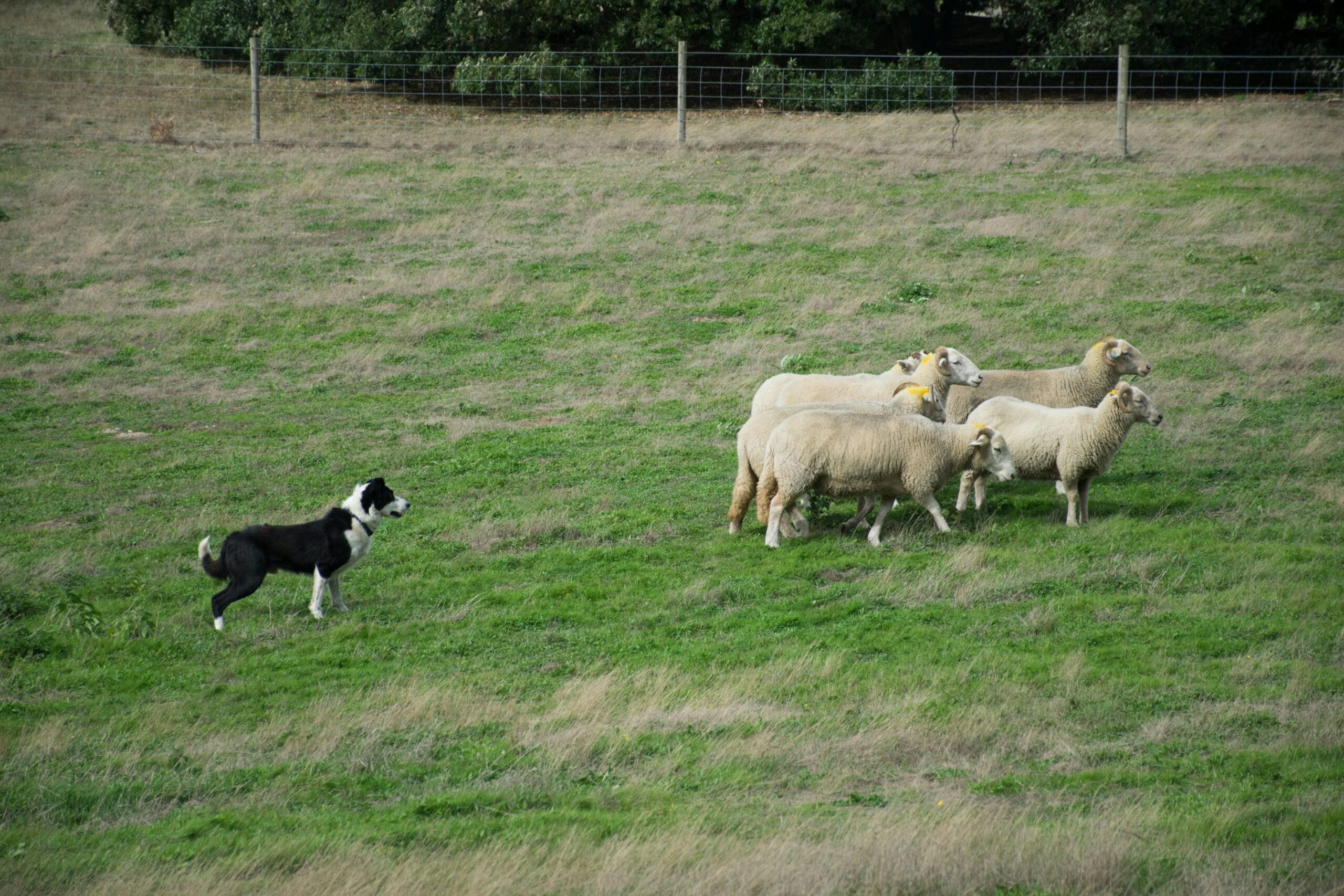
A new study offers an alternative approach inspired by an unlikely source: sheepdogs. Researchers analyzed how trained dogs guide small, unpredictable flocks during herding trials, where animals constantly shift between following the group and reacting to perceived threats. This behavior creates instability, particularly in smaller groups, making precise control difficult.
According to TechXplore, the key insight lies in how dogs manage that unpredictability. Instead of forcing immediate movement, they first influence the flock’s orientation—subtly aligning the animals in a desired direction. Only once alignment is achieved do they apply pressure to initiate movement. Timing is critical, as this alignment can quickly break down.
Building on these observations, researchers developed a computational model and applied it to robotic swarms. Rather than having each unit continuously average inputs from all neighbors, the proposed method allows each agent to follow a single influence at a time—either another unit or a guiding signal—and switch that influence dynamically over time.
This “switching” approach, referred to as the Indecisive Swarm Algorithm, proved more effective in simulations where information was noisy or uncertain. By avoiding the dilution of useful signals—a common issue in averaging-based systems—the swarm was able to maintain direction with less overall control effort.
The concept also reflects a counterintuitive principle: some level of randomness or “noise” within a system can actually improve coordination, rather than degrade it.
From a defense and homeland security perspective, the implications are clear. Swarm systems are increasingly used for reconnaissance, surveillance, and distributed operations, often in contested environments where communication is degraded or disrupted. An approach that maintains coordination under such conditions could improve mission reliability and reduce the need for centralized control.
As autonomous systems become more prevalent, methods that balance flexibility with control will be essential. Drawing inspiration from natural behavior offers a practical path toward managing complexity in these increasingly distributed systems.
The research was published here.