This post is also available in:
 עברית (Hebrew)
As more satellites enter orbit, simply knowing where every object is located is becoming increasingly difficult, and location alone may not provide enough information. A spacecraft that unexpectedly changes course or approaches another satellite can require closer inspection before operators understand whether it represents a threat.
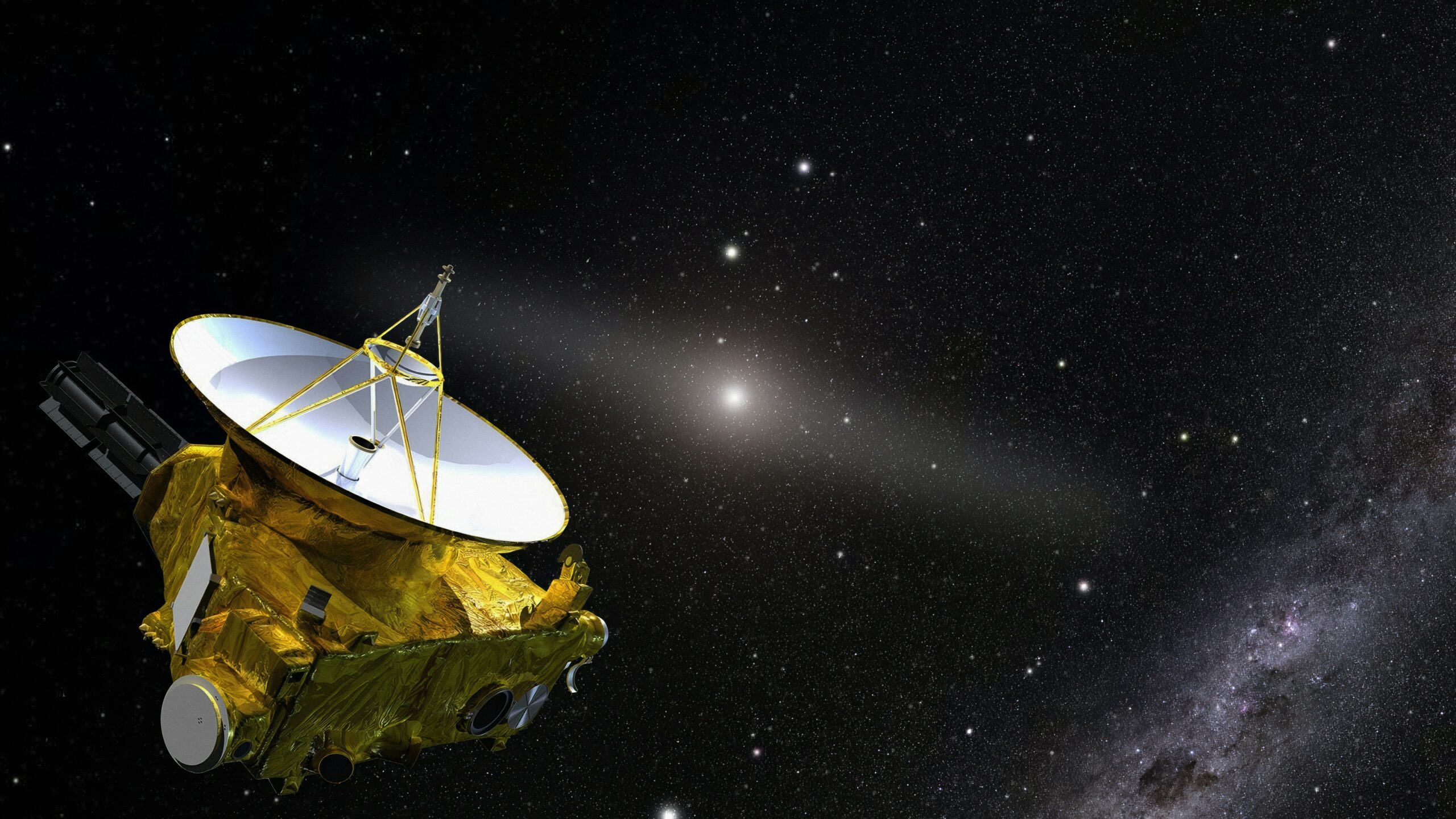
A recent demonstration under the VICTUS HAZE mission tested a more responsive approach: sending advanced optical sensing capability into orbit to help locate, track and inspect other space objects.
The mission brought together Lawrence Livermore National Laboratory (LLNL), Rocket Lab and the U.S. Space Force as part of an effort to improve Space Domain Awareness (SDA), which represents the ability to detect, characterize and understand objects and their behavior in orbit.
Ground-based monitoring can provide valuable tracking information, but an inspector spacecraft operating closer to another object can potentially gather more detailed imagery.
According to Interesting Engineering, the mission payload uses monolithic telescopes manufactured from a single silica substrate. This construction is intended to provide strong mechanical stability while keeping costs relatively low, making the optical technology suitable for rapid integration.
Speed was an important part of the demonstration. The team completed commissioning of the imaging payload within 24 hours of launch, allowing it to begin supporting orbital operations quickly.
The payload also demonstrated angles-only navigation. Live images are processed using an algorithm embedded in the payload electronics to determine information about another object’s relative position. That information feeds back into the spacecraft, creating closed-loop control between the imaging system and the vehicle carrying it.
The technology addresses one side of a growing space-security problem: detecting and inspecting potential threats. Another is ensuring that satellites can survive physical hazards once they are in orbit.
Spacecraft face impacts not only from potentially hostile activity but also from orbital debris and micrometeoroids. That creates demand for lightweight materials and structures capable of absorbing or limiting impact damage without relying on complex active protection systems.
A further step would be self-healing materials capable of restoring some of their functionality after being punctured or damaged. Unlike robotic repair or other active systems, such protection could work passively as part of the satellite’s structure.
That capability has clear dual-use potential. Commercial communications and Earth-observation satellites face the same debris environment as defense spacecraft, while military satellites may place an even greater premium on resilience and continued operation after damage.
This is also a relevant challenge for INNOFENSE, the innovation program operated by iHLS in cooperation with the Israeli Ministry of Defense and DDR&D (MAFAT). Companies developing impact-resistant structures, self-healing materials or passive spacecraft protection technologies can apply with solutions that could be adapted to defense requirements and explored through a POC with the defense establishment.
Better orbital awareness can help operators understand what is approaching a satellite. The complementary challenge is making sure the spacecraft can survive when something actually hits it.
Are you working on self-healing materials, impact-resistant structures or other passive protection technologies that could help satellites survive debris and micrometeoroid strikes? Apply to INNOFENSE now!