This post is also available in:
 עברית (Hebrew)
Future air operations are expected to rely increasingly on uncrewed aircraft working alongside fighter jets, but making that concept practical requires more than simply putting both types of aircraft in the same airspace. Autonomous platforms must communicate over long distances, switch between control systems and perform missions with limited human input, all while operating in environments where conventional bases and communications may be vulnerable.
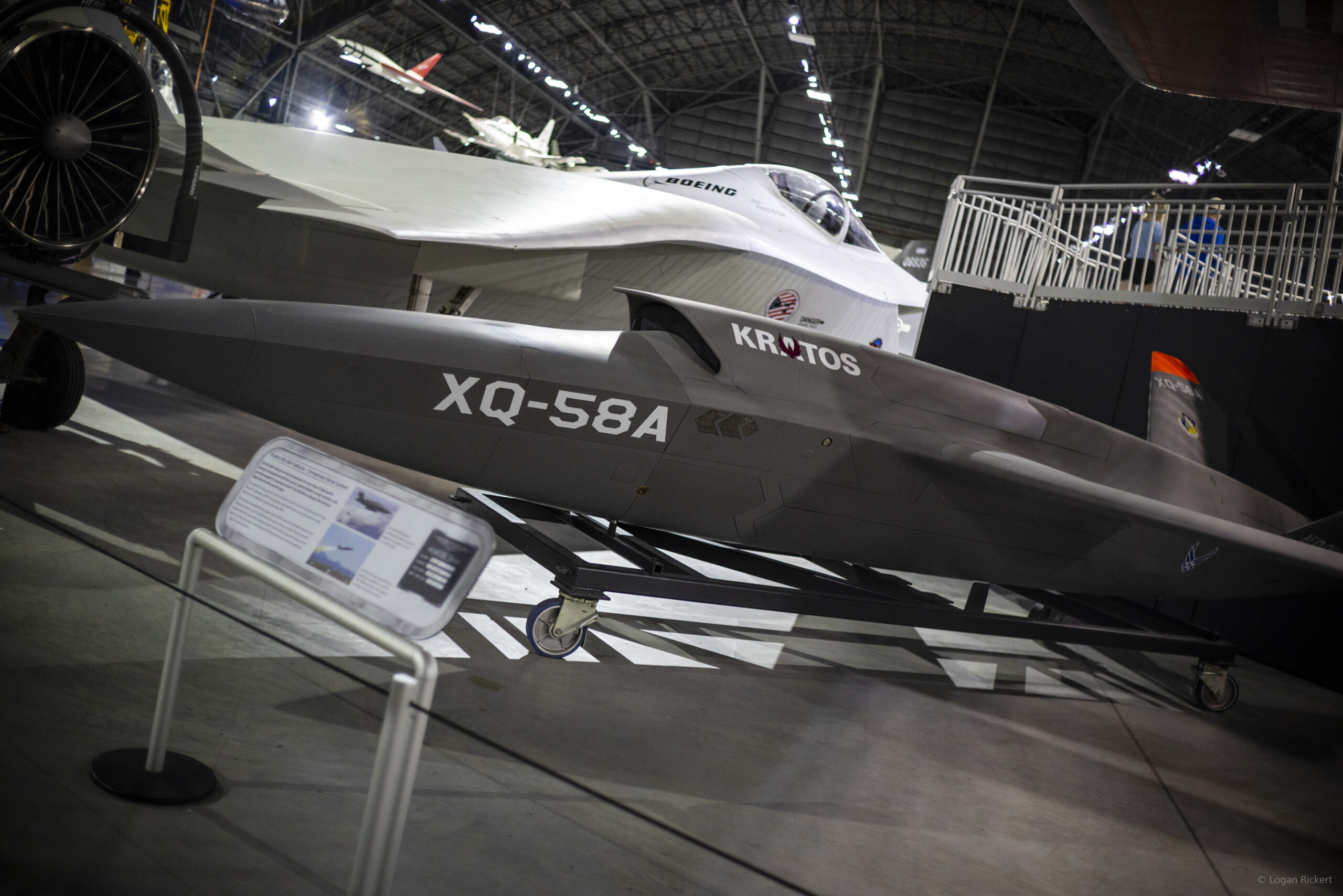
A recent flight test of the XQ-58A Valkyrie demonstrated several of those capabilities at once. During testing in Southern California, the jet-powered collaborative combat aircraft operated alongside multiple F-35s and an F/A-18, while evaluating beyond-line-of-sight (BLOS) control, electronic warfare capabilities and autonomous recovery.
One of the aircraft’s distinguishing features appeared before it even took off. Instead of using a conventional runway, the aircraft launched from a zero-length launch system, allowing it to operate from locations without traditional airfield infrastructure. For expeditionary forces, that could reduce dependence on large, easily identified runways.
According to Interesting Engineering, once airborne, the aircraft established a BLOS command-and-control link, allowing operators to communicate with it beyond the range of direct radio visibility. Control initially came through Kratos’ ground-control station before being transferred during flight to a separate interface developed by Autonodyne.
That second system complies with the Autonomy Government Reference Architecture, an open framework intended to reduce dependence on proprietary control systems. The successful handoff demonstrated how an operator could potentially control different autonomous aircraft through standardized interfaces rather than learning a separate system for every platform.
Following the transition, the aircraft joined the crewed fighters for coordinated electronic warfare testing. Specific details of the electronic warfare mission were not disclosed, but such capabilities can include detecting, analyzing or disrupting hostile electromagnetic systems.
After completing its assigned objectives, it autonomously navigated back to its designated recovery location.
The test is part of a broader effort to develop collaborative combat aircraft that can complement crewed fighters. Instead of requiring a pilot to remotely fly every movement, these systems are intended to receive higher-level objectives and handle much of the navigation and mission execution themselves. This could allow a single human operator to supervise multiple aircraft while concentrating on tactical decisions.
The U.S. Marine Corps has evaluated four different mission-system configurations on the aircraft over the past three years, progressively integrating communications, autonomy and mission equipment.
For defense forces, runway independence could be particularly valuable during operations where established air bases are damaged, threatened or unavailable. Combined with long-range control and autonomous operation, aircraft such as this could carry sensors, electronic warfare systems or other payloads ahead of crewed fighters, placing fewer pilots directly inside the most dangerous airspace.
The latest demonstration moves that concept another step forward: not simply an autonomous aircraft flying near fighters, but a networked platform capable of changing controllers, conducting mission tasks and returning on its own.