This post is also available in:
 עברית (Hebrew)
Countering small drones does not always require shooting them down. In many situations, denying a drone the ability to see its target is enough to prevent it from completing its mission. As unmanned aerial systems increasingly rely on electro-optical cameras for navigation, reconnaissance, and target acquisition, defense developers are exploring directed-energy technologies capable of disabling those sensors without physically destroying the aircraft.
A recent series of trials by NUBURU demonstrated one such approach using a laser dazzler designed to overwhelm drone cameras with intense light.
Unlike high-energy laser weapons that damage or burn through targets, a laser dazzler works by saturating an electro-optical sensor. The intense light temporarily blinds the camera, preventing it from capturing usable imagery or tracking designated targets while the effect is maintained.
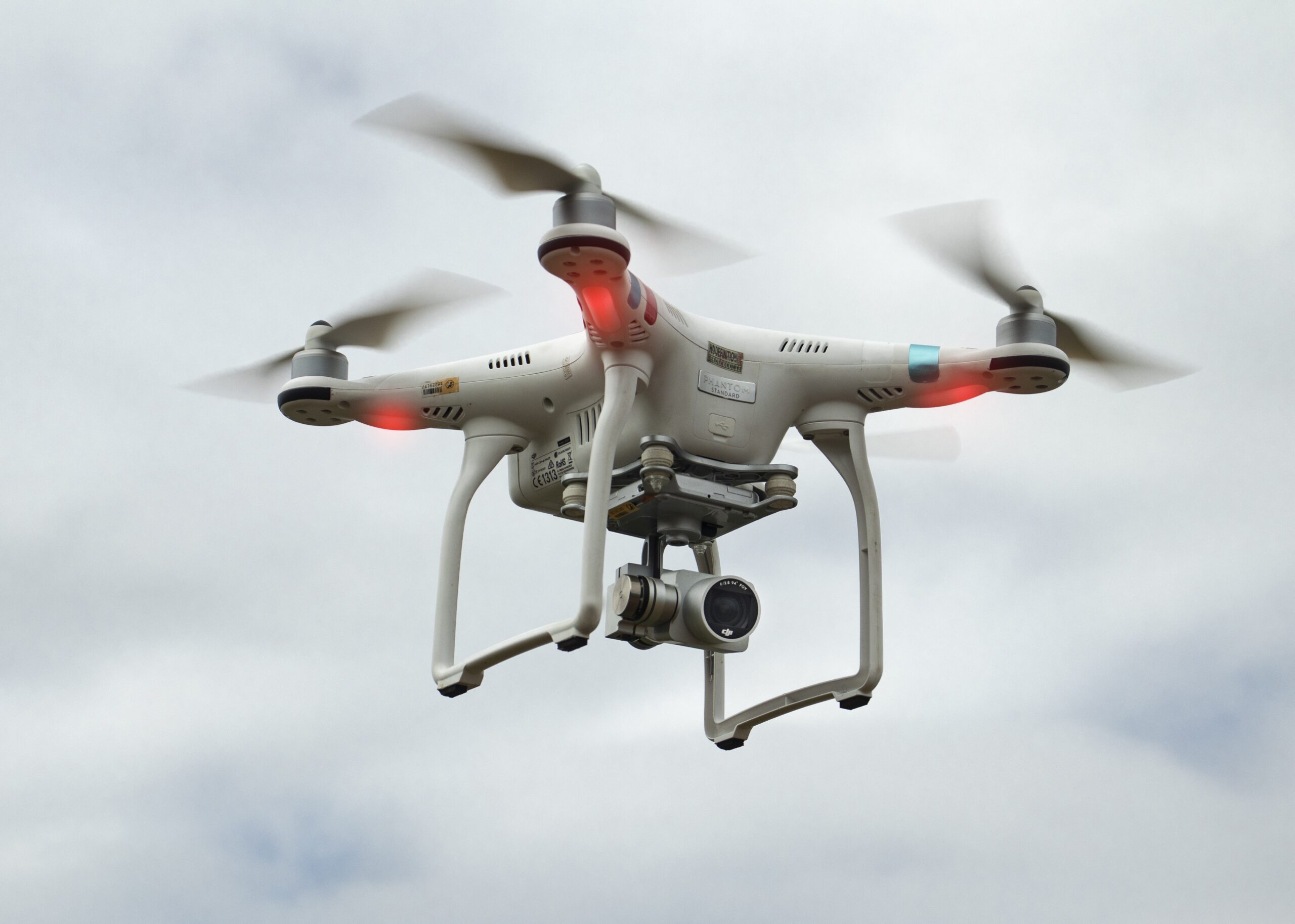
During indoor testing, engineers evaluated the system against two different drone platforms operating in simulated tactical scenarios. According to Interesting Engineering, the laser successfully disrupted the drones’ optical sensors across multiple test configurations.
In one demonstration, a drone tasked with locating and tracking a designated individual failed to detect the operator, allowing the person to approach to within roughly 20 meters without being identified. The result illustrates how optical denial can interfere with reconnaissance or targeting missions without requiring kinetic interception.
The trials examined both continuous-wave and pulsed laser operation using several power levels while remaining within applicable optical safety guidelines during standard testing. Additional measurements at higher irradiance levels were conducted solely to characterize system performance.
Testing distances reached approximately 100 meters, limited by the size of the indoor facility. However, the collected data is being used to model future operational configurations intended to engage drones at distances exceeding one kilometer.
From a defense perspective, laser dazzling represents another layer within modern counter-UAS architectures. Instead of replacing radar, electronic warfare, or kinetic interceptors, it provides a non-destructive option for denying drones the visual information they require to identify targets, conduct surveillance, or support attacks.
The developers are now working toward integrating multiple laser wavelengths, including green, blue, and infrared sources, into a single system suitable for daytime and nighttime operations. Future versions are planned for portable, vehicle-mounted, maritime, tower-mounted, and fixed-site installations.
As counter-drone technology continues to diversify, optical sensor denial is emerging as a practical directed-energy capability that can complement existing defenses by disrupting a drone’s vision before it ever reaches its intended target.