

This post is also available in:
 עברית (Hebrew)
Unmanned aerial systems are taking on increasingly complex missions, from reconnaissance and border monitoring to strike operations and electronic surveillance. But as drones move deeper into contested environments, they face growing threats from radar-guided defenses, electronic warfare systems, and signal disruption. Traditional self-protection systems used on larger aircraft are often too heavy, power-hungry, or expensive for smaller unmanned platforms.
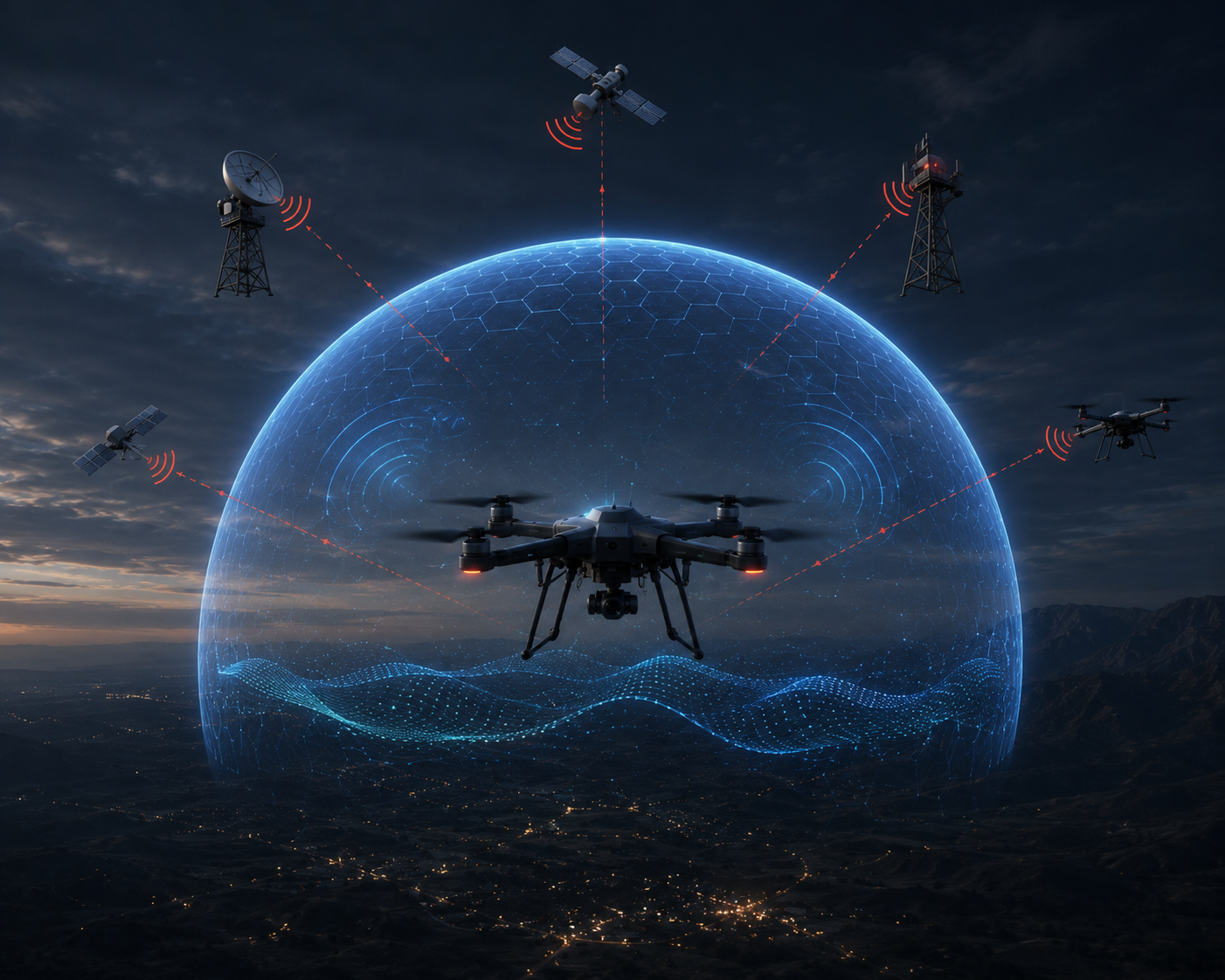
A new electronic warfare system called STORM SHIELD is designed to address that gap by bringing advanced self-protection capabilities into a lightweight form factor suitable for drones and tactical aircraft. The system continuously scans the electromagnetic spectrum, autonomously detecting, analyzing, generating, and transmitting signals to counter incoming threats.
Acording to Interesting Engineering, at the core of the platform is an active electronically scanned array (AESA) transmitter architecture combined with Digital Radio Frequency Memory (DRFM) technology. This setup allows the system to generate sophisticated deception techniques against radar-guided threats while adapting dynamically to changing conditions. According to the developer, the technologies are derived from existing operational electronic warfare systems and miniaturized for smaller airborne platforms.
One of the key features is full 360-degree spatial coverage, allowing protection regardless of the platform’s orientation or maneuvering. The system also supports broad frequency coverage and autonomous electromagnetic monitoring, enabling it to react quickly across multiple threat types without constant operator input.
The architecture is designed to be modular and software-programmable, allowing mission-specific configurations depending on operational requirements. This flexibility enables integration across different unmanned aerial platforms using standardized components while also simplifying future upgrades.
From a defense perspective, compact electronic warfare systems are becoming increasingly important as drones take on frontline operational roles. UAVs operating in anti-access or electronically degraded environments require some level of survivability against radar tracking and signal disruption if they are expected to remain effective during high-intensity missions.
The broader trend reflects how electronic warfare is evolving alongside unmanned systems. Instead of relying only on large dedicated aircraft for electronic protection, militaries are increasingly seeking distributed, autonomous EW capabilities that can operate directly on smaller platforms closer to contested areas.
As drone operations continue expanding across reconnaissance, strike, and surveillance missions, integrated electronic protection systems may become a standard requirement rather than a specialized capability.























