This post is also available in:
 עברית (Hebrew)
As unmanned systems expand across air and land domains, underwater autonomy is becoming an increasingly important area of military development. Traditional submarines remain highly effective but are costly to operate and require trained crews for long-duration missions. At the same time, naval forces are looking for platforms capable of carrying diverse payloads while remaining difficult to detect in contested maritime environments.
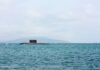
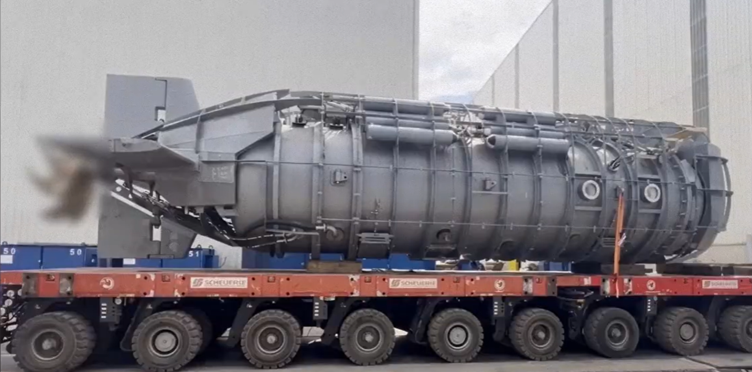
A newly unveiled extra-large uncrewed underwater vehicle (Sinarit XLUUV) is designed to address these demands through a modular, multi-role architecture. The diesel-electric platform is intended for long-range autonomous missions without onboard personnel and can reportedly support up to 12 different payload configurations depending on operational needs.
According to Interesting Engineering, the submarine uses interchangeable payload sections that allow rapid adaptation between reconnaissance, mine warfare, torpedo deployment, and strike missions. One of the more notable capabilities demonstrated was the underwater deployment of first-person-view attack drones, expanding the concept of drone launch platforms beneath the surface.
Beyond drone operations, the platform is designed to integrate a wide range of systems, including anti-ship missiles, land-attack missiles, torpedoes, smart mines, sonar packages, and remotely operated mine countermeasure systems. Synthetic aperture sonar and intelligence-gathering sensors can also be installed for surveillance and reconnaissance roles. This modular approach allows a single vehicle design to support multiple mission profiles without extensive redesign.
The platform measures roughly 11.2 meters in length and can be transported inside a standard shipping container or airlifted by cargo aircraft. It is designed to operate at depths of up to 100 meters, with relatively low acoustic and radar signatures intended to reduce detectability during missions.
From a defense perspective, autonomous underwater vehicles are increasingly viewed as force multipliers for naval operations. Their ability to remain submerged for extended periods while carrying strike or surveillance payloads could support distributed maritime operations, intelligence gathering, or area denial missions without risking crews.
The broader concept also reflects a growing trend toward modular autonomous systems capable of adapting quickly to evolving operational requirements. As underwater autonomy matures, platforms that combine stealth, interchangeable payloads, and long-endurance operation may become a more common component of future naval force structures.