This post is also available in:
 עברית (Hebrew)
Long-range strike capabilities often face a trade-off between endurance, precision, and survivability. Systems that can reach distant targets may depend heavily on satellite navigation, making them vulnerable to jamming or signal disruption. At the same time, operating in remote or contested environments requires flexible launch options and the ability to adapt to different mission types without complex logistics.
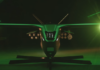
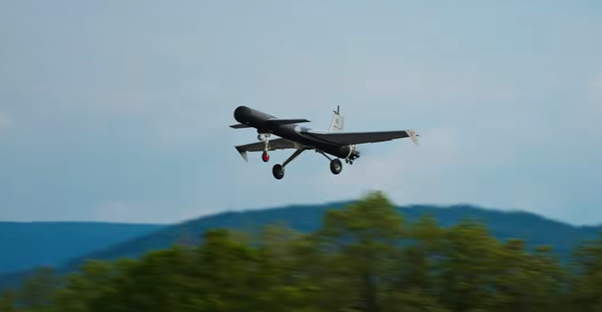
According to Interesting Engineering, a new loitering munition (Mizrak kamikaze) is designed to address these challenges by combining extended range with autonomous navigation. The system can remain airborne for more than seven hours and cover distances exceeding 997 kms, allowing it to operate far beyond the front line. It uses onboard artificial intelligence and sensor-based navigation, enabling it to function even when GPS signals are unavailable or degraded.
The platform is built with flexibility in mind. It can take off from conventional runways or use rocket-assisted launch for deployment in areas without established infrastructure. With a maximum takeoff weight of around 200 kgs and a wingspan of roughly 3.9 meters, it is designed to balance payload capacity with operational mobility. It can fly at speeds of up to 185 kms per hour and reach altitudes of approximately 3,048 meters.
Two primary configurations support different mission requirements. One version is optimized for high-impact strikes, carrying dual warheads for engaging hardened or high-value targets. Another focuses on precision, using a smaller payload paired with a radio-frequency seeker to target specific emitters. Both variants are equipped with electro-optical and infrared sensors, allowing operators to conduct surveillance and confirm targets before engagement.
Additional features include sensor fusion and anti-jamming capabilities, which help maintain control and situational awareness in contested environments. The system can also integrate with other unmanned platforms, sharing data and video feeds to support coordinated operations across multiple assets.
From a defense perspective, this type of system reflects the growing emphasis on autonomous, long-range strike tools that can operate with reduced reliance on external infrastructure. The ability to combine reconnaissance, decision-making, and engagement in a single platform supports more flexible mission planning and can reduce exposure for personnel.
As loitering munitions continue to evolve, systems with extended endurance and independent navigation are likely to play an increasing role in future operational concepts.