This post is also available in:
 עברית (Hebrew)
Detecting hypersonic missiles remains one of the most difficult challenges in modern air defense. Traveling at speeds above Mach 5, these weapons generate extreme heat as they move through the atmosphere, creating a plasma envelope around them. This ionized layer can interfere with radar signals, particularly those operating at higher frequencies, often degrading tracking accuracy or causing targets to disappear from conventional systems altogether.
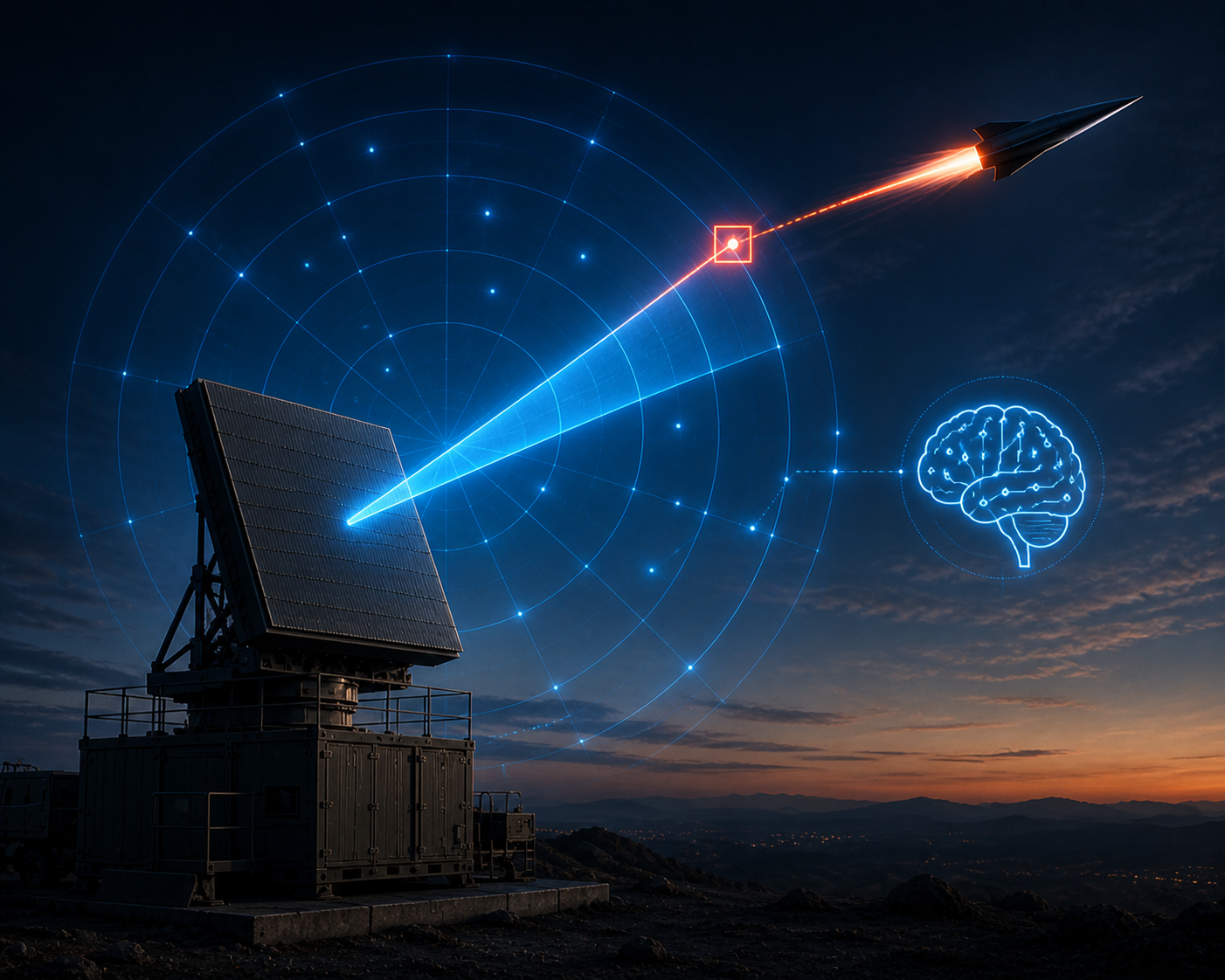
A new radar concept is being developed to address this issue by combining lower-frequency sensing with adaptive signal processing. According to NextGenDefense, the system is based on an L-band Active Electronically Scanned Array (AESA) radar, which operates at longer wavelengths that are less affected by plasma interference. This allows the radar to maintain more consistent contact with fast-moving targets that would otherwise be difficult to detect.
To further improve performance, the radar uses gallium nitride-based transmit-receive modules. These components enable higher power output and greater efficiency, increasing the likelihood of obtaining reliable returns even when signals are partially disrupted. In parallel, advanced processing techniques, specifically Space-Time Adaptive Processing (STAP), help filter out noise caused by the plasma layer, isolating the actual missile signature from surrounding electromagnetic clutter.
Artificial intelligence is integrated into the system to manage these variables in real time. Machine learning algorithms continuously adjust radar parameters such as frequency selection, pulse patterns, and scanning modes. This adaptability allows the system to respond to changes in the missile’s speed, altitude, and plasma characteristics throughout its flight, improving overall tracking stability.
From a defense standpoint, the ability to detect and track hypersonic weapons is becoming increasingly critical. Their speed and maneuverability reduce reaction times and complicate interception efforts. Enhancing radar performance against such threats is a key step toward building effective countermeasures and maintaining situational awareness in high-speed engagement scenarios.
While development is ongoing, the approach highlights a shift toward combining hardware advancements with adaptive software. As hypersonic technologies continue to evolve, detection systems will likely need to rely on similar multi-layered solutions to remain effective.