

This post is also available in:
 עברית (Hebrew)
Industrial environments such as chemical facilities, refineries, and large storage sites often involve hazardous conditions that put human workers at risk. Tasks like welding, inspection, and maintenance may require operating at height, on unstable surfaces, or in areas exposed to heat, corrosion, or toxic materials. Traditional automation has helped in controlled settings, but many of these environments still require human intervention due to their complexity.
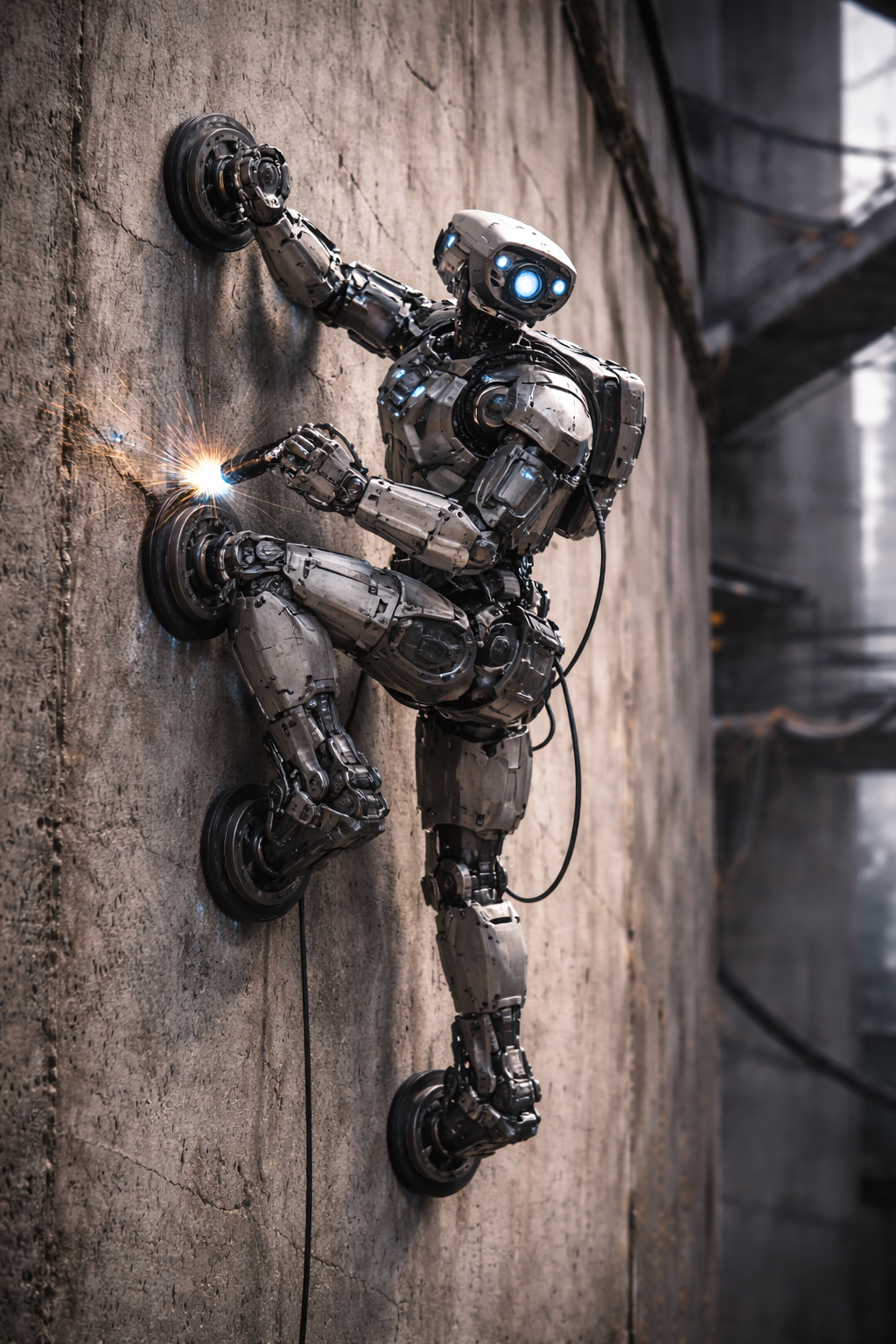
A new type of humanoid robot, called Nengzai No. 1, is designed to address this gap by combining mobility, adaptability, and advanced control into a single platform. Unlike fixed robotic systems, the machine can physically navigate challenging environments, including vertical metal surfaces. It uses a magnetic chassis to adhere to structures such as storage tanks, allowing it to move and operate where conventional robots cannot.
According to Interesting Engineering, the system is built to handle a wide range of industrial tasks. Equipped with dual robotic arms and multiple degrees of freedom, it can perform operations such as welding, grinding, inspection, and surface treatment. This flexibility allows it to replace several specialized machines while maintaining precision in complex workflows.
At the core of the platform is an AI-driven control system trained on extensive operational data. This enables the robot to interpret its surroundings, adjust to real-world conditions, and improve performance over time. Instead of following fixed routines, it can adapt to variations in structure, surface condition, and task requirements.
Another key feature is continuous operation. The robot uses a tethered power system, eliminating the need for battery swaps or charging cycles. This allows it to function around the clock, which is particularly valuable in industrial settings where downtime can be costly.
From a defense and homeland security perspective, such capabilities could be applied beyond industrial use. Robots that can operate in hazardous environments may support missions such as infrastructure inspection, disaster response, or operations in contaminated or high-risk zones where human access is limited.
As robotics continues to evolve, systems that combine physical mobility with adaptive intelligence are expanding the range of tasks that can be automated. In environments where safety and precision are critical, such platforms offer a practical way to reduce risk while maintaining operational efficiency.























