

This post is also available in:
 עברית (Hebrew)
As humanoid robots become more advanced, one of the key challenges is making their interactions feel natural. Accurately recognizing faces, tracking expressions and reproducing subtle emotional cues all depend on precise mapping of facial features. However, most current systems rely on 2D images or synthetic models, which can introduce errors due to mismatches between textures and real-world geometry.
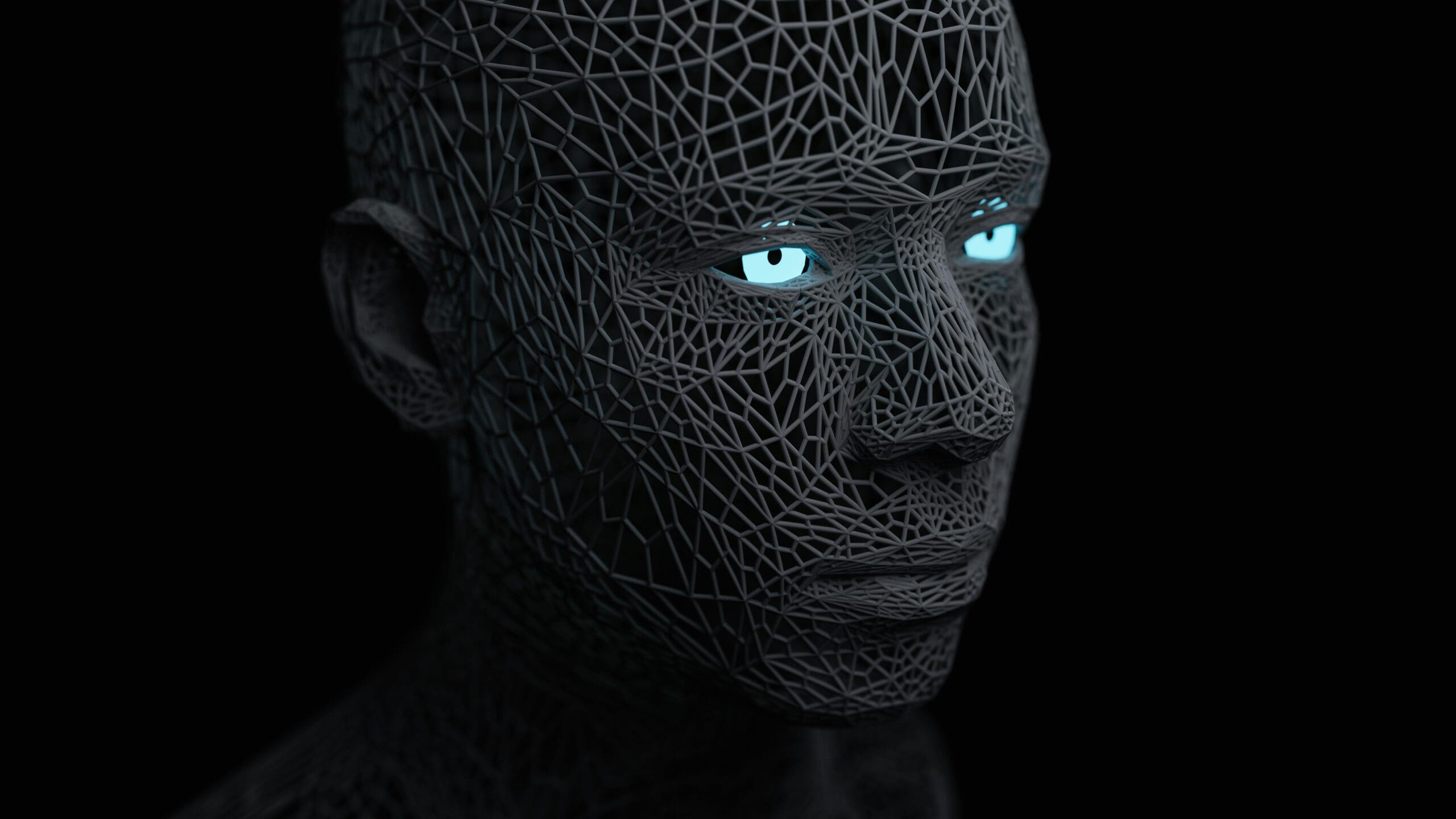
A new approach focuses on bypassing those limitations by working directly with three-dimensional data. Chinese researchers have developed a large-scale dataset of around 200,000 high-resolution 3D facial scans, along with an AI model designed to identify facial landmarks using raw geometric information rather than visual textures.
The system is based on point clouds — collections of spatial coordinates that represent the shape of a face without relying on surface appearance. To process this data, the team designed a curvature-fused graph attention network (CF-GAT), which analyzes both local surface details and overall facial structure.
According to Interesting Engineering, instead of using predefined templates, the model extracts key geometric features by focusing on curvature — subtle variations in shape that define facial characteristics. A specialized sampling method reduces the amount of data while preserving these critical features, allowing the AI to operate efficiently without losing accuracy.
By integrating curvature information into its attention mechanism, the model can detect facial landmarks directly in 3D space. This enables more precise localization of features such as eyes, nose and mouth, even in cases where traditional image-based methods struggle. Testing showed improved robustness to noise and better performance across different facial shapes.
The dataset itself includes not only static scans but also dynamic 4D facial expressions and related biometric data, providing a broad foundation for training and evaluation.
For defense and homeland security applications, such capabilities could enhance biometric identification systems, surveillance analysis and human-machine interfaces. More accurate 3D facial mapping may support identity verification in complex environments and improve interaction between operators and robotic platforms.
As robotics and AI continue to converge, the ability to interpret and replicate human facial behavior using real-world geometry may play a central role in making machines more effective in both civilian and operational settings.
The research was published here.























