This post is also available in:
 עברית (Hebrew)
Modern military aviation faces a growing coordination problem. As drones, sensors, and crewed platforms multiply, commanders are often forced to juggle disconnected systems that were never designed to work together. Each new unmanned aircraft or sensor typically arrives with its own interface and data format, slowing decision-making and limiting how effectively information can be shared in real time—especially in fast-moving maritime and coastal environments.
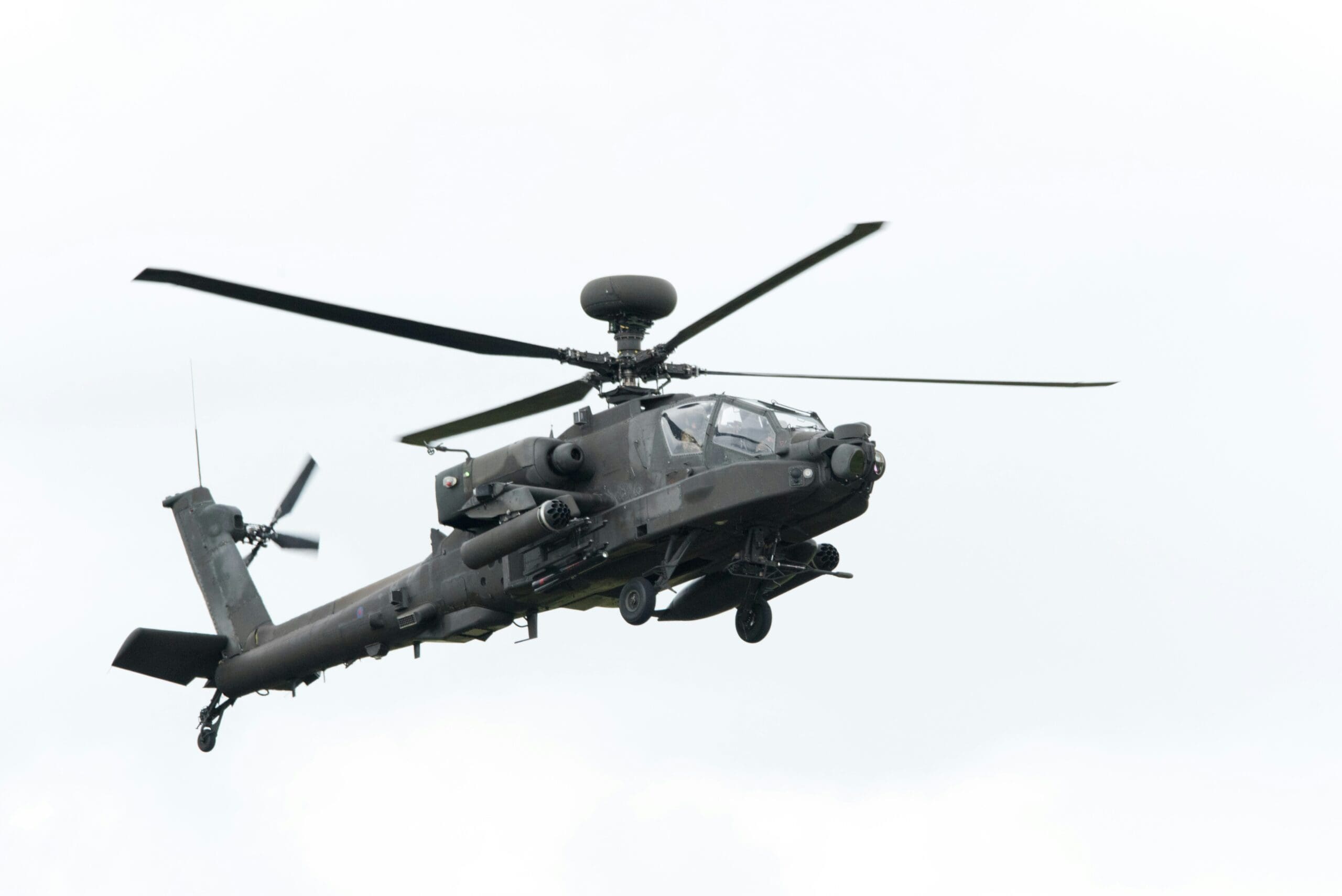
A recent flight demonstration explored a different approach: turning crewed helicopters into airborne command hubs for unmanned systems. In the trial, a multi-role helicopter (called Eagles Eye) operated as the central node in a distributed digital network, receiving near-instant intelligence from multiple drones and ground-based sensors. Instead of acting solely as a shooter or observer, the helicopter functioned as a control and fusion platform, integrating inputs from across the battlespace.
According to NextGenDefense, the demonstration validated a resilient mesh communications architecture that allows manned and unmanned assets to exchange data seamlessly. Surveillance drones operating beyond the helicopter’s line of sight transmitted live feeds directly to the cockpit, enabling the crew to detect and track moving targets without relying on external command centers. Crucially, the system translated data from different platforms into a unified interface, removing the need for bespoke integrations each time a new drone or sensor is added.
This approach supports a broader shift toward manned-unmanned teaming. Rather than replacing crewed aircraft, drones extend their reach—pushing sensors forward, covering wider areas, and reducing risk to personnel. The helicopter remains the decision-making node, but with far greater situational awareness than it could achieve on its own.
In littoral zones, border regions, and congested sea lanes, threats often emerge quickly and from unexpected directions. A helicopter acting as an airborne command post can coordinate drones to monitor fast attack craft, track small surface targets, or maintain persistent surveillance over complex terrain. The ability to fuse sensor data instantly also supports rapid targeting and response, critical in asymmetric or time-sensitive scenarios.
Looking ahead, insights from the trial are expected to feed into larger multinational exercises focused on coastal defense and maritime security. As armed forces adapt to lessons from recent conflicts, systems that emphasize interoperability, resilient communications, and real-time data sharing are becoming central. Using helicopters as flying command hubs offers a practical way to integrate unmanned systems into existing forces without waiting for entirely new platforms.