This post is also available in:
 עברית (Hebrew)
Modern naval operations are increasingly shaped by uncertainty. Fleets must operate across wide areas, integrate manned and unmanned platforms, and function under conditions where communications may be degraded or denied. In such environments, reacting to events is often not enough—commanders need systems that can anticipate problems before they disrupt missions.
A new mission intelligence platform is designed to address that gap by combining real-time sensor data with predictive modeling. The system creates a continuously updated digital picture of both the operating environment and the platforms themselves, helping crews and commanders understand not just what is happening now, but what is likely to happen next.
According to NextGenDefense, at the heart of the approach is the fusion of live inputs—such as environmental conditions, platform status, and sensor feeds—with virtual models that simulate mission behavior. By running these models in parallel with real-world operations, the platform can forecast how changes in weather, system health, or tasking might affect mission outcomes. This allows operators to adjust plans earlier, rather than responding after performance begins to degrade.
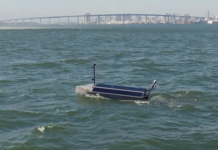
The technology, called DIGIT, is built to work across surface ships and underwater assets, including unmanned vessels. It is designed to function at the tactical edge, where connectivity to centralized command systems may be limited. Onboard processing enables local decision support, while shore-based components provide higher-level mission coordination when communications are available.
The platform is organized into three main functional modules. One provides shore-based commanders with a mission management layer that complements existing command-and-control systems, offering decision support without replacing established workflows. Another runs onboard vessels, monitoring propulsion, power, and other critical systems to detect faults early and recommend corrective actions before failures escalate. The third module focuses on unmanned surface and underwater vehicles, allowing them to plan, adapt, and continue missions even with intermittent links to operators.
Naval forces tasked with protecting sea lanes, ports, and offshore infrastructure benefit from tools that reduce surprise and improve coordination between crewed ships and autonomous platforms. Anticipating system failures or environmental risks can be as important as tracking external threats.
As navies incorporate more unmanned and software-defined systems, the ability to manage complexity becomes a defining capability. By shifting from reactive monitoring to forward-looking mission assurance, platforms like this point toward a future where fleets rely as much on predictive software as on sensors and steel to maintain operational advantage at sea.