This post is also available in:
 עברית (Hebrew)
Naval forces are under increasing pressure to monitor vast maritime areas, protect critical sea lanes, and respond quickly to emerging threats—often with limited numbers of crewed vessels. Traditional ships are expensive to operate, slow to deploy at scale, and place personnel at risk during routine surveillance or high-threat missions. As maritime competition intensifies, navies are looking for ways to expand presence and readiness without proportionally expanding fleets.
According to the Maritime Executive, a new approach (named JAGM Quad Launcher by Lockheed Martin and Saildrone) is emerging through the integration of long-endurance unmanned surface vessels with combat-ready defense payloads. Recent developments show how autonomous maritime platforms can move beyond passive sensing roles and become active contributors to fleet operations. By combining proven uncrewed vessels with mature military systems, the goal is to deliver operational capability faster and at lower cost than building new warships.
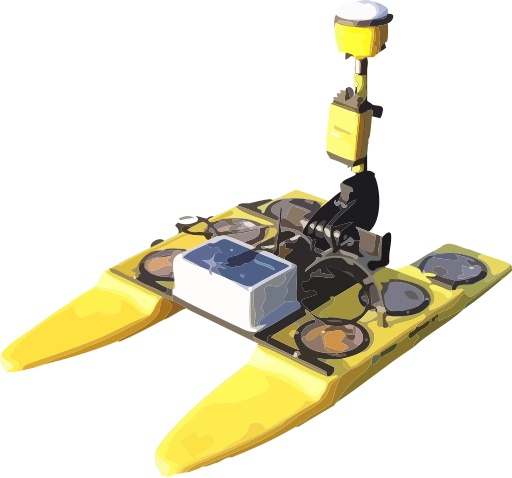
At the center of this effort are unmanned surface vessels designed for persistent, autonomous operation. These platforms have already demonstrated the ability to remain at sea for months, operating in remote and contested environments while collecting maritime data around the clock. Their endurance and reliability have been validated through years of real-world use, including sustained missions alongside naval forces that have logged hundreds of thousands of nautical kms and detected large volumes of maritime contacts.
The next step is arming and integrating these vessels for more demanding roles. Initial work focuses on installing a quad launcher capable of firing precision-guided missiles onto an autonomous survey vessel. This transforms the platform from a sensor-only asset into a multi-mission system capable of surveillance, reconnaissance, undersea monitoring, and defensive strike tasks. The integration relies on open-architecture design and secure command-and-control, allowing new payloads to be added without redesigning the vessel.
From a defense perspective, this shift supports distributed maritime operations. Uncrewed vessels can be deployed in large numbers to extend sensor coverage, complicate adversary planning, and reduce the burden on high-value crewed ships. Armed or sensor-equipped USVs can operate forward, act as decoys, provide early warning, or protect critical infrastructure, all while keeping sailors out of harm’s way.
Looking ahead, larger autonomous vessels are already being developed to carry heavier payloads, including vertical launch systems and advanced towed sonar arrays. Live-fire demonstrations and proof-of-concept trials are planned to validate these capabilities in realistic conditions.
The broader significance lies in speed and scale. By pairing commercial-grade autonomy with field-proven military systems, navies can field new capabilities years faster than traditional acquisition cycles allow. As maritime security challenges grow more complex, this model of rapidly adapting unmanned platforms may become a cornerstone of future naval readiness—delivering presence, persistence, and protection without relying solely on crewed fleets.