This post is also available in:
 עברית (Hebrew)
Low-cost drones and coordinated swarms are rapidly eroding the effectiveness of traditional air-defense methods. Missiles are expensive, guns have limited coverage, and both can be overwhelmed when dozens of small unmanned aircraft approach simultaneously. As militaries look for scalable ways to defend bases, borders, and urban areas, attention is increasingly shifting toward non-kinetic solutions that can neutralize many targets at once.
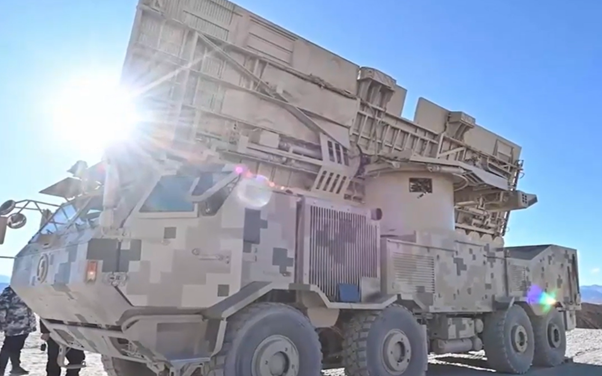
One such approach is a truck-mounted high-power microwave weapon known as the Hurricane 3000. After a brief public appearance during a military parade last year, new technical insights suggest the system is designed to move beyond close-in point defense. According to recently released information, it is intended to disable small drones and swarms at ranges exceeding three kilometers, placing it in a category closer to area denial than last-line protection.
According to NextGenDefense, the system works by detecting aerial targets with radar before switching to electro-optical sensors for confirmation and tracking. Once a target or swarm is identified, the weapon emits a high-power microwave pulse that disrupts onboard electronics almost instantly. Unlike kinetic interceptors, this method does not rely on physical impact. Instead, it disables drones by overwhelming their control, navigation, or power systems, causing them to fail in mid-air.
This approach addresses several weaknesses of conventional counter-UAS defenses. High-power microwave weapons have no practical ammunition limit and a very low cost per engagement. They are also less likely to cause collateral damage, since the effect is confined to electronics rather than explosive force. These characteristics make them particularly attractive against large numbers of inexpensive drones, where cost exchange ratios strongly favor the attacker.
The weapon is also designed to operate as part of a layered defense network. It can function on its own or be linked with laser systems and traditional artillery, creating a mix of soft-kill and hard-kill options. This flexibility allows operators to tailor responses depending on range, target type, and environment. Beyond drones, the system is reportedly being explored for roles such as disrupting reconnaissance platforms, interfering with information links, and countering certain precision-guided threats.
Durability is another critical factor. High-power microwave systems must handle extreme electrical stress without degrading themselves. Recent testing claims indicate that the weapon has fired thousands of full-power pulses while maintaining stable output, suggesting progress toward operational reliability, even if further trials are ongoing.
From a defense perspective, such systems reflect a broader shift toward electronic and energy-based air defense. As drone use expands in military and homeland security scenarios, wide-area, reusable countermeasures are becoming a central part of future air-defense planning—especially where persistent coverage and rapid response matter more than single-shot precision.