

This post is also available in:
 עברית (Hebrew)
Modern military and civilian systems face a growing power and connectivity problem. Sensors, communications, and autonomous platforms all demand more energy, yet batteries add weight, limit endurance, and require frequent replacement or recharging. At the same time, the electromagnetic environment is becoming increasingly crowded, filled with radar emissions, wireless signals, and reflected energy that usually goes unused.
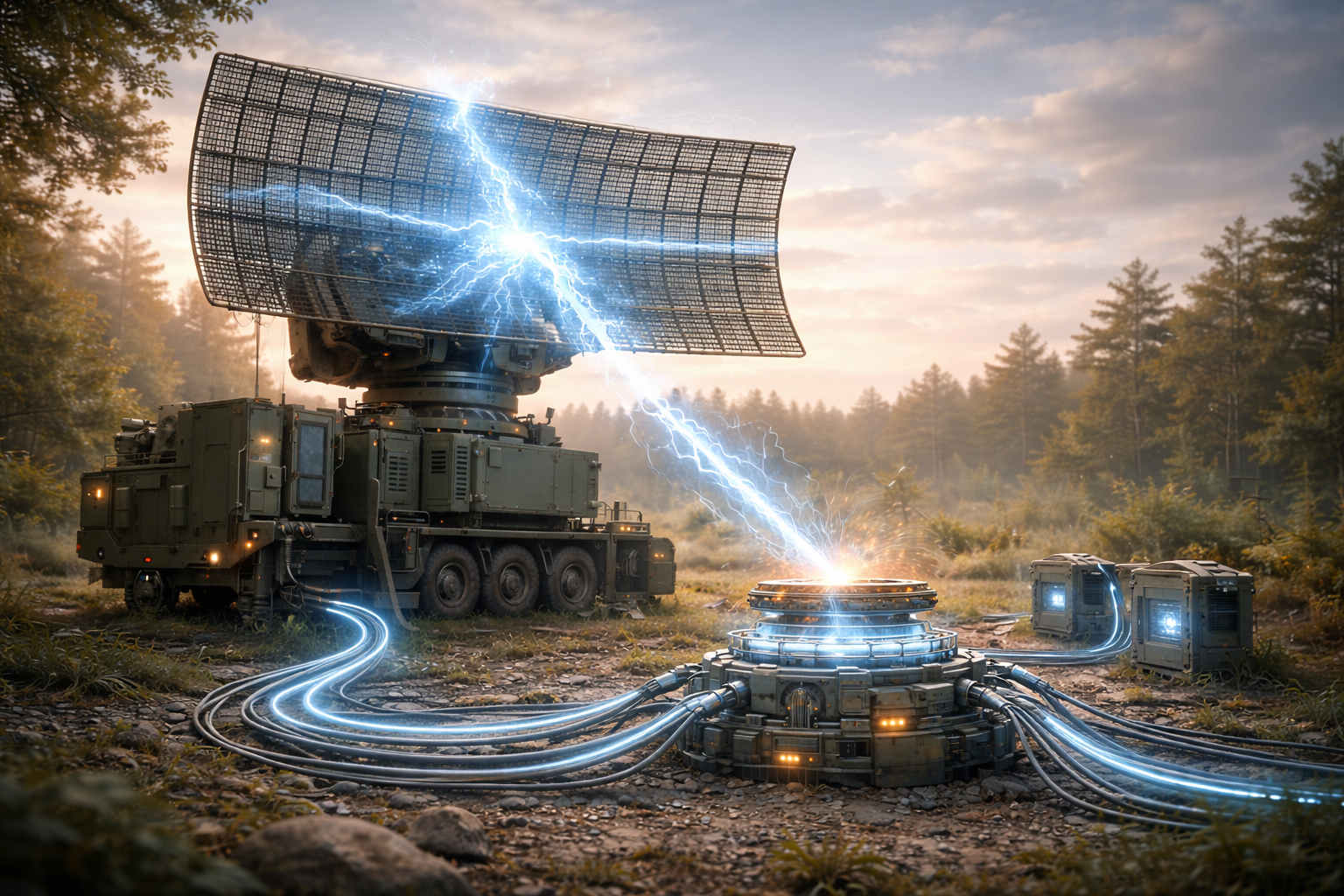
A new research effort points to a different approach: turning that background radiation into a usable resource. Researchers in China have developed a programmable electromagnetic surface that can harvest energy directly from ambient signals, including radar emissions, while simultaneously supporting communication and sensing functions. The goal is to create self-sustaining electronic systems that no longer depend on conventional power sources.
The technology is based on what is known as a reconfigurable intelligent surface, or RIS. This is a thin, two-dimensional material made up of many controllable elements that can dynamically shape how electromagnetic waves are reflected. By adjusting these elements in real time, the surface can redirect signals, steer beams, or absorb energy from the environment. In this case, the absorbed energy is converted into electrical power, eliminating the need for onboard batteries.
According to Interesting Engineering, to manage this complexity, the researchers propose using advanced algorithms that jointly optimize signal transmission, sensing, and energy harvesting. Their framework relies on machine learning methods to coordinate beamforming, path planning, and data collection across multiple connected platforms. The result is a surface that can adapt to its surroundings, deciding when to reflect, redirect, or harvest electromagnetic waves.
For defense applications, the implications are notable. In a military context, such surfaces could allow platforms to draw power from hostile radar signals rather than avoiding them entirely. This supports concepts like electromagnetic cooperative stealth, where networked aircraft or vehicles coordinate their electromagnetic behavior to reduce detectability while sustaining onboard systems. The ability to operate without traditional power supplies could also extend mission duration for autonomous platforms operating deep inside contested environments.
Beyond stealth and power, the surface offers additional capabilities. It can steer beams over wide angles, improve coverage when line-of-sight is blocked, and even create intentional radio “dead zones” to reduce interference or limit eavesdropping. By combining communication, sensing, and energy functions into a single programmable layer, the system reduces the need for separate hardware components.
The researchers see broad potential as wireless networks move toward 6G. Self-powered relay nodes, intelligent micro base stations, and environment-aware sensing systems could all benefit from RIS-based designs. While the technology is still at a research stage, it highlights a shift in thinking: instead of treating electromagnetic energy as interference or a threat, future systems may learn to exploit it as both a signal and a power source.























