

This post is also available in:
 עברית (Hebrew)
Keeping military pilots mission-ready is not only a matter of training and aircraft availability. Medical clearance is a critical but often time-consuming step, particularly after an injury or health issue. Even routine aeromedical waivers can take anywhere from half an hour to several days, creating delays that limit how quickly qualified pilots can return to duty. In high-tempo operations, those delays add up to reduced readiness across entire squadrons.
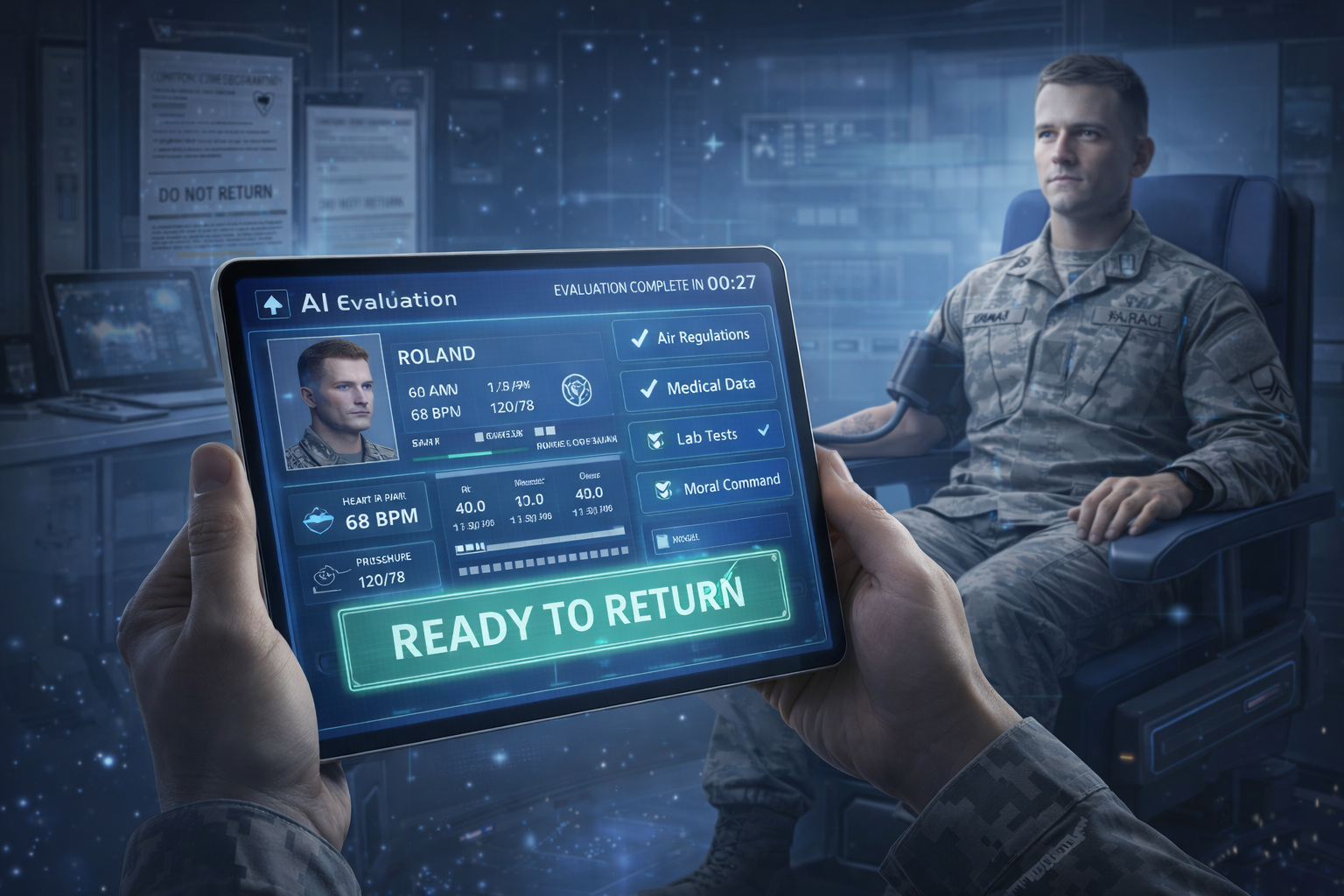
A new AI-driven software prototype aims to remove that bottleneck. Developed by a small team from the Defense Health Agency’s Chief Data and Analytics Office, the tool automates large parts of the aeromedical clearance process for U.S. Air Force pilots. During a recent defense technology hackathon, the system demonstrated the ability to complete reviews in under 30 seconds—a task that traditionally involves multiple manual checks and approvals.
According to MilitaryAI, the software, known as MEDAL (Medical Evaluation for Defense Airmen’s Readiness), uses artificial intelligence to process medical records and policy requirements simultaneously. It draws on synthetic data modeled after the Pentagon’s unified digital health record system, MHS GENESIS, and applies existing aeromedical standards to determine whether a pilot meets clearance criteria. By doing so, it removes much of the manual back-and-forth that slows the current process.
Pilot availability directly affects sortie generation, training schedules, and operational planning. An automated clearance process supports faster decision-making and helps commanders maintain a more accurate picture of force readiness. In future conflicts or sustained operations, reducing downtime for trained aircrew could provide a meaningful operational advantage.
The prototype was developed as part of a competitive hackathon hosted by the National Defense Industrial Association, where it placed second among 50 teams. The event focused on applying emerging technologies to practical defense challenges, emphasizing solutions that could be deployed quickly and scaled across the force.
Following the competition, the team continued refining the system and examining how similar AI tools could support other aspects of medical and personnel readiness. While it is still a prototype, it demonstrates how artificial intelligence can assist—not replace—clinical decision-making by accelerating reviews and surfacing relevant information faster.
The broader significance lies in the shift toward using AI for internal military processes and has a direct effect on operational output. By compressing administrative timelines from days to seconds, tools like this one point to a future where readiness is limited less by paperwork and more by actual capability.























