






How Do You Test a Missile Defense Radar? Fire a Missile...
Missile-defense systems cannot be validated using simulations alone. Radars and combat-management systems ultimately need to encounter physical targets moving through real airspace, allowing crews...
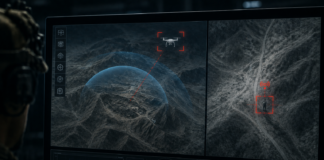
This Anti-Drone System Doesn’t Just Find the UAV – It Finds...
Small commercial drones are increasingly becoming a security problem for military forces and critical facilities. Detecting an unauthorized UAV is only part of the...
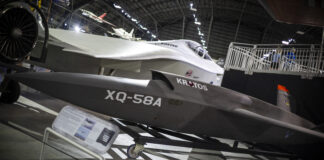
This Runway-Free Combat Drone Just Flew Alongside F-35s
Future air operations are expected to rely increasingly on uncrewed aircraft working alongside fighter jets, but making that concept practical requires more than simply...

This Cold-Proof Material Could Give Wearable Sensors a Winter Upgrade
Wearable sensors need to remain soft and conductive as the body moves, but cold weather presents a basic materials problem. Many flexible sensors use...
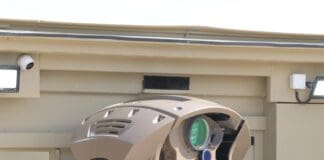
The Next Frontier for Laser Weapons Might Be Orbit
As more military and civilian infrastructure depends on satellites, space is becoming an increasingly important operational domain. Communications, navigation, intelligence gathering, missile warning, and...
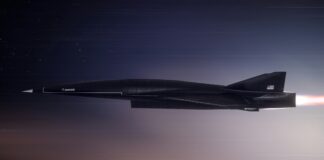
When GPS Goes Dark, Hypersonic Weapons Could Navigate by the Stars
Hypersonic vehicles create an unusually difficult navigation problem. Traveling at several times the speed of sound leaves little room for positioning errors, while satellite...

These Floating Gun Platforms Are Built to Guard Ports From Drones
Protecting a major port from drones presents an increasingly difficult security problem. Maritime facilities cover large areas and contain ships, fuel infrastructure and other...
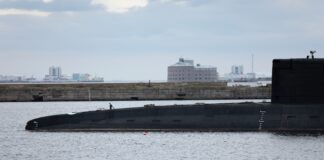
A New Underwater Robot Is Built to Hunt for Threats on...
Inspecting the underside of a ship is a difficult but important security task. Hulls can conceal structural damage, foreign objects or potentially dangerous devices...

Ukraine Unveils Faster Drone Hunter for Shahed Attacks
One-way attack drones have created an increasingly difficult equation for air-defense forces. Aircraft such as the Shahed-136 are relatively inexpensive, can be launched in...
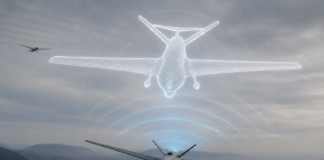
A New Decoy Drone Can Make Itself Look 20 Times Larger...
Modern air-defense systems depend heavily on radar to determine which objects in the sky deserve attention. That creates an opportunity for deception: if a...

This Skin-Cell-Sized Sensor Could One Day Help Detect Submarines
Detecting extremely weak magnetic fields is useful in everything from medical imaging to industrial monitoring, but sensitivity comes with a fundamental problem: noise. As...

A Tiny Levitating Gyroscope Could Make GPS-Free Navigation More Accurate
Modern navigation depends heavily on satellite signals, but GPS is not always available. Signals cannot reliably penetrate underground or deep underwater and can also...

The Biggest Thing Holding Back Next-Gen Radar? Heat
Gallium nitride has become an important material for high-performance radar, communications and electronic warfare systems because it can handle far more radio-frequency power than...

Butterfly-Inspired Tech Could Give Tiny Robots Some Serious Muscle
Building robots at microscopic scales creates an unusual engineering problem: even the simplest movements become difficult to produce. Conventional motors, gears and hydraulic systems...

The Battlefield Is Full of Invisible Signals—This Device Finds Them
Modern battlefields are increasingly crowded with radio-frequency signals. Drones, aircraft, ships, communications equipment and electronic warfare systems all transmit across the electromagnetic spectrum, creating...
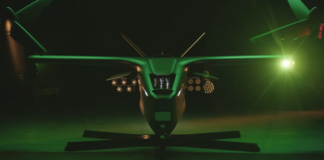
This Autonomous Aircraft Can Carry 10 Missiles Without a Pilot
Attack helicopters are facing a growing challenge on today's battlefield. The widespread use of inexpensive drones, loitering munitions and persistent aerial surveillance has made...

Israeli Drone Company Heads to Wall Street at a $1.5 Billion...
As militaries and security organizations deploy growing numbers of drones, robots, and autonomous systems, a new challenge is emerging: each platform comes with its...

This Tiny Cyber Probe Can Tell When a Device Has Been...
Protecting critical systems becomes especially difficult once an attacker gets inside the device itself. Conventional cybersecurity tools can monitor network traffic, identify known vulnerabilities...

€3 Billion Deal Brings Israeli Multi-Layered Air Defense to Greece
Air defense systems today must contend with a wide range of fundamentally different threats: ballistic missiles traveling at high speeds and altitudes, fighter aircraft,...
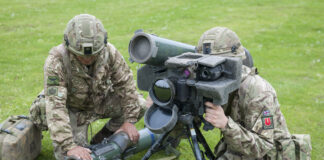
The Javelin Missile Is Getting a Next-Generation Infrared Upgrade
Modern armored vehicles are increasingly equipped with camouflage, thermal-management technologies and other measures intended to make them harder to identify and engage. At the...

This Surveillance Drone Can Take Orders Directly From a Crewed Aircraft
Maritime surveillance requires military forces to monitor enormous areas while identifying ships, submarines and other potential threats as quickly as possible. Crewed patrol aircraft...

This Technology Gives Autonomous Drones Better Eyes in the Sky
Flying autonomously through complex environments requires more than knowing where a drone is. The aircraft must continuously understand what surrounds it, distinguish open routes...
Latest

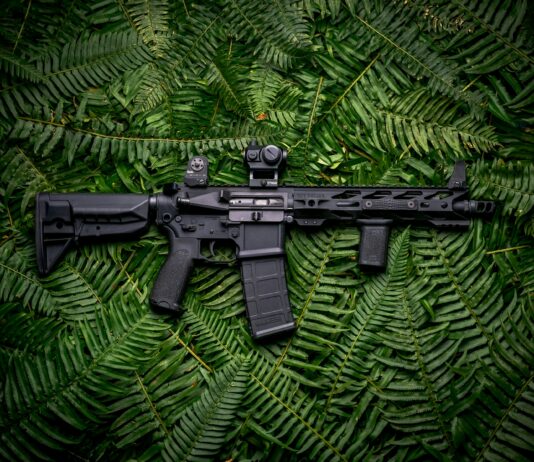
This Rifle Upgrade Times Every Shot to Help Hit Fast-Moving Drones
Small drones have become a difficult target for infantry. They can approach quickly, change direction and present a much smaller target than a conventional...




















