This post is also available in:
 עברית (Hebrew)
For decades, combat aircraft programs have largely followed the same model: highly complex manned platforms developed over long timelines by a small group of established aerospace manufacturers. But as militaries seek ways to increase airpower without proportionally increasing costs and pilot risk, attention is shifting toward autonomous aircraft designed to operate alongside traditional fighter jets.
One of the most ambitious examples of that trend has now entered a new phase. A semi-autonomous combat aircraft program has moved from rapid prototyping into production, bringing together a next-generation unmanned fighter and an AI-powered autonomy system designed to function as its operational brain.
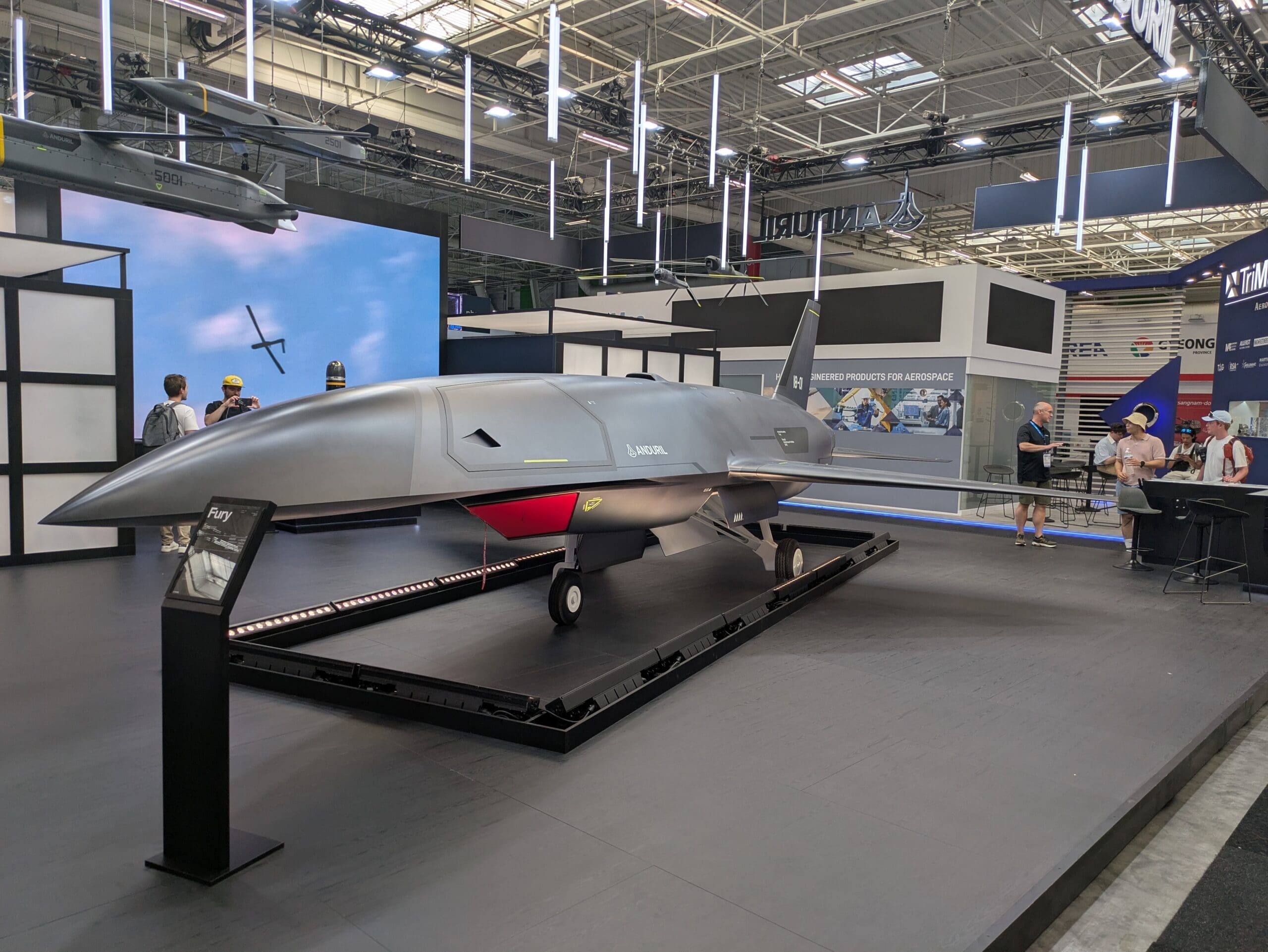
The aircraft, known as the FQ-44, is designed to serve as a Collaborative Combat Aircraft (CCA) by Anduril, often described as a robotic wingman. Rather than replacing human pilots, the platform is intended to operate alongside crewed fighters, extending their reach and taking on selected missions during combat operations.
According to Ohio Tech News, a key element of the system is its autonomy software. Known as Lattice for Mission Autonomy, the platform enables multiple aircraft to coordinate actions, adapt to changing battlefield conditions, and execute tasks with reduced operator workload. The software is designed to manage how autonomous aircraft collaborate during missions, allowing them to function as part of a larger tactical formation.
The aircraft itself was developed for high-performance operations. According to available information, it can operate from shorter runways and offers a combat radius that exceeds that of many current crewed fighter aircraft. These characteristics make it suitable for long-range missions and dispersed operations.
From a defense perspective, collaborative combat aircraft are becoming one of the most closely watched developments in military aviation. Future air operations are expected to combine crewed and autonomous platforms, allowing air forces to increase mass, extend sensor coverage, and conduct higher-risk missions without placing pilots directly in harm’s way.
Another notable aspect of the program is its manufacturing model. Rather than relying exclusively on highly specialized defense components, much of the platform is built around commercially available technologies and supply chains. This approach aims to accelerate production while reducing costs and simplifying scalability.
The transition from prototype to production in just over two years is particularly significant in an industry where fighter programs often require a decade or more to reach operational maturity. As autonomous aviation continues to evolve, programs like this provide a glimpse into how future air combat systems may be built, deployed, and operated.