This post is also available in:
 עברית (Hebrew)
Modern air-defense networks face an increasingly diverse set of threats. Combat aircraft, cruise missiles, drones, and tactical ballistic missiles can approach from different altitudes and speeds, forcing military planners to field systems capable of responding across a broad engagement envelope. Improving range, reaction time, and maneuverability has therefore become a major focus for modern surface-to-air missile development.
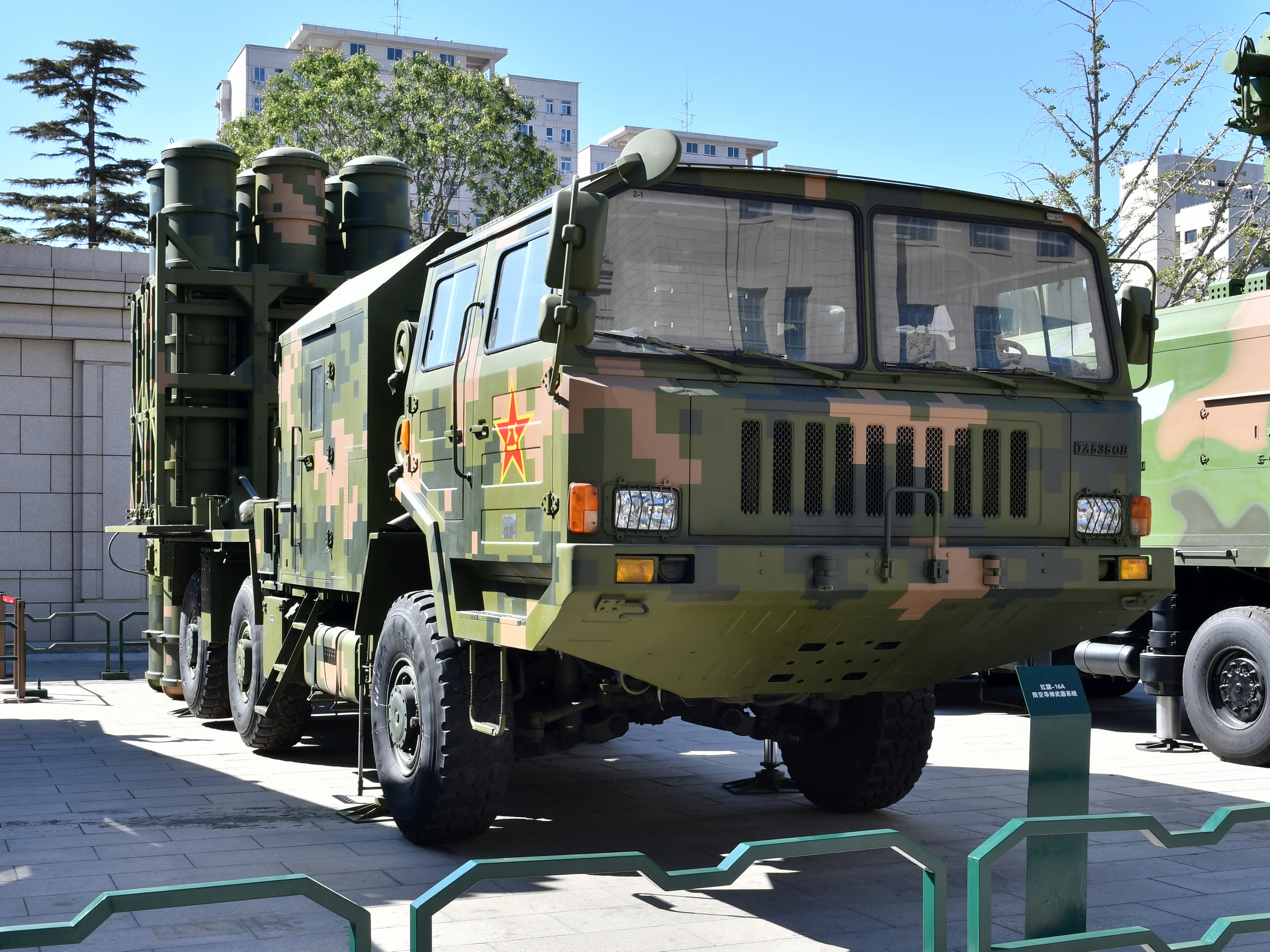
A recent live-fire exercise offered a closer look at a new member of the Chinese HQ-16 air-defense family. During the test, a missile launched from a mobile platform successfully intercepted an aerial target at a distance of approximately 50 kilometers, providing one of the first public demonstrations of the system’s operational use.
One of the most noticeable features of the missile is its aerodynamic configuration. Unlike earlier missile designs that relied on larger mid-body wings, the new system uses a streamlined, wingless body with four control fins mounted at the rear. These fins are responsible for steering and course correction throughout flight.
According to Interesting Engineering, the design reduces aerodynamic drag while maintaining maneuverability, potentially improving flight efficiency and engagement performance. Lower drag can help extend range and preserve energy during intercepts, particularly when engaging maneuvering targets at medium distances.
The missile is believed to belong to the latest generation of the missile family, a medium-range air-defense system available in both land-based and naval variants. Footage from the exercise showed vertical launch capability, indicating compatibility with modern vertical launch systems used on both ground platforms and warships.
Publicly available specifications associated with the export-oriented HQ-16FE indicate engagement ranges extending to roughly 160 kilometers against conventional aircraft, while retaining the ability to engage targets at much shorter distances. The system is also designed to intercept a variety of threats, including low-flying aircraft, cruise missiles, and certain ballistic missile targets.
From a defense perspective, the missile represents part of a broader trend toward layered air-defense architectures. Modern forces increasingly rely on multiple overlapping systems designed to engage threats at different ranges and altitudes, creating a more resilient defensive network.
The recent firing demonstrates not only the missile’s technical maturity but also the continued emphasis on improving medium-range interception capabilities as air threats become more diverse and technologically sophisticated.