This post is also available in:
 עברית (Hebrew)
Modern air defense systems are becoming increasingly dense and sophisticated, making it harder for conventional aircraft to operate inside contested airspace. Long-range missiles offer a way to strike from a distance, but they are expensive and limited once launched. This creates a gap between reach and flexibility, particularly when targeting hardened or time-sensitive objectives deep inside defended territory.
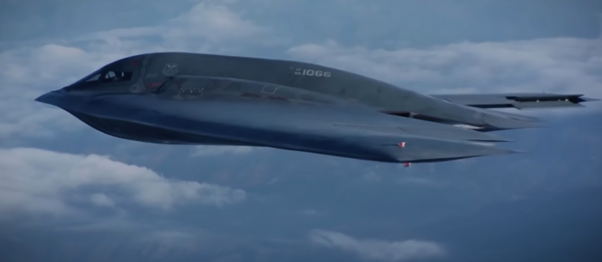
A new generation of American stealth bombers (B-21 Raider) is designed to address this challenge by combining low observability with long-range strike capability. Instead of remaining outside threat zones, the platform is built to penetrate defended airspace, remain on station, and engage targets as conditions evolve. This allows for greater adaptability compared to pre-programmed stand-off weapons.
The aircraft is optimized for reduced detection across multiple sensor types, enabling it to operate in environments where radar, electronic warfare, and surface-to-air systems are actively deployed. Its design supports both precision strike and sustained presence, allowing it to loiter and respond dynamically rather than relying on fixed mission profiles.
Beyond its strike role, the platform also integrates advanced sensing and communication capabilities. According to Interesting Engineering, this allows it to function as part of a broader operational network, collecting intelligence and coordinating with other assets such as drones or satellites. In this sense, it acts not only as a delivery system for munitions, but also as a node for information and command.
Another notable aspect is the development approach. Efforts are underway to accelerate production timelines by overlapping testing and manufacturing phases. This could shorten the path to deployment, but also introduces technical risk if issues are identified later in the process.
From a defense perspective, platforms that combine stealth, range, and network integration are increasingly important. As contested environments become the norm, the ability to operate inside them, rather than around them, provides a strategic advantage. Such systems can support a wider range of missions, from precision strikes to intelligence gathering and coordination.
As airpower continues to evolve, the emphasis is shifting toward multi-role platforms that can adapt in real time, balancing survivability with operational flexibility in complex environments.