

This post is also available in:
 עברית (Hebrew)
Drone threats at sea are becoming more frequent and harder to manage. Small, low-cost UAVs can be launched in large numbers, forcing naval forces to rely on expensive interceptors or layered defenses that are not always sustainable over time. On a moving platform like an aircraft carrier, maintaining precision targeting adds another layer of complexity.
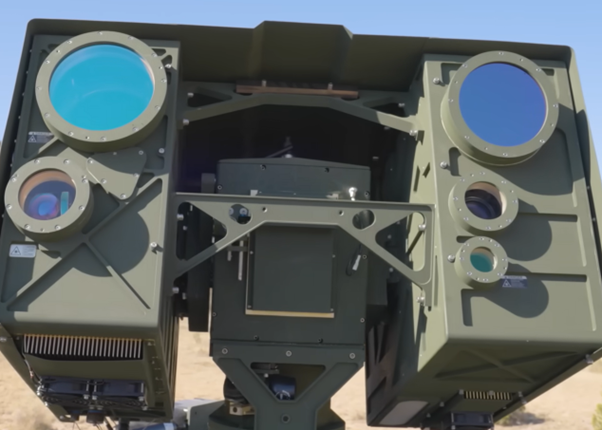
A new approach, called LOCUST (by AeroVironment) is focusing on directed energy as a practical countermeasure. Instead of using traditional munitions, the system employs a high-energy laser to engage targets at the speed of light. Mounted in a palletized configuration, it can be deployed directly onto existing platforms without major structural changes, allowing rapid integration into operational environments.
Recent testing demonstrated the system’s ability to track and neutralize multiple aerial targets while operating aboard a moving carrier. According to Interesting Engineering, maintaining beam accuracy under these conditions is a key technical challenge, requiring stabilization and precise tracking despite constant motion. The system successfully engaged drones in real time, showing that laser-based defenses can function effectively in dynamic maritime settings.
One of the defining features is its modular design. The system is built as a roll-on, roll-off unit, meaning it can be installed or removed as needed. This allows it to be used across different platforms, including ships and ground vehicles, without permanent modification. It can draw power from the host platform or operate using onboard energy storage, providing flexibility in deployment.
Another advantage is cost efficiency. Each engagement uses electrical energy rather than physical ammunition, reducing the cost per shot. This is particularly relevant when dealing with repeated or high-volume drone threats, where traditional interceptors can become prohibitively expensive.
From a defense perspective, this reflects a broader shift toward layered and scalable protection. Laser systems are not intended to replace existing defenses, but to complement them by providing a rapid, low-cost option for close-range threats.
As directed energy technologies continue to mature, their ability to integrate quickly and operate across different platforms may make them a central component in future naval defense strategies, especially against evolving aerial threats.























