

This post is also available in:
 עברית (Hebrew)
Modern air operations are increasingly shaped by the need to strike targets at long range without exposing aircraft to dense air defense systems. Traditional strike missions often rely on fighter jets entering contested airspace, which carries both operational risk and high cost. As threats evolve, there is growing interest in alternative ways to deliver firepower from safer distances.
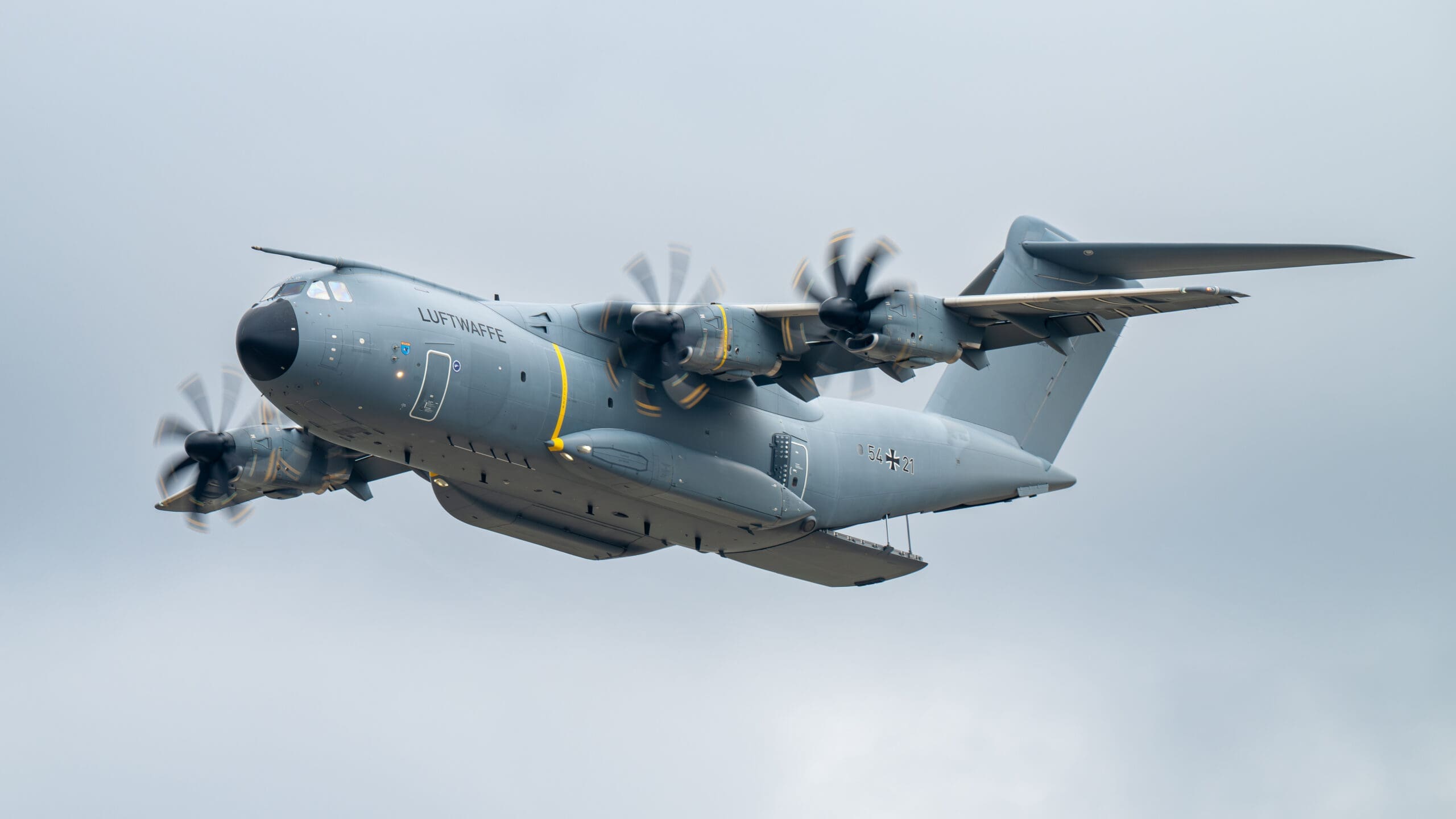
A new concept adapts a military transport aircraft (the A400M) into a stand-off strike platform by using its internal cargo space as a launch system. Instead of external weapons mounts, the aircraft carries palletized payloads that can be deployed mid-flight. This allows it to release cruise missiles or large numbers of drones while remaining outside hostile engagement zones.
According to Interesting Engineering, the approach leverages the aircraft’s existing cargo architecture. Standard pallets are fitted with release mechanisms and loaded into the cargo bay. During deployment, the pallets are extracted through the rear ramp using parachutes, after which the weapons are released in sequence. This roll-on, roll-off method enables rapid conversion between transport and strike roles without structural modifications.
Payload flexibility is a central feature. Depending on the configuration, the aircraft can carry either a dozen long-range cruise missiles or dozens of drones (up to approx. 16,782 kgs). The internal carriage preserves aerodynamic performance and range, allowing the platform to operate over extended distances.
Another important aspect is integration into broader operational networks. The system is designed to work alongside other assets, potentially allowing coordination of multiple launches and limited in-flight updates. This transforms the aircraft from a transport platform into a node within a larger strike architecture.
From a defense perspective, this reflects a broader shift toward distributed and stand-off capabilities. By launching weapons from outside contested zones, forces can reduce exposure while maintaining operational reach. The ability to deploy large numbers of systems from a single platform also supports saturation strategies against defended targets.
The concept also highlights the increasing role of modularity. Platforms that can switch between missions, such as transport, strike, or support, offer greater flexibility in changing environments.
As air forces adapt to modern threats, using existing aircraft in new roles may provide a practical way to expand capability without developing entirely new platforms.























