

This post is also available in:
 עברית (Hebrew)
The growing use of drones on the battlefield is shifting the focus toward speed and scale. Small unmanned systems can be deployed in large numbers, overwhelming defenses or covering wide areas in a short time. However, launching multiple drones quickly and in a coordinated way remains a logistical challenge, especially in forward or contested environments.
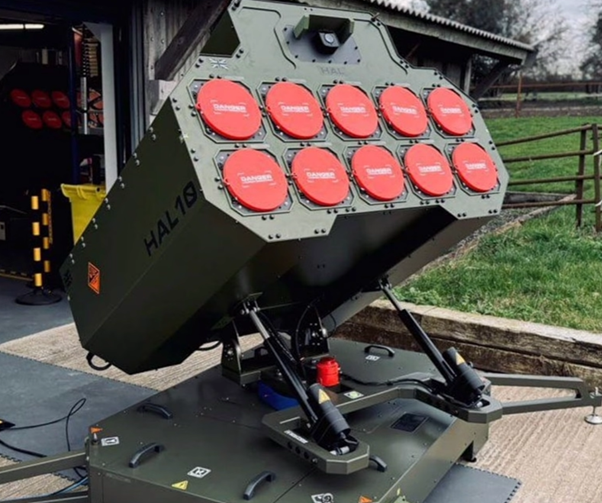
A new modular launcher, called HAL10, is designed to address this gap by enabling rapid, burst-style deployment of multiple UAVs from a single platform. The system uses a cassette-based structure with 10 internal bays, allowing drones to be stored, protected, and launched in quick succession. According to NextGenDefense, this approach reduces setup time and simplifies handling, particularly when fast response is required.
The launcher can be installed on fixed sites, mobile platforms, or forward operating bases, offering flexibility depending on mission needs. Built to operate across a wide temperature range, it is suited for deployment in diverse environments, from cold climates to high-heat regions.
At the system level, the concept is centered on scalability. Instead of deploying drones one at a time, operators can release a group in seconds, creating immediate aerial presence. This is particularly useful for missions that require rapid area coverage, such as reconnaissance, target acquisition, or counter-drone operations.
The drones themselves are lightweight, rocket-assisted platforms capable of operating at ranges of several dozen kilometers. With onboard payload capacity, they can support intelligence gathering, surveillance, and interception tasks. Their endurance varies depending on configuration, allowing operators to balance payload and flight time.
One of the more notable aspects is the system’s ability to support swarm-like operations. Multiple drones can be launched together to saturate an area, act as decoys, or track multiple targets simultaneously. This increases operational flexibility and reduces reliance on larger, more complex platforms.
From a defense perspective, rapid-launch systems reflect a broader shift toward distributed and responsive capabilities. The ability to deploy multiple drones within seconds can improve reaction time against emerging threats and expand coverage without increasing manpower.
As unmanned systems continue to evolve, solutions that combine portability, speed, and multi-drone deployment are likely to play an increasing role in both offensive and defensive operations.























