

This post is also available in:
 עברית (Hebrew)
Submarine warfare depends heavily on one weapon: the heavyweight torpedo. Unlike missiles, which can be observed and tracked throughout much of their flight, torpedoes operate underwater, where detection is more difficult and reaction times are limited. For navies seeking to strengthen undersea warfare capabilities, validating a torpedo’s performance under realistic conditions is a critical step.
A recent naval exercise included a live-fire sinking test designed to evaluate a domestically (Turkish) developed heavyweight torpedo (AKYA) against a decommissioned surface vessel. During the exercise, the torpedo was launched from a submarine, successfully acquired and tracked its target, and ultimately struck the ship, causing severe structural damage and sinking it.
Live sinking exercises, often referred to as SINKEX events, provide information that computer simulations alone cannot fully replicate. Engineers can evaluate how a warship responds to underwater explosions, monitor flooding progression, measure structural failures, and collect data on overall weapon effectiveness under operational conditions.
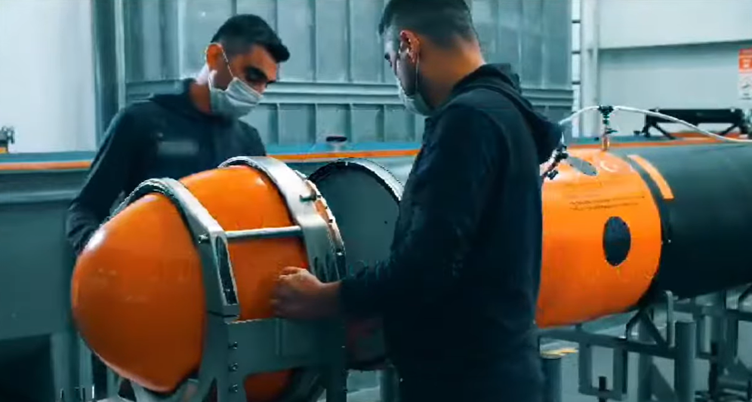
The torpedo itself is a 533-millimeter-class weapon powered by an electric propulsion system. It reportedly has a range of approximately 50 kilometers and a speed of around 45 knots. According to Interesting Engineering, guidance is provided through a combination of active and passive sonar systems, allowing it to detect and track targets in different acoustic environments.
One of its more advanced features is wake-homing guidance. Instead of focusing solely on engine noise or acoustic signatures, the torpedo can follow the disturbance left behind by a moving ship. This approach can make it more difficult for targets to evade using traditional acoustic decoys because the weapon is effectively tracking the vessel’s path through the water rather than simply chasing noise.
The system also supports fiber-optic guidance. Through a physical data link connecting the torpedo to the launching submarine, operators can update targeting information, modify engagement parameters, and refine the attack profile while the weapon remains in flight.
From a defense perspective, heavyweight torpedoes remain among the most important assets in naval warfare. They provide submarines with the ability to engage surface combatants and other maritime targets while remaining concealed beneath the surface.
The exercise also highlighted the growing integration of indigenous combat-management systems that handle sonar processing, target tracking, firing solutions, and weapon control. Together, these technologies form a broader underwater warfare ecosystem designed to improve operational independence and expand submarine combat capabilities.























