

This post is also available in:
 עברית (Hebrew)
Small drone swarms are becoming increasingly difficult to stop using traditional air-defense systems. Conventional remotely operated gun turrets usually rely on mechanically rotating toward a target before firing, a process that can create delays when multiple drones attack simultaneously from different directions. As drones become faster, cheaper, and more resistant to electronic jamming, those delays are becoming a growing vulnerability at very short range.
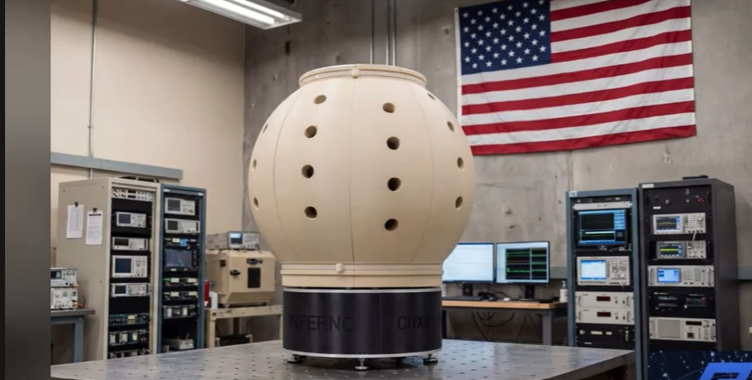
A newly introduced counter-drone turret called Inferno RTC (by Picket Defense Systems) is designed specifically to address that final layer of defense. Instead of using a single rotating weapon, the system uses a spherical turret covered with dozens of fixed barrels positioned at multiple angles. The design allows the platform to select the closest firing solution instantly rather than physically turning toward incoming threats.
The larger configuration reportedly carries more than 54 barrels arranged across the turret structure and supports heavier 12-gauge and 40mm low-velocity munitions. A lighter version uses 36 barrels and smaller ammunition types including 5.56mm rounds and .410 shotgun shells. According to Interesting Engineering, both variants are designed to engage drones at distances of up to roughly 120 meters.
One of the more unusual aspects of the system is its passive detection method. Rather than relying on radar emissions that could expose its position, the turret uses a 3D acoustic microphone array combined with optical cameras to detect and track incoming drones. The acoustic sensors identify the direction and sound signature of approaching UAVs, while onboard cameras help confirm and follow targets visually.
Artificial intelligence software processes the sensor data in real time, prioritizing threats and selecting which barrels to fire based on incoming attack angles. The system is also designed to continue operating independently without relying on external communications networks or RF-based targeting systems.
From a defense perspective, the concept reflects growing concern over close-range drone swarms capable of overwhelming traditional defenses. Layered air-defense networks can still leave short-range gaps, especially against multiple low-cost drones approaching simultaneously from different directions.
The modular turret can also support non-lethal payloads such as nets, smoke obscurants, and laser dazzlers, making it adaptable for military bases, border security, or infrastructure protection where limiting collateral damage may be important.
As drone warfare evolves, systems focused on fast reaction time, passive sensing, and low-cost manufacturing are becoming an increasingly important part of counter-UAS defense strategies.























