This post is also available in:
 עברית (Hebrew)
Modern naval radar systems face a growing challenge: the electromagnetic spectrum is becoming increasingly crowded. Warships today must manage surveillance, missile guidance, communications, and electronic warfare functions while sharing limited frequency space with civilian infrastructure such as expanding 5G networks. Traditional radar architectures, built around tightly integrated hardware systems, can struggle to adapt quickly to changing operational demands.
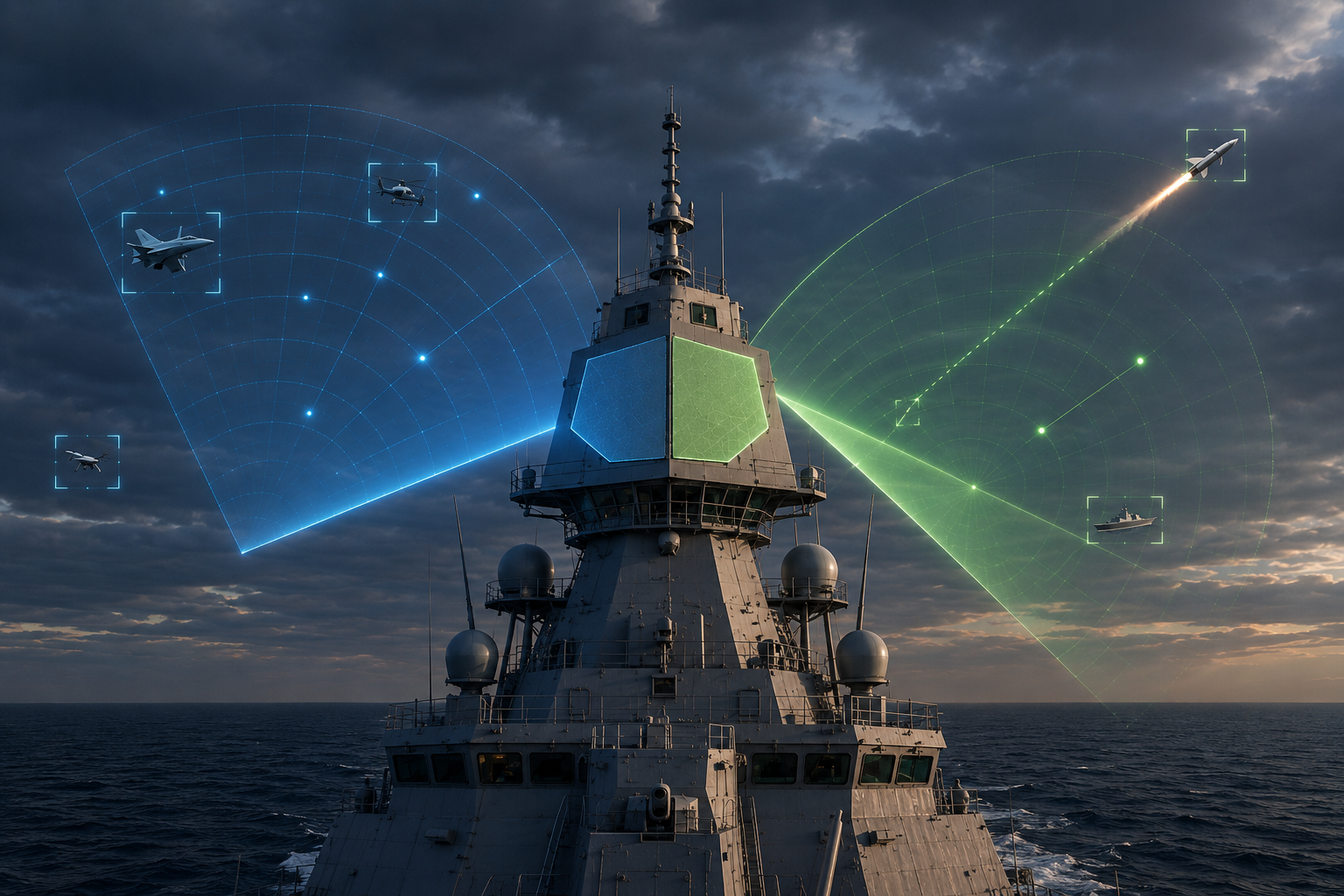
A new software-defined radar approach by Raytheon aims to address that limitation by changing how radar systems are controlled internally. Instead of operating as a single rigid unit, the concept breaks the radar into independently managed segments controlled through software. This allows different portions of the same radar to perform separate tasks simultaneously.
According to Interesting Engineering, under the proposed architecture, one section of a ship’s radar could track airborne threats while another supports missile guidance or surveillance operations at the same time. Software-defined control also enables operators to adjust signal behavior dynamically based on operational conditions without requiring major hardware modifications.
The system relies on software-defined apertures, where software manages how radar modules transmit and receive signals. Engineers believe this flexibility could improve radar performance in congested electromagnetic environments while reducing interference with nearby communications networks. More precise signal management may also help naval systems operate more efficiently alongside civilian spectrum users.
Another major advantage is upgradeability. Traditional radar modernization programs often require significant hardware redesign and lengthy integration cycles. A software-driven architecture allows new functions or mission capabilities to be introduced through software updates instead of replacing major physical components.
The modular design is also intended to support future mission expansion. Naval forces increasingly require radar systems capable of handling air defense, tracking, electronic warfare support, and communications functions simultaneously across rapidly changing operational environments.
From a defense perspective, software-defined radar technology reflects a broader shift toward adaptable and resilient sensing systems. As electronic warfare threats become more sophisticated and spectrum competition increases, military platforms may need radar systems capable of reconfiguring themselves dynamically during operations.
The project is expected to move into demonstration phases focused on multi-mission operation and spectrum-sharing performance. If successful, the technology could shape the next generation of naval radar systems built around software flexibility rather than fixed hardware limitations.