This post is also available in:
 עברית (Hebrew)
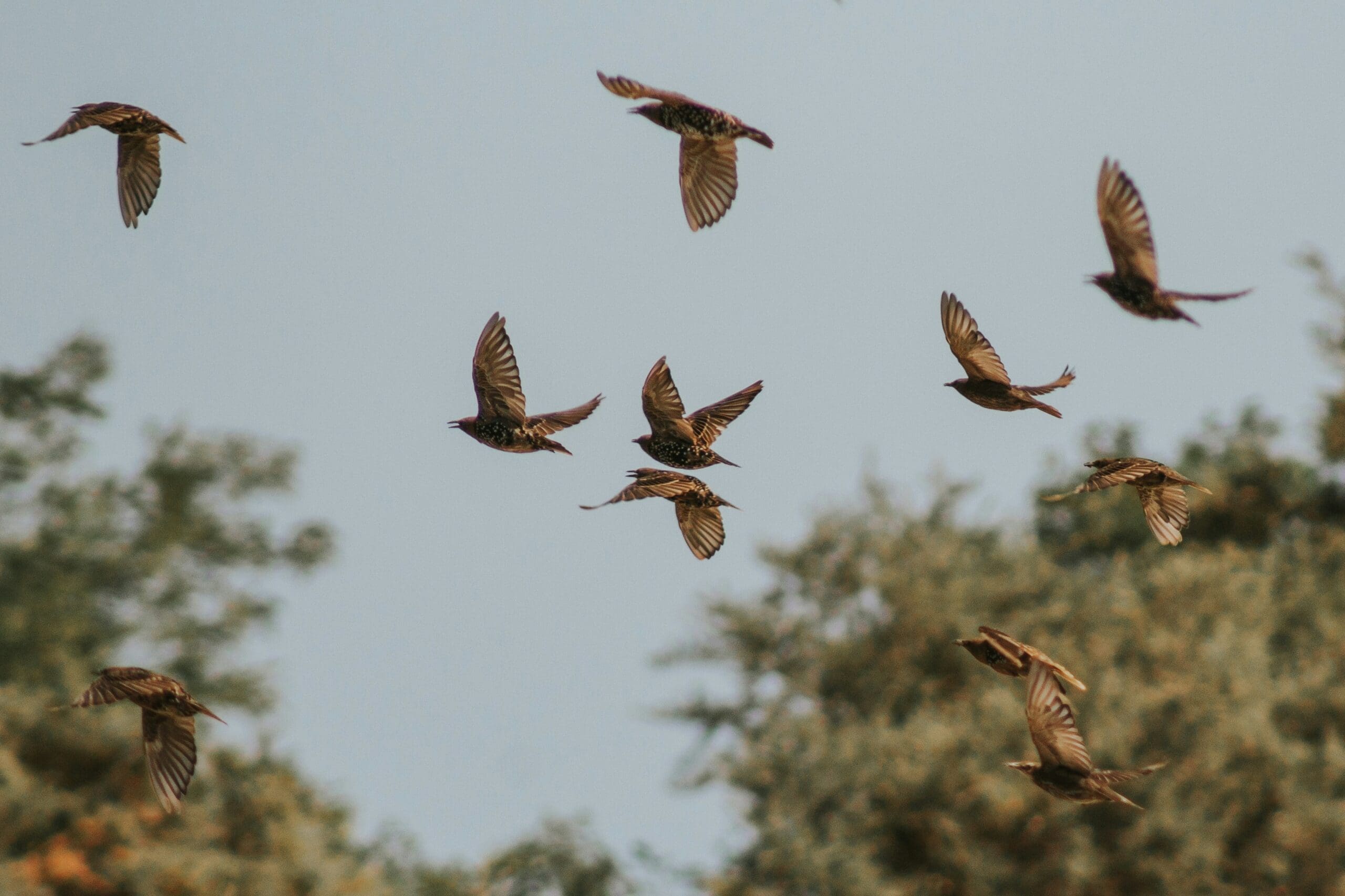
Building small flying robots that move like insects has long been a challenge for engineers. Flapping-wing systems are highly agile and energy efficient, but they are also difficult to stabilize. Conventional thinking has suggested that insects remain airborne only through constant neural corrections, requiring rapid adjustments to compensate for instability caused by turbulence and wing motion.
New research offers a different perspective. A computational model developed to study flapping flight suggests that many flying animals may rely more on passive stability than previously believed. Instead of continuously correcting their motion, certain wing and body configurations appear capable of naturally maintaining stable flight through the physics of their movement alone.
According to Interesting Engineering, the model identifies a phenomenon known as anti-resonance, which is a balance point where wing inertia and body dynamics work together to counter disturbances automatically. In this state, the flyer can remain stable even in turbulent conditions without requiring constant active correction. Researchers condensed the complex mechanics of flight into five key parameters: wing-to-body mass ratio, wing loading, hinge placement, stroke frequency, and flap amplitude.
By analyzing these variables in a simplified five-dimensional framework, the team was able to derive formulas that define the conditions for passive stability. Unlike earlier models focused on replicating existing insect species, this approach allows researchers to explore a much wider range of possible flight configurations, including designs not found in nature.
One of the more practical implications is in robotics. Engineers developing micro aerial vehicles could use these findings to create flapping-wing drones that are inherently stable by design. This may reduce the need for heavy onboard processors, complex sensors, and constant feedback systems, making small flying robots lighter and more energy efficient.
From a defense and security perspective, stable flapping-wing drones could support reconnaissance and sensing missions in environments where conventional drones are less effective. Smaller and quieter aerial systems inspired by biological flight may be better suited for confined urban spaces or low-signature operations.
Beyond engineering, the model may also help researchers better understand how flight evolved in nature by identifying which physical traits contribute most to stable airborne movement. The work points toward a closer link between biological evolution and next-generation robotic design.
The research was published here.