This post is also available in:
 עברית (Hebrew)
Hypersonic systems promise significant advantages in speed and responsiveness, but their development has been slowed by a persistent challenge: most propulsion technologies are designed for single use. The extreme heat and mechanical stress involved in flight above Mach 5 often limit engines to one mission, driving up costs and reducing operational flexibility. For hypersonic platforms to become practical, engines must not only perform at high speeds but also withstand repeated use.
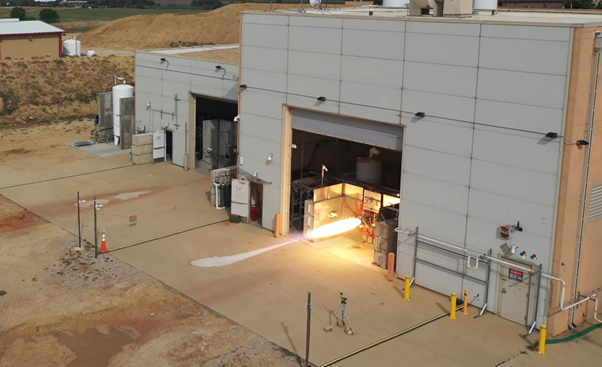
A recent series of flight tests by Ursa Major suggests progress in that direction. A liquid-fueled rocket engine has now completed ten consecutive flights, including multiple missions at sustained hypersonic speeds. The same propulsion system was reused across several of these flights, demonstrating that key components can endure the thermal and structural demands associated with high-speed operations.
The engine operates using liquid oxygen and kerosene in an oxygen-rich staged combustion cycle, a design typically associated with high efficiency and performance. It produces around 2,267 kg-force of thrust at sea level and up to 2,948 kg-force in vacuum conditions. This configuration allows it to support both hypersonic flight platforms and smaller launch systems, making it adaptable to different mission profiles.
According to Interesting Engineering, one of the notable aspects of the engine is its manufacturing approach. A large portion of its components, around 80 percent, are produced using additive manufacturing. This reduces part count, shortens production timelines, and allows for faster design iterations. As a result, engineers can refine performance more quickly and move from testing to flight with fewer delays.
The engine has been integrated into a flight vehicle designed for high-speed testing, where it has demonstrated not just performance but also turnaround capability. Reusing the same engine across multiple missions suggests a potential shift toward more sustainable and cost-effective hypersonic operations.
From a defense perspective, reusable propulsion systems could play a key role in scaling hypersonic capabilities. Lower costs and higher flight rates would enable more frequent testing, faster deployment cycles, and improved readiness. As demand for high-speed systems grows, technologies that combine durability with performance are likely to become increasingly important.
The milestone highlights a gradual move from experimental systems toward more operationally viable hypersonic platforms.