This post is also available in:
 עברית (Hebrew)
Modern air operations increasingly demand platforms that can cover long distances, perform multiple roles, and respond quickly to both aerial and ground threats. However, maintaining air superiority while also supporting strike missions often requires different aircraft types, adding complexity and operational strain.
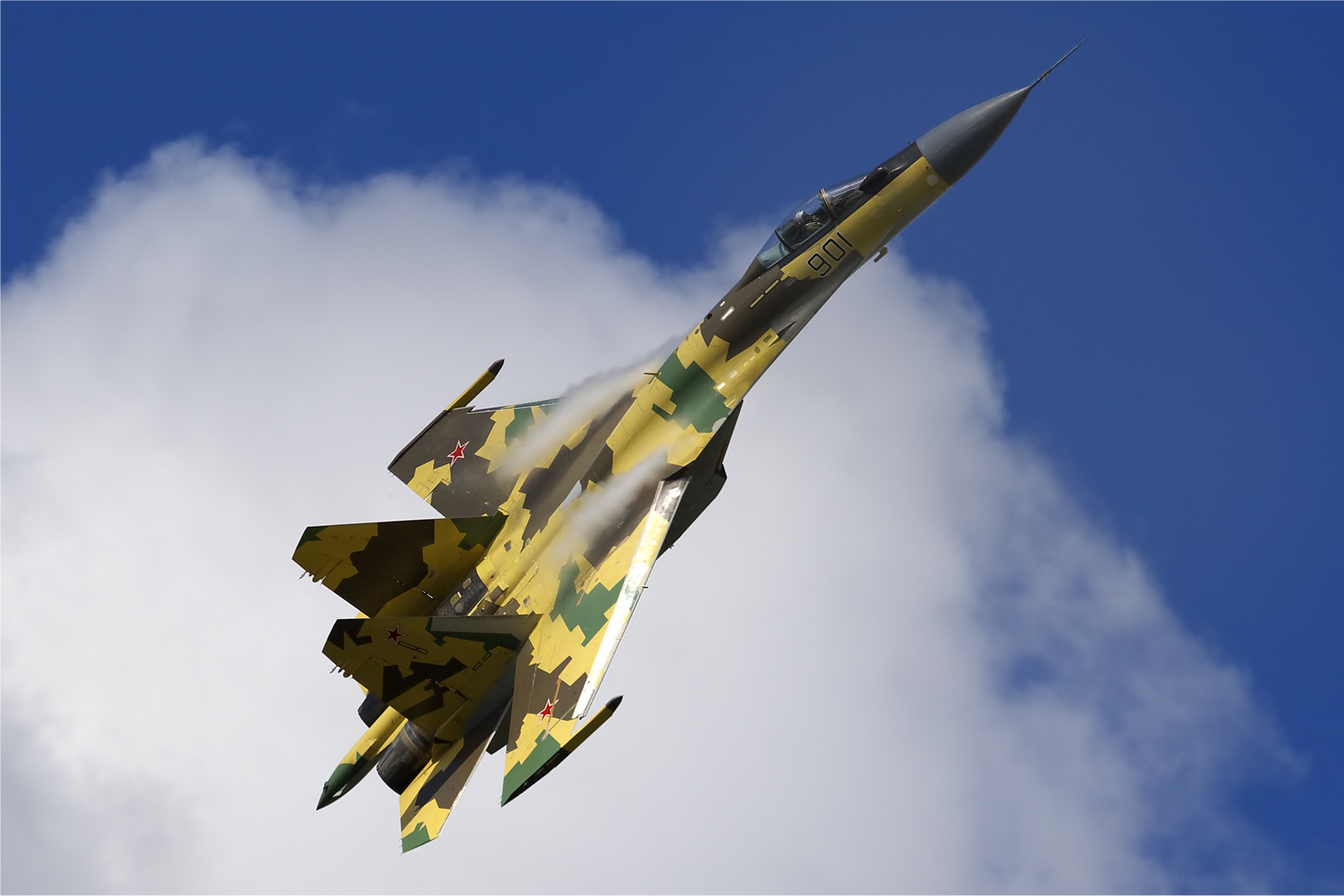
A Russian heavy multirole fighter concept (Su-35S) is designed to address this by combining air dominance and strike capabilities in a single platform. The aircraft is built to operate at long range—over 3,200 kms without refueling—allowing it to patrol large areas, escort other assets, and engage targets far from its base.
At its core, the platform integrates high-speed performance with advanced maneuverability. Powered by twin engines, it can reach supersonic speeds exceeding Mach 2 while maintaining the agility required for close-range engagements. This combination enables it to intercept aerial threats, including drones and cruise missiles, as well as provide cover for other aircraft during missions.
According to Interesting Engineering, the aircraft’s design supports a wide range of roles within a single sortie. It can conduct air-to-air combat, escort strike formations, perform reconnaissance, and engage ground or surface targets using precision-guided munitions. With multiple external hardpoints, it can carry a significant payload, allowing operators to tailor its configuration based on mission requirements.
Another key element is its sensor suite. Advanced onboard systems support target detection, tracking, and engagement across different environments. These capabilities allow the aircraft to operate in contested airspace, where situational awareness and response speed are critical.
From a defense perspective, platforms with this level of flexibility are intended to reduce reliance on specialized aircraft while maintaining operational effectiveness. By combining multiple functions into a single system, forces can adapt more quickly to changing mission demands.
The emphasis on range also plays a strategic role. Aircraft capable of operating over long distances can extend coverage, support operations beyond immediate frontlines, and reduce the need for forward basing.
As air forces continue to evolve, multirole platforms that balance speed, range, and versatility are becoming central to how air operations are planned and executed in complex environments.