

This post is also available in:
 עברית (Hebrew)
Moving supplies from ship to shore has always been one of the most fragile points in military logistics. Surf zones, soft beaches, debris-filled waters, and damaged port infrastructure can turn routine resupply into a bottleneck. Traditional vehicles often handle either sea or land well—but not both—forcing forces to rely on multiple platforms and extra handling at exactly the moment speed and reliability matter most.
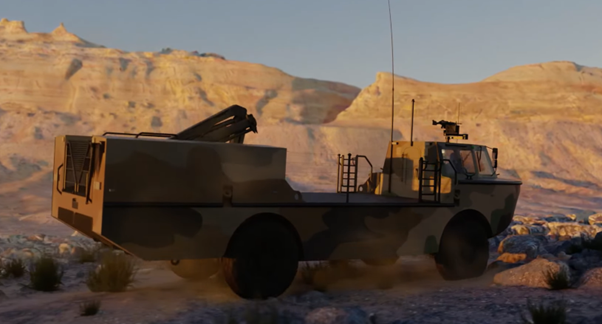
A new Australian amphibious logistics vehicle is designed to close that gap. The Amphibious Vehicles–Logistics (AV-L) platform is being introduced as a modern replacement for aging amphibious cargo vehicles, with the explicit goal of operating seamlessly across open water, shoreline, and inland terrain. Instead of adapting a land vehicle for water, or vice versa, the system is engineered from the outset as a true hybrid.
According to NextGenDefense, one of the key design choices is propulsion. The vehicle uses fully guarded waterjet systems rather than exposed propellers, reducing the risk of damage in shallow or debris-heavy waters. This allows it to approach beaches, navigate surf zones, and operate near ports without the vulnerability typically associated with marine drivetrains. Once ashore, independent suspension, front and rear steering, and a locking differential provide the maneuverability needed to traverse sand, mud, and uneven ground.
Mobility is further supported by a central tire inflation system that lets crews adjust tire pressure while moving. Lower pressure improves traction on soft terrain, while higher pressure supports road travel, enabling the vehicle to remain compliant with civilian road safety standards after landing. Automated systems monitor wheel slippage and bogging, dynamically adjusting power output to help the vehicle clear hazardous conditions, including wave action in the surf zone.
In practical terms, the vehicle is built to carry serious loads. With a payload capacity of up to 4.7 tonnes, it can transport vehicles, supplies, or equipment directly from ship to shore without intermediate transfers. A single-point lift and standardized tie-downs allow the vehicle to be moved by heavy transport aircraft, supporting rapid deployment to distant theaters.
From a defense perspective, this type of platform is especially relevant as militaries refocus on littoral and expeditionary operations. Dispersed forces, contested ports, and damaged infrastructure demand logistics systems that are flexible and resilient. An amphibious vehicle that can self-deploy from sea to land reduces reliance on fixed facilities and lowers exposure during unloading operations.
The vehicle is being produced locally and will enter service as part of a broader modernization of littoral maneuver capability. Beyond replacing older vehicles, it reflects a shift toward logistics platforms that are treated as operational enablers rather than support afterthoughts. In environments where access is contested and timelines are tight, the ability to bridge sea and land reliably can be as decisive as any combat system.























