

This post is also available in:
 עברית (Hebrew)
Air defenses are increasingly being shaped by the types of threats they face. Slow, propeller-driven drones are relatively easy to detect and engage once defenders adapt their sensors and tactics. That adaptation has already happened in Ukraine, where layered air defenses and electronic countermeasures have reduced the effectiveness of earlier long-range attack drones. In response, attackers are now looking for ways to restore speed, reach, and unpredictability.
A newly observed version of the Geran one-way attack drone reflects that shift. The latest model replaces the traditional piston engine with a small turbojet, turning the drone into a faster, harder-to-intercept strike platform. Ukrainian sources report that this jet-powered variant, often referred to as the Geran 5, has already been used in combined attacks in early 2026, signaling a move away from purely low-cost, slow-flying designs.
According to Interesting Engineering, the key change is propulsion. The drone is powered by a JT80 turbojet, which provides significantly more thrust than the engines used in earlier Geran versions. This increase in speed compresses reaction times for air defense systems and complicates interception by short-range weapons optimized for slower targets. Preliminary assessments suggest an operational range of around 1,000 kilometers, maintaining long-range strike capability despite the higher fuel consumption associated with jet engines.
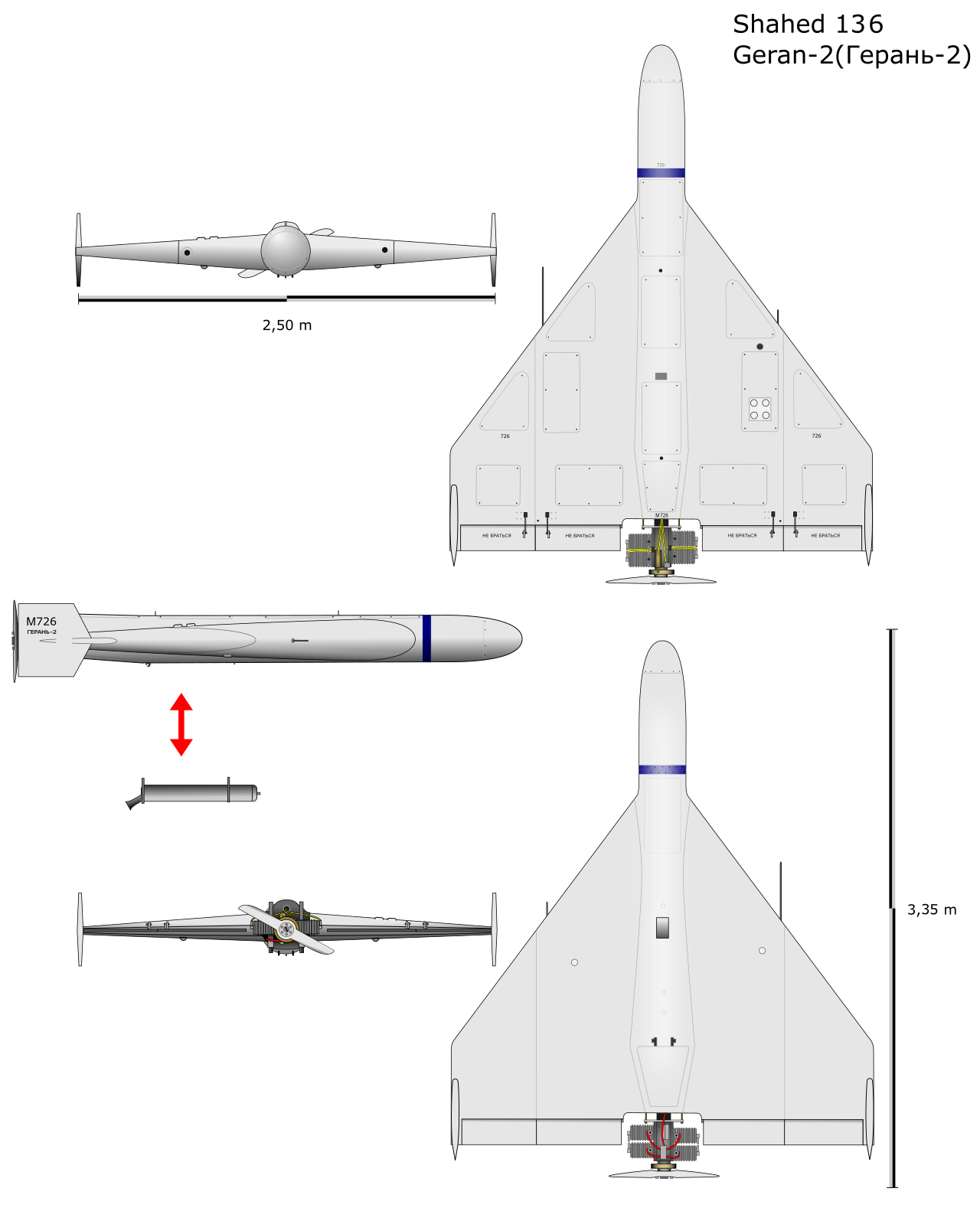
The airframe has also changed. Instead of the blended, delta-wing layout associated with earlier Shahed-based designs, the new drone features a more conventional fuselage with straight wings and a horizontal tail. Analysts note that this configuration is closer to earlier jet-powered target or strike drones, offering better aerodynamic efficiency at higher speeds while retaining many common subsystems to simplify production.
Internally, the drone continues to rely on a mix of military and commercial components. Navigation is handled by a satellite guidance unit already seen across multiple Russian systems, while tracking and communications reportedly use commercial hardware and cellular modems. This hybrid approach suggests an incremental evolution rather than a clean-sheet design.
One of the more significant developments is the reported plan to launch the drone from an aircraft. Diagrams released by Ukrainian sources show attack jets carrying the drone underwing. Air launch would extend range, allow attacks from unexpected vectors, and reduce the need for ground-based launch infrastructure. It also enables tighter coordination with other strike assets.
The jet-powered Geran highlights how drone warfare is escalating. Faster unmanned strike systems blur the line between cruise missiles and expendable drones, forcing defenders to spend more resources per intercept. If air-launch capability and even self-defense air-to-air missiles are added, these platforms could further complicate air defense planning. The trend points toward unmanned systems that are no longer just cheap saturation tools, but increasingly capable weapons designed to survive in contested airspace.























